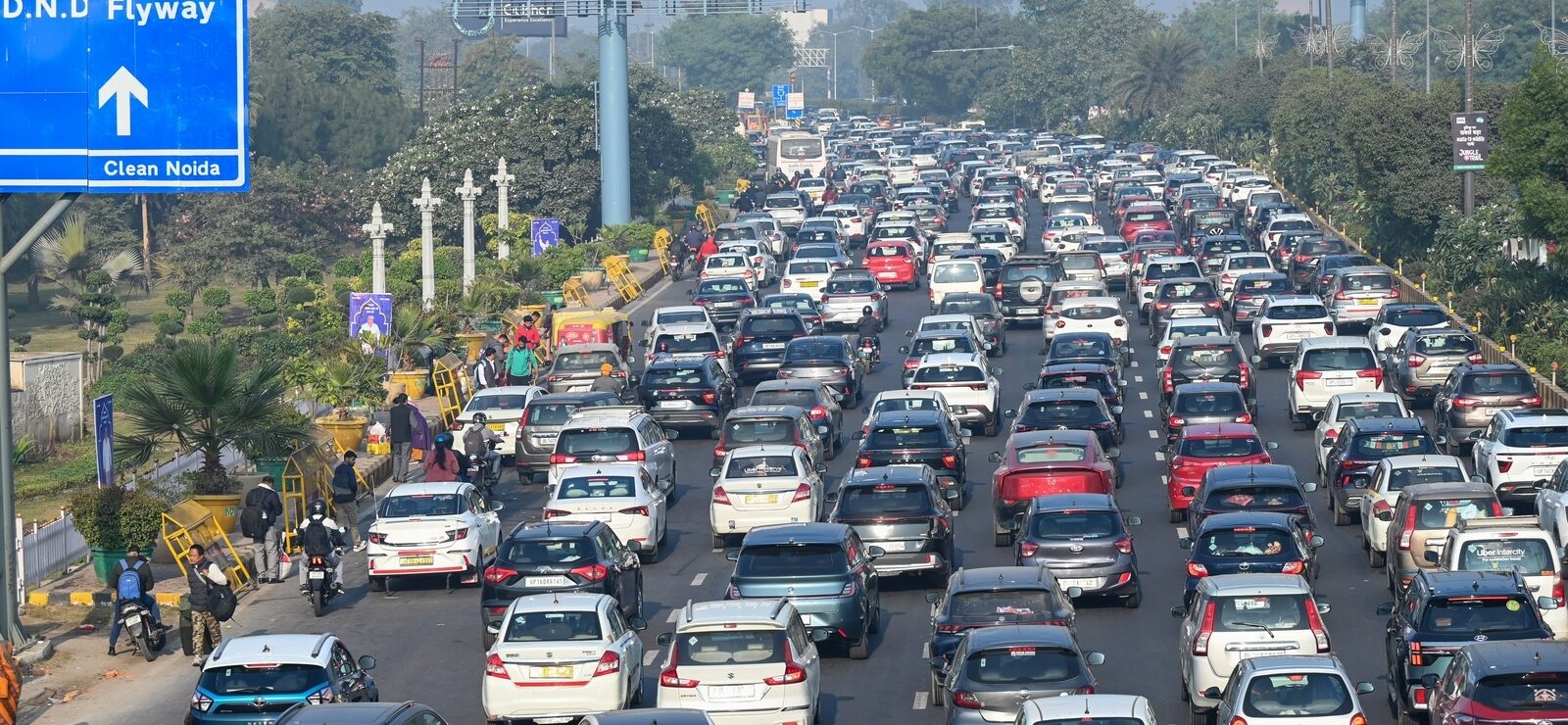
Delhi’s New Year celebrations brought unprecedented crowds to the Central Vista precinct, transforming the ceremonial heart of the capital into a focal point of public gathering and exposing the limits of traffic management and public transport capacity during peak civic events. Large numbers of residents from across the National Capital Region converged around India Gate, leading to congestion on key arterial roads and pressure on nearby metro stations.
The scale of the turnout underscored the growing role of Central Vista as a people-centric public space rather than a purely symbolic corridor. Families, elderly citizens, young couples, and first-time visitors were seen occupying lawns, underpasses, and pedestrian zones well into the evening. Urban planners note that such spontaneous mass participation reflects a post-pandemic shift towards open, accessible civic spaces, particularly in cities with limited recreational infrastructure.
However, the surge also tested Delhi’s mobility systems. Traffic slowed significantly on connecting roads such as Kartavya Path and Man Singh Road, while entry points to central metro stations experienced heavy queuing. Commuters reported delays in accessing platforms as station capacity was stretched by outbound crowds. Transport experts say this highlights the need for dynamic crowd modelling and event-based transit planning in districts that now serve both administrative and leisure functions.
Law enforcement agencies deployed extensive resources to manage the influx. A large security contingent was positioned across central districts, supported by surveillance networks and coordinated traffic control rooms. Enforcement data from the night indicated a sharp rise in traffic violations, particularly drink-driving cases, compared to the previous year. Officials attribute the increase to both higher footfall and intensified monitoring through rotating checkpoints. Beyond India Gate, the festive rush extended to religious institutions and major attractions such as the city zoo, drawing tens of thousands of visitors and triggering secondary congestion on surrounding roads. Urban economists observe that such distributed crowd patterns create ripple effects across neighbourhoods, affecting last-mile connectivity, emergency access, and local commerce.
From a sustainability perspective, the New Year surge raises questions about how cities accommodate large public gatherings without increasing emissions or compromising safety. While public transport absorbed a significant share of visitors, gaps in pedestrian circulation, signage, and temporary traffic re-routing became evident. Experts suggest that timed entry zones, extended metro frequencies, and pop-up pedestrian corridors could ease future pressure.
The experience also offers lessons for real estate and urban development around high-visibility public spaces. As Central Vista increasingly functions as a cultural commons, surrounding infrastructure from transit nodes to public amenities will need upgrades aligned with inclusive design and climate resilience.
As Delhi looks ahead to a year packed with national events and festivals, the New Year rush serves as both a success story of public engagement and a reminder that people-first urban spaces require equally robust mobility and safety planning to remain truly accessible.
Delhi Year End Celebrations Strain Core Roads