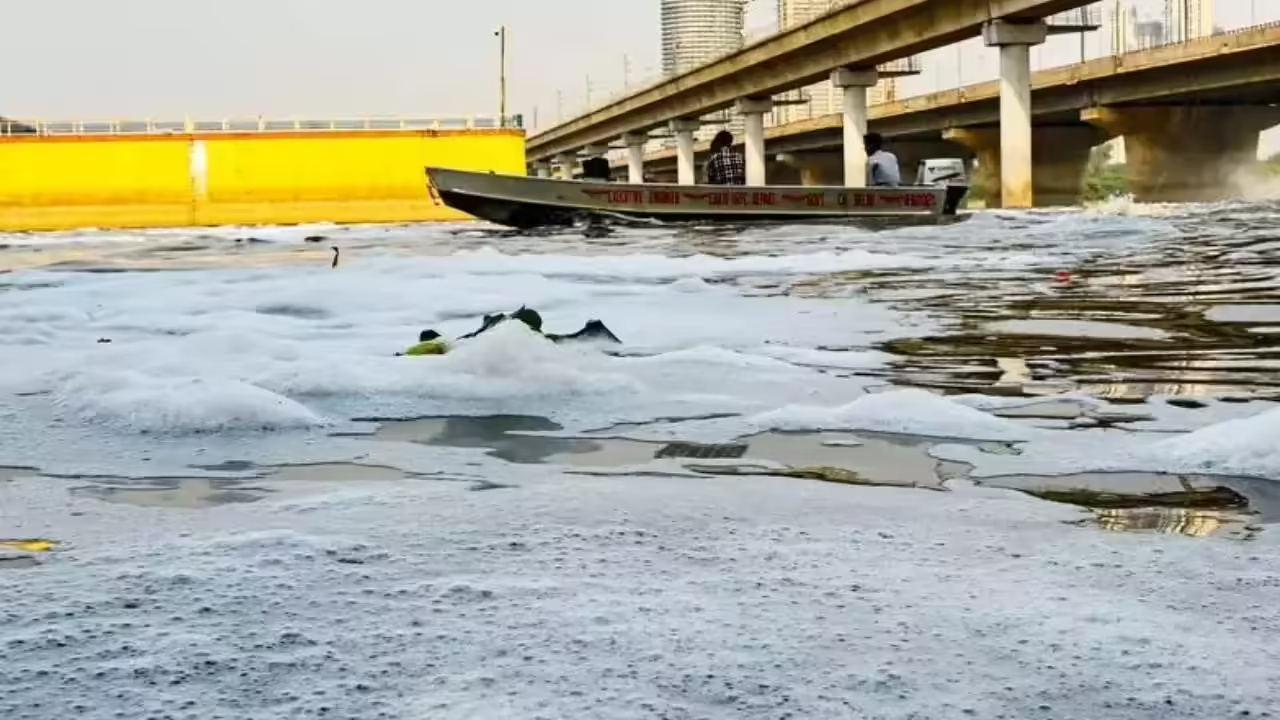
Fresh monitoring data indicates that Yamuna water pollution in Delhi intensified in March, with indicators of sewage contamination and organic waste rising sharply across several monitoring points. The deterioration in river quality highlights continuing gaps in wastewater management in one of India’s most densely populated urban regions and raises concerns for environmental health, aquatic ecosystems and downstream water users. Monthly water quality monitoring conducted by pollution authorities tracks multiple scientific parameters along the river’s stretch through the capital. These include measurements of faecal coliform bacteria, biological oxygen demand (BOD), dissolved oxygen, pH and chemical oxygen demand. Together, these indicators help determine whether river water is capable of sustaining aquatic life or supporting safe human use.
The latest findings show that Yamuna water pollution worsened significantly at multiple locations, particularly in terms of faecal coliform levels. This parameter indicates the presence of human and animal waste in water and is widely used as a marker of untreated sewage discharge. In some stretches, recorded levels reached several hundred thousand units per 100 millilitres — dramatically exceeding safe thresholds defined for surface water quality. Among the monitored points along the river’s course through Delhi, the downstream location near Asgarpur registered the most severe contamination levels. Environmental scientists note that such high counts typically reflect the direct inflow of untreated domestic wastewater through drains entering the river channel. Equally concerning is the sharp increase in biological oxygen demand. BOD measures the amount of oxygen consumed by microorganisms when breaking down organic matter in water. When this value rises significantly, it indicates a high concentration of decomposing waste. Such conditions reduce the oxygen available to fish and other aquatic organisms, potentially leading to ecological stress or biodiversity loss.
Urban environmental experts say these indicators underline the persistent structural challenge of managing wastewater in a rapidly growing metropolitan region. Delhi generates large volumes of sewage every day, and while treatment capacity has expanded over the years, infrastructure gaps and unregulated drain outflows continue to introduce contaminants into the river system. The stretch of the Yamuna passing through Delhi represents only a small portion of the river’s total length but contributes a disproportionately large share of its pollution load. Several major drains carrying domestic sewage and industrial effluents discharge into the river before it exits the city’s boundary. For urban planners and environmental policymakers, the worsening Yamuna water pollution levels reinforce the need for accelerated investment in sewage treatment plants, improved sewer networks and real-time monitoring systems. Experts also point to the importance of restoring wetlands and floodplains, which act as natural filters capable of improving river health.
As India’s capital continues to expand, the condition of the Yamuna remains closely tied to the city’s long-term sustainability. Improving water quality will require coordinated action across urban planning, infrastructure investment and environmental governance to ensure that economic growth does not come at the cost of the region’s most critical river ecosystem.