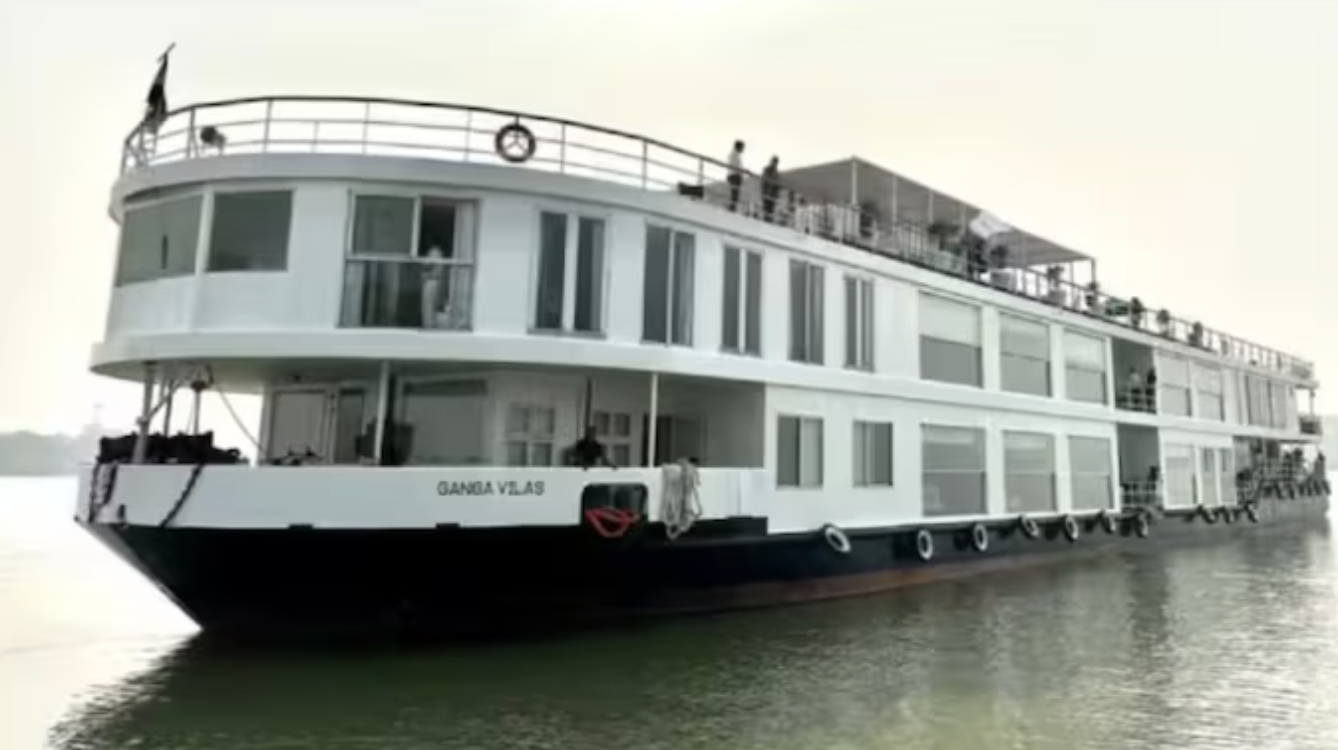
Delhi is preparing to activate a long-discussed but rarely realised urban asset its riverfront with the introduction of a short-distance passenger cruise on the Yamuna, marking a notable shift in how the capital approaches waterways, mobility and public space. Scheduled to begin operations next month, the service is being positioned not merely as a tourism product but as a pilot for integrating rivers into everyday urban life.
The planned route spans a compact but symbolic stretch between Sonia Vihar and Jagatpur in northeast Delhi, an area that has historically remained detached from the city’s mainstream development narrative. By opening this corridor to recreational navigation, authorities are signalling an intent to reconnect residents with the river a relationship that has been largely severed by decades of pollution, encroachment and neglect. Urban planners view this initiative as part of a broader recalibration of riverfront policy. Unlike traditional infrastructure projects that prioritise vehicular throughput or land monetisation, river-based mobility brings environmental performance, public access and placemaking into the same frame. In a city where open spaces are under pressure and air quality remains fragile, activating waterways offers a low-emission alternative for leisure and short-distance travel.
The vessel proposed for the service is expected to operate on a hybrid propulsion system combining electric and solar power, with a limited passenger capacity aimed at minimising ecological disturbance. Transport analysts note that while the ridership numbers will be modest, the symbolic value is substantial: it introduces a non-road, non-rail mode of urban movement within Delhi for the first time in decades. Equally significant is the institutional alignment behind the project. Multiple public agencies have collaborated on its rollout, reflecting a shift from siloed river-cleaning efforts towards integrated river management. This coordination is essential if riverfront projects are to move beyond isolated beautification exercises and become functional parts of urban infrastructure.
However, experts caution that a cruise alone cannot transform the Yamuna’s condition or its relationship with the city. Downstream of Wazirabad, large sections of the river remain ecologically stressed due to untreated sewage and industrial discharge. Authorities have indicated parallel investments in drain interception and wastewater treatment, recognising that sustained riverfront activation depends on measurable improvements in water quality, not just surface-level interventions.
From a real estate and urban development perspective, riverfront accessibility has the potential to recalibrate land use along its banks. International experience shows that when rivers become active public assets, adjacent neighbourhoods often see shifts towards mixed-use development, pedestrian-friendly streets and higher environmental standards. For Delhi, this could offer a counterpoint to car-centric growth patterns that have dominated recent decades.
The project also aligns with a broader push towards climate-resilient urbanism. By prioritising electric mobility on water and encouraging citizens to experience the river as a living system rather than a drain, the initiative embeds sustainability into public imagination a soft but powerful lever for long-term behavioural change.
As the Yamuna cruise prepares to set sail, its true test will not lie in ticket sales alone but in whether it catalyses a more ambitious, inclusive and ecologically grounded approach to Delhi’s riverfront. If successful, it could redefine how India’s capital engages with its most historic natural corridor not as a liability to be hidden, but as infrastructure to be reimagined.
Delhi Yamuna river cruise signals urban revival