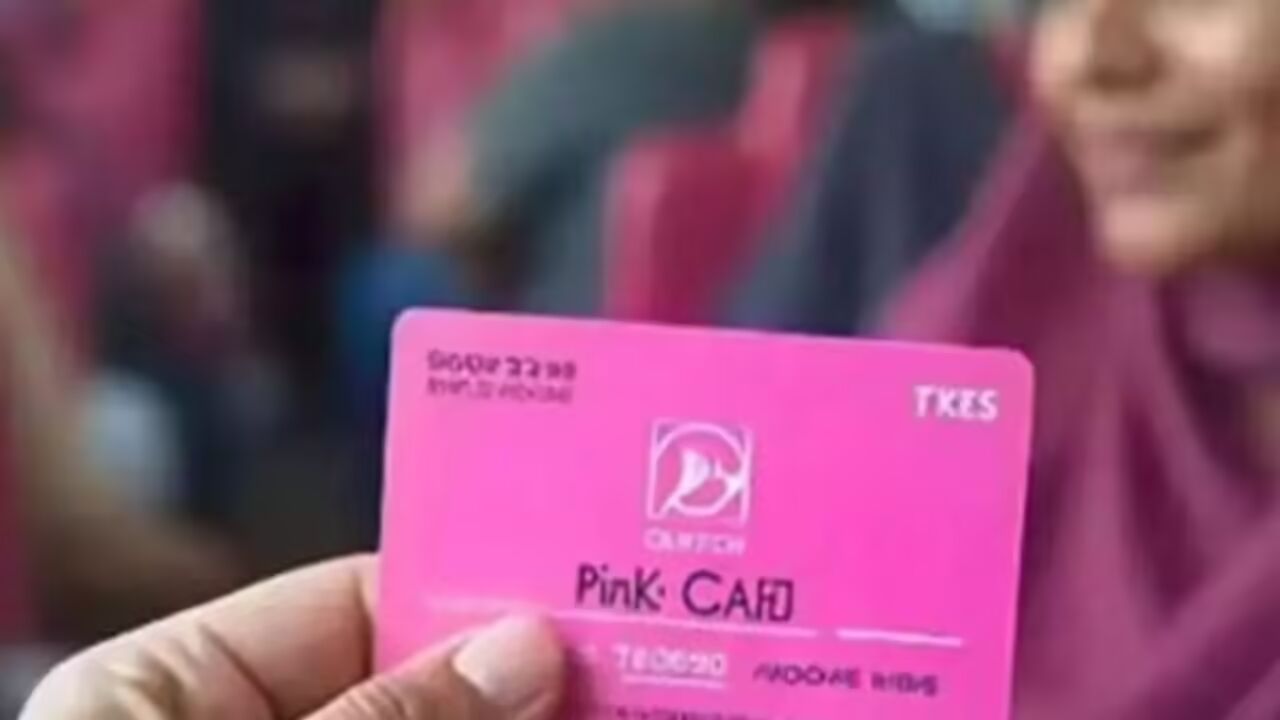
New Delhi — In a significant move to make public transport more accessible, affordable and inclusive, the Delhi government is set to roll out a Pink National Common Mobility Card (NCMC) for women residents, offering free travel on city buses while streamlining access to other transit modes through a single smart card.
The initiative, announced by the city’s leadership and scheduled for formal launch by the President of India at a high-profile event, signals a policy shift towards integrating digital mobility with gender-responsive urban planning. Under the scheme, eligible women will receive a free contactless smart card that enables unlimited travel on Delhi Transport Corporation (DTC) buses and seamless paid access to the metro, Regional Rapid Transit System (RRTS) and other public transport services. The system is inspired by the central government’s One Nation, One Card vision, which aims to unify ticketing and fare collection across multiple mobility networks. City officials describe the Pink Card as a replacement for older paper-based “pink” tickets, embedding digital payment and data tracking into the transit experience. Each card will be linked to the user’s mobile number and Aadhaar for authentication of age, gender and residency to ensure benefits reach bona fide Delhi women, with minimal documentation required at point of issuance.
Around 50 dedicated centres — including district and sub-divisional administrative offices as well as selected DTC depots — have been identified for card distribution. Urban mobility analysts note that cost can be a barrier to participation in public transport, particularly for women, students and low-income households. By eliminating bus fares for women on DTC services and facilitating easy multi-modal access through a single smart card, the policy could reduce daily travel costs, expand commuter choice and boost women’s access to employment, education and healthcare across the capital. The digital nature of the scheme also aligns with broader transport planning objectives by generating rich trip data that can inform service optimisation. Real-time insights into ridership patterns can help authorities adjust schedules, allocate buses more efficiently and improve last-mile connectivity — all critical components in creating people-centred, resilient urban mobility systems.
Experts emphasise that this initiative complements Delhi’s ongoing efforts to improve safety and convenience for women commuters. Previous investments in CCTV surveillance, smart street lighting and gender-sensitive public spaces reinforce a wider framework aimed at tackling structural barriers that often discourage women from fully participating in urban life. However, questions remain about implementation challenges, including ensuring swift card issuance, equitable outreach across income groups and integration with existing fare collection infrastructure. Effective coordination between transport agencies, local administrators and technology partners will be crucial to operational success. Observers will be particularly attentive to how the scheme unfolds during peak travel periods and whether it catalyses additional women-centric transport innovations.
As the Pink NCMC programme goes live, it could set a benchmark for other Indian cities exploring gender-responsive mobility solutions — advancing not just transit access but broader goals of equitable, inclusive and climate-smart urbanisation.