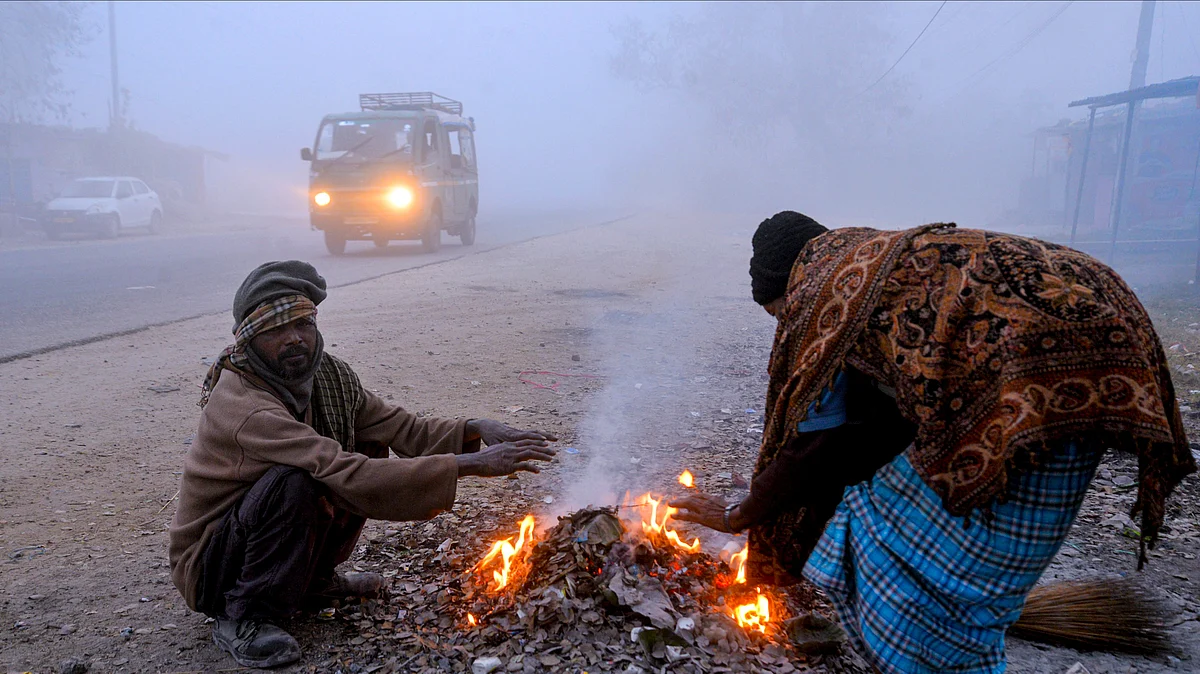
Delhi began Saturday with a sharper winter chill than is typical for early February, as temperatures dipped below seasonal norms and air quality remained under pressure. The combination of cooler conditions and persistent pollution once again highlighted the capital’s vulnerability to wintertime environmental stress, with implications for public health, productivity, and long-term urban resilience.
Early morning readings showed minimum temperatures slipping well below the usual seasonal baseline, while humidity levels remained elevated. Such conditions are known to trap fine particulate matter close to the ground, particularly during overnight and early morning hours. By mid-morning, Delhi air quality was assessed in the ‘poor’ category across large parts of the city, reflecting continued exposure risks for residents despite marginal day-to-day fluctuations. Meteorological forecasts suggest that surface winds are expected to strengthen through the day, pushing afternoon temperatures closer to the mid-twenties. While these winds can temporarily disperse pollutants, environmental experts caution that such improvements are often short-lived and heavily dependent on weather dynamics rather than emission reductions. As a result, Delhi air quality continues to oscillate within unhealthy ranges during winter months.
Urban health researchers note that ‘poor’ air quality levels disproportionately affect outdoor workers, children, and the elderly, especially in neighbourhoods with high traffic density and limited green cover. The uneven distribution of pollution across the city also mirrors broader urban inequalities, where low-income residential clusters often face higher exposure due to proximity to arterial roads and industrial activity. From an infrastructure standpoint, recurring winter pollution episodes underscore the need for coordinated interventions beyond emergency responses. Transport planners have long pointed to vehicle emissions as a dominant contributor during colder months, when thermal inversion limits dispersion. Accelerating the shift to electric public transport, improving pedestrian infrastructure, and strengthening last-mile connectivity are seen as essential to stabilising Delhi air quality over time.
Real estate and construction activity also plays a role. Analysts observe that while regulatory controls on dust emissions have improved, enforcement remains inconsistent across zones. Cleaner construction practices and better site management are increasingly viewed as part of responsible urban development rather than compliance burdens. Despite the seasonal nature of Delhi’s winter pollution, the economic consequences are tangible. Reduced outdoor activity, health-related absenteeism, and pressure on healthcare systems collectively impose costs on the city’s economy.
Business continuity planning for climate-linked disruptions is becoming a growing concern for employers and urban policymakers alike. As temperatures are expected to remain near current levels over the coming days, attention will remain on how effectively the city manages routine pollution without relying on favourable weather. The episode reinforces a familiar lesson: while winter winds may offer temporary relief, long-term improvement in Delhi air quality will depend on sustained policy coordination, cleaner mobility choices, and climate-responsive urban design.
Delhi Winter Chill Persists Amid Pollution Strain