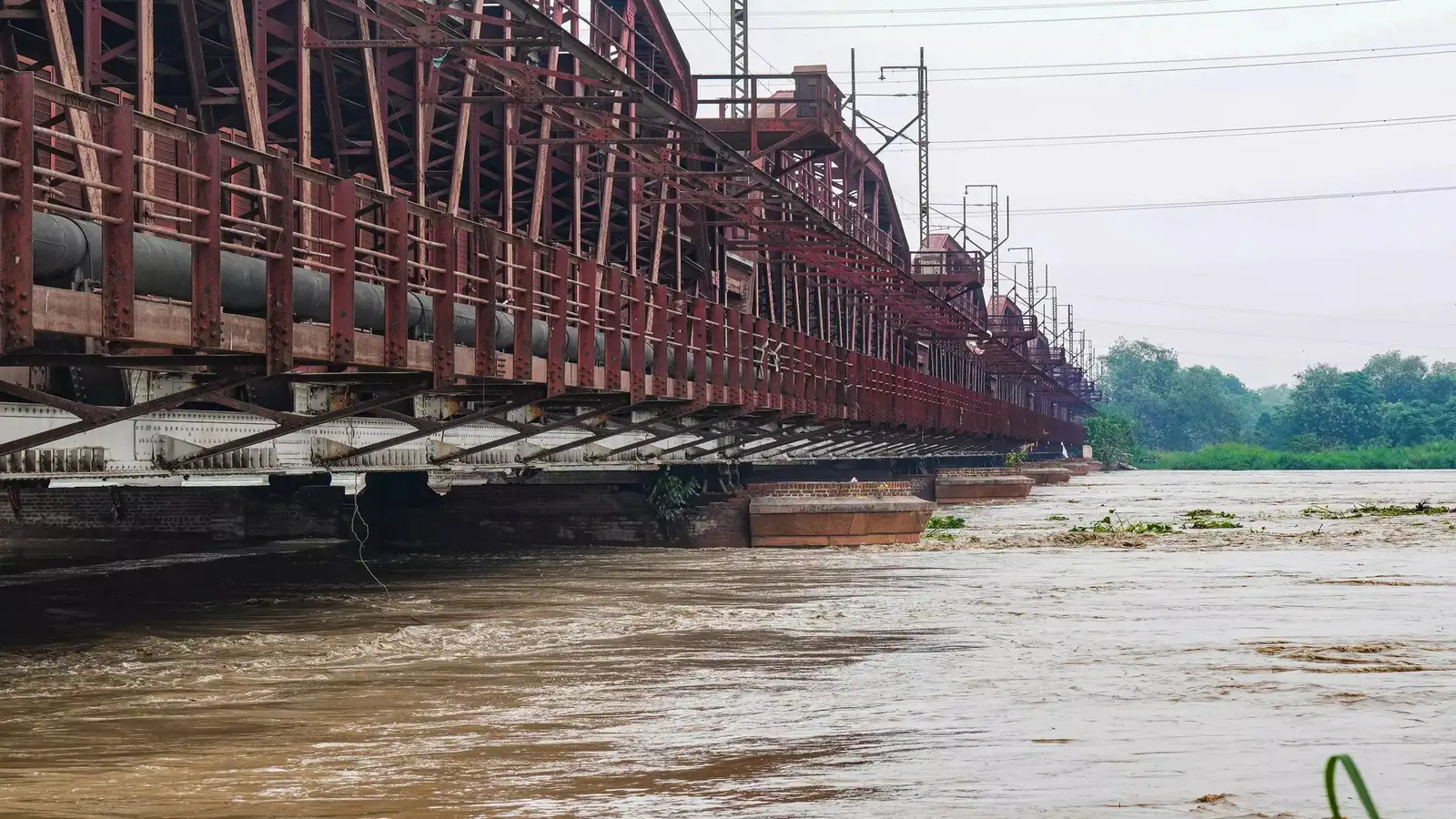
Delhi’s transport planners are evaluating a fresh river-crossing proposal over the Yamuna as mounting traffic pressure from new expressways and regional transit projects begins to test the city’s ageing road network. The plan, still at a concept stage, involves either constructing an additional bridge near the northern river stretch or replacing an existing iron bridge to improve east–west connectivity across the capital.
The assessment is being led by Delhi’s public works authorities following deliberations within the Trans-Yamuna planning framework. Officials involved in the process say the objective is to strengthen links between North East Delhi and the city’s northern and central districts, areas that remain disproportionately affected by congestion despite multiple flyovers and arterial roads. The urgency is being shaped by a convergence of regional infrastructure. With rapid rail corridors, intercity expressways and new urban transport nodes nearing completion, traffic volumes along the Ring Road particularly near Sarai Kale Khan are projected to rise sharply. Urban mobility experts note that several long-distance corridors currently funnel traffic into limited Yamuna crossings, creating choke points that affect daily commuters, freight movement and emergency response times.
Delhi already has more than two dozen bridges spanning the river, serving both rail and road traffic. However, planners argue that many of these crossings were designed for older traffic patterns and lack the capacity or alignment required for today’s mixed mobility demands. The existing iron bridge in the northern stretch, a double-decker structure carrying both trains and vehicles, has increasingly been flagged as a constraint rather than a solution. Under the current proposal, feasibility studies will examine multiple locations along the river corridor, from the Wazirabad stretch in the north to Kalindi Kunj in the south. These studies will analyse traffic flow, land availability, floodplain sensitivity and integration with public transport systems. Officials familiar with the process say environmental impact and river hydrology will be key determinants in deciding whether a new structure is viable or an existing crossing requires replacement.
Urban planners stress that any new Yamuna bridge must go beyond easing vehicular congestion. Integrating bus lanes, non-motorised transport and climate-resilient design will be essential if the project is to align with Delhi’s long-term mobility and sustainability goals. Poorly planned river crossings, experts caution, can lock cities into car-dependent growth patterns and intensify air pollution along riverfront zones. From a real estate and economic perspective, improved cross-river connectivity could rebalance development pressures across eastern Delhi, where housing density is high but job access remains uneven.
Better links may shorten commute times, support local commerce and reduce logistical bottlenecks that currently affect small businesses. For now, the proposal remains under examination, with no final alignment or construction timeline announced. As studies progress, the challenge for Delhi’s planners will be to deliver a solution that improves mobility without compromising the Yamuna’s fragile ecology a test increasingly facing fast-growing metropolitan regions across NCR.
Delhi Weighs New Yamuna Bridge for Traffic Relief