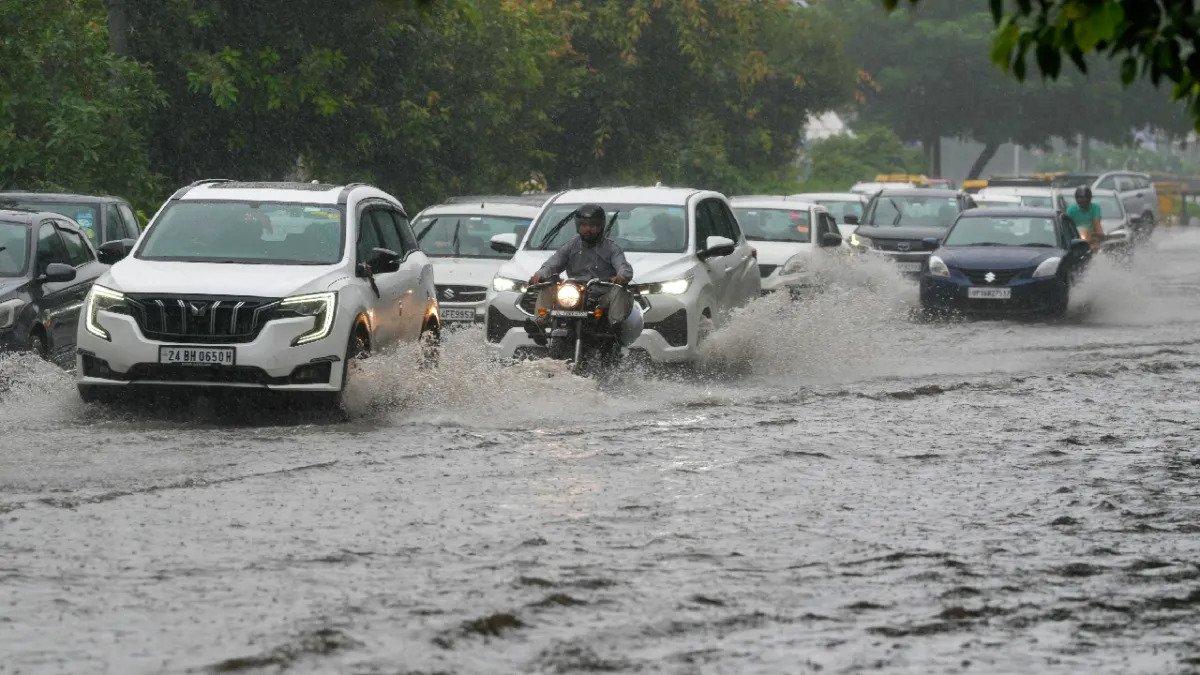
Unseasonal rain and persistent cloud cover brought a sharp drop in temperatures across the national capital region this week, creating the coolest early April conditions in several years while also triggering waterlogging in parts of neighbouring Noida. Meteorological observations show that Delhi recorded unusually low daytime temperatures for this time of year as intermittent showers and dense cloud layers reduced solar heating across the region. The Delhi weather shift offered temporary relief from the early onset of summer heat but also highlighted the growing volatility in seasonal climate patterns affecting large Indian cities.
Data from key monitoring stations across the capital indicate that maximum temperatures remained significantly below the long-term average. The city’s primary observatory recorded a daytime high of around 28 degrees Celsius, which is several degrees lower than the seasonal norm for early April. Other weather stations across the metropolitan area reported similar readings, reflecting a uniform cooling trend triggered by widespread cloud cover and light rainfall. Meteorological agencies attribute the temperature drop to a combination of western disturbances and moisture-laden winds that moved across northern India, bringing scattered rainfall and overcast skies. Rainfall accumulation remained relatively modest across most parts of Delhi, with weather stations recording only a few millimetres of precipitation during the day. Despite the limited rainfall totals, prolonged cloud cover significantly suppressed daytime heating. Neighbouring cities experienced more visible impacts. In parts of Noida, localised flooding and water accumulation were reported on several roads following heavy showers, disrupting traffic movement during peak hours. Urban planners note that such flooding events often occur when short bursts of rainfall overwhelm stormwater drainage networks in rapidly urbanising areas.
The recent Delhi weather pattern also had a noticeable impact on air quality conditions across the region. Rainfall helped reduce airborne dust and suspended particulate matter, temporarily improving atmospheric clarity. Monitoring data from pollution control authorities indicated that the city’s air quality remained in the moderate category, suggesting that precipitation helped wash pollutants from the air. Urban climate researchers say such sudden shifts in temperature and rainfall patterns are becoming more common in northern India due to broader climate variability. Seasonal transitions between winter and summer are increasingly marked by abrupt weather fluctuations, including unexpected rainfall, thunderstorms and temporary cooling periods. For large metropolitan regions such as Delhi, these changes carry implications beyond comfort levels. Sudden rainfall events can strain drainage infrastructure, disrupt traffic systems and expose vulnerabilities in urban planning. Cities experiencing rapid expansion often struggle to upgrade stormwater networks at the same pace as construction and population growth.
Meteorological forecasts suggest that cloudy conditions and light rain may continue for another day before temperatures begin rising again later in the week. While the cooler spell may offer brief relief from the summer heat, urban experts note that long-term resilience will depend on better climate-sensitive infrastructure planning, including improved drainage, heat mitigation strategies and more climate-responsive urban design.