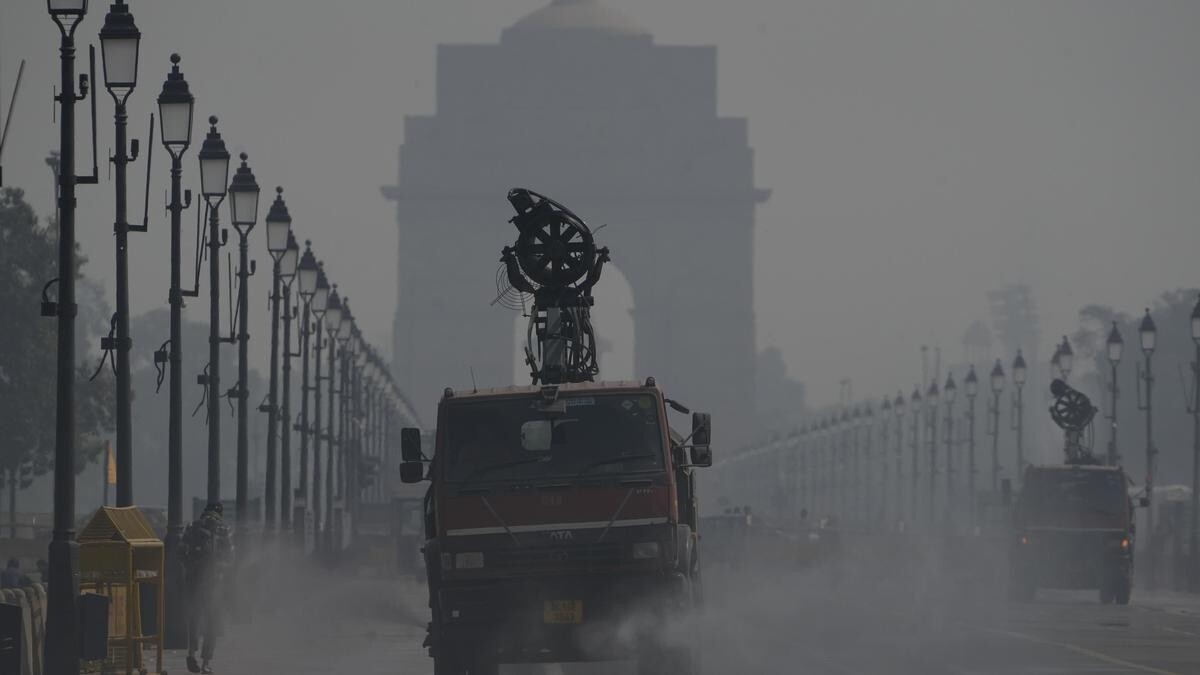
A brief spell of cloud cover and light rainfall has brought temporary relief to residents across Delhi-NCR, easing temperatures and improving air quality levels in the region. The Delhi weather shift, marked by cooler conditions and moderate winds, underscores the strong link between meteorological patterns and urban air pollution in one of India’s most densely populated metropolitan areas. Weather data indicates that daytime temperatures have dipped below seasonal averages, while early morning readings also remained relatively mild. Increased humidity and cloud formation contributed to a more comfortable environment, with intermittent drizzle expected to persist through parts of the day. Wind speeds in the range of 20–25 km per hour have further aided the dispersion of airborne pollutants.
The most immediate impact of the Delhi weather shift has been observed in air quality indicators. Pollution levels across the capital and surrounding NCR cities have moved into the moderate category, with Air Quality Index (AQI) readings hovering between 120 and 140 in several urban centres. While still above ideal levels, this marks a noticeable improvement compared to the higher pollution bands frequently recorded during dry and stagnant conditions. Environmental experts note that such fluctuations highlight the seasonal vulnerability of Delhi’s air quality. Rainfall helps remove particulate matter from the atmosphere, while wind currents prevent accumulation of pollutants near the surface. However, these gains are often short-lived, as underlying emission sources—including vehicular traffic, construction activity, and industrial output—continue to exert pressure on air quality.
From an urban planning perspective, the episode reinforces the need for structural interventions rather than reliance on favourable weather conditions. Cleaner mobility systems, dust control measures, and green infrastructure remain central to achieving sustained improvements. Planners argue that integrating climate-responsive design into city development—such as increasing urban green cover and promoting low-emission transport—can help mitigate the impact of pollution over the long term. The Delhi weather shift also has implications for public health and daily life. Lower pollution levels can reduce respiratory stress, particularly for vulnerable groups such as children and the elderly. At the same time, cooler temperatures and improved air quality tend to encourage outdoor activity, influencing urban mobility patterns and public space usage.
Looking ahead, forecasts suggest that the current conditions may persist briefly before temperatures begin to rise again. This cyclical pattern highlights the importance of continuous monitoring and adaptive policy responses. As Delhi navigates the dual challenges of climate variability and urban pollution, short-term weather relief serves as a reminder of the broader structural changes required to build a cleaner, healthier, and more resilient city environment.