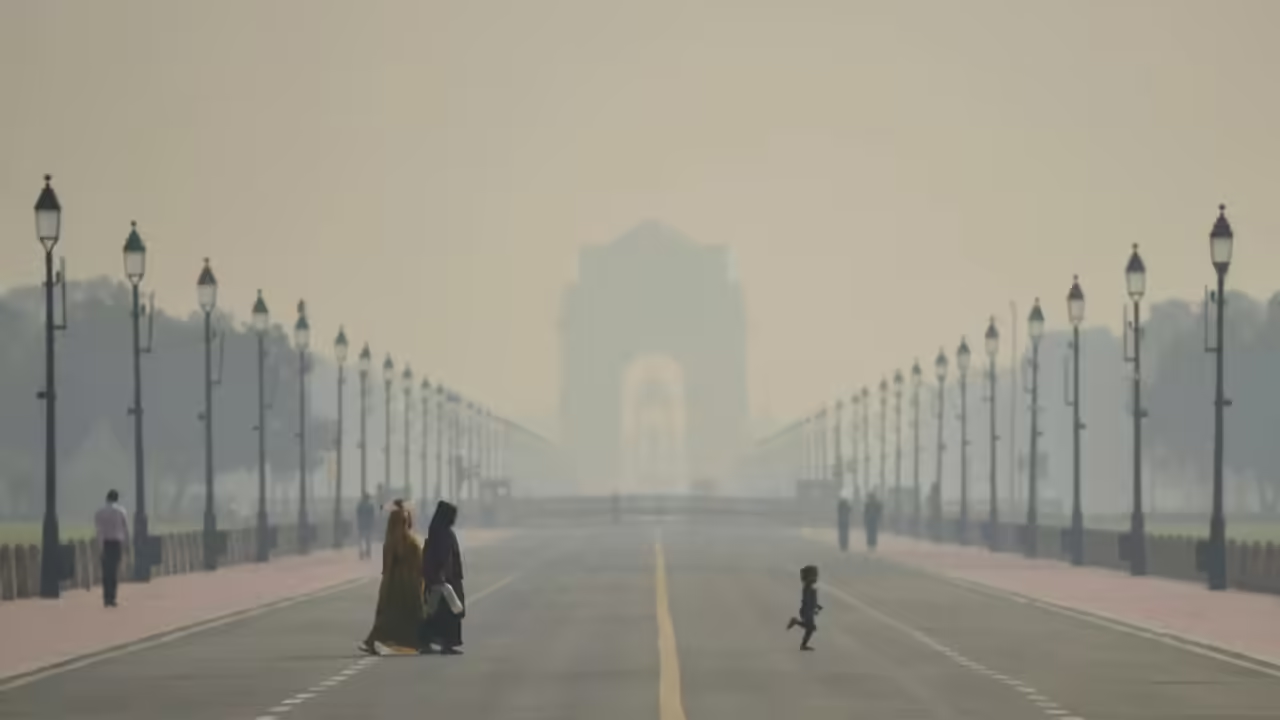
Delhi experienced a brief but notable improvement in air quality on Saturday as stronger surface winds dispersed pollutants across the National Capital Region, offering residents a clearer winter morning. While no rainfall is expected, the weather shift highlights how short-term climatic conditions continue to play a decisive role in the city’s environmental health underscoring the fragile balance between meteorology, infrastructure planning, and public well-being.
Early morning temperatures hovered in the low-teens, typical for early February, with visibility levels remaining stable across the city’s aviation and transport corridors. Weather agencies indicated largely clear skies through the day, accompanied by brisk winds reaching up to 25 kilometres per hour. These winds contributed to improved dispersion of particulate matter, nudging the citywide Air Quality Index (AQI) marginally lower compared to the previous day. Despite this temporary relief, Delhi’s air quality remained within the ‘poor’ category at several monitoring locations, with pollution levels varying sharply across districts. Peripheral and densely populated residential zones continued to record higher AQI readings, reflecting persistent localised emissions from traffic congestion, construction activity, and domestic fuel use. Transport hubs and low-density zones showed comparatively better readings, reinforcing the uneven exposure risks faced by urban residents.
Urban climate experts note that such episodic improvements, driven largely by wind patterns rather than emission reductions, should not be mistaken for structural progress. “Meteorology can dilute pollution temporarily, but it cannot substitute long-term air quality management,” an urban environmental planner said, pointing to the need for integrated land-use planning and cleaner mobility systems. The weather outlook for the coming days suggests stable temperatures with intermittent morning mist, offering little likelihood of rainfall that could otherwise help wash out airborne pollutants. Meanwhile, approaching western weather systems are expected to impact the Himalayan region rather than the plains, limiting their influence on Delhi’s air shed.
From an urban development perspective, the episode reinforces the importance of climate-responsive city design. Compact neighbourhoods with poor ventilation, limited green buffers, and high construction density are particularly vulnerable during stagnant weather phases. As Delhi continues to expand vertically and outward, planners are increasingly emphasising wind corridors, urban forests, and low-emission building practices to reduce pollution exposure.
For households and businesses, the short-term improvement offers modest respite but little predictability. Public health specialists continue to advise caution for vulnerable populations, especially during early morning hours when residual pollutants can remain trapped close to the ground. As Delhi transitions toward spring, policymakers face a narrow window to convert seasonal atmospheric advantages into lasting gains. Without sustained investments in clean transport, decentralised energy, and climate-resilient infrastructure, the city’s air quality will remain at the mercy of shifting winds rather than deliberate urban strategy.
Delhi Weather Shift Eases Pollution Pressures