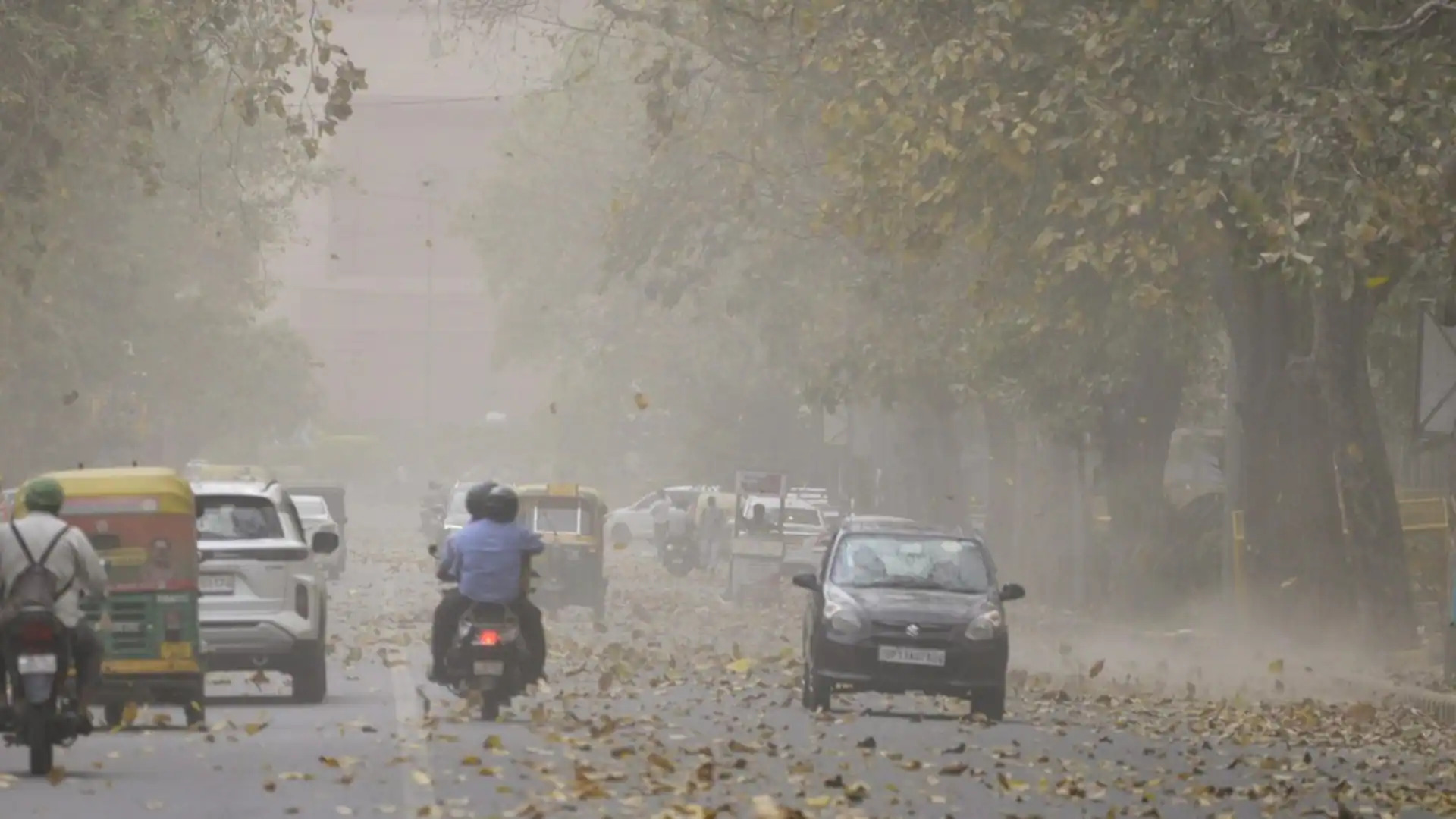
Delhi Weather Forecast Brings Calm While Storms Hit India
Delhi is expected to experience relatively stable weather conditions even as several regions across India face severe atmospheric disturbances, including hailstorms, thunderstorms and powerful wind squalls. Meteorological forecasts indicate that while parts of eastern and northern India prepare for disruptive weather events, the national capital is likely to remain largely unaffected for now. According to the latest Delhi weather forecast, the city will see partly cloudy skies accompanied by moderate temperatures and gentle winds. Daytime temperatures are expected to remain in the mid-thirties Celsius range, while night-time readings could stay below the seasonal average, offering residents a comparatively comfortable start to the week.
In contrast, other regions across the country are bracing for intense weather activity triggered by broader atmospheric instability. Forecasts suggest that eastern states including parts of central and northeastern India may experience hailstorms, which can damage crops, disrupt transport and affect power infrastructure. Such events often occur when strong updrafts in thunderstorms lift moisture high into the atmosphere where it freezes before falling as hail. Meanwhile, western desert regions are likely to face thundersqualls — sudden bursts of strong winds that accompany thunderstorms. These gusty winds can reach high speeds and may temporarily disrupt transport operations, damage lightweight structures or bring down trees in vulnerable areas. Hill states in the Himalayan region are also expected to witness scattered rainfall accompanied by lightning activity. In these mountainous areas, thunderstorms frequently develop when moisture-laden winds interact with terrain, leading to short but intense spells of precipitation. Plains in northern India could experience isolated showers and gusty winds as part of the same weather system.
Despite these developments, the Delhi weather forecast indicates relatively calm atmospheric conditions in the capital. Winds are expected to remain light, moving from the west at modest speeds that help maintain comfortable conditions without triggering significant weather events. Urban climate specialists say such contrasts in regional weather patterns are not unusual during seasonal transitions. As winter weather systems weaken and summer heat begins building across the subcontinent, different regions often experience sharply varying conditions ranging from storms to calm skies within short distances. For large metropolitan regions like Delhi, stable weather periods can offer temporary relief from extreme temperature fluctuations while also supporting routine urban activities. Mild winds and moderate temperatures are particularly beneficial for outdoor work, transport operations and construction activity that often slows during severe weather. Meteorologists also note that broader temperature trends across northwestern and central parts of India could gradually rise in the coming days as skies clear after passing disturbances. However, forecasts suggest that temperatures are likely to remain near or slightly below seasonal averages for much of the week, reducing the immediate risk of early heatwave conditions.
Across the country, weather variability continues to highlight the increasing importance of climate monitoring systems for urban planning and infrastructure resilience. For now, residents in the national capital are likely to experience a relatively calm window of weather even as other parts of India navigate more turbulent atmospheric conditions.