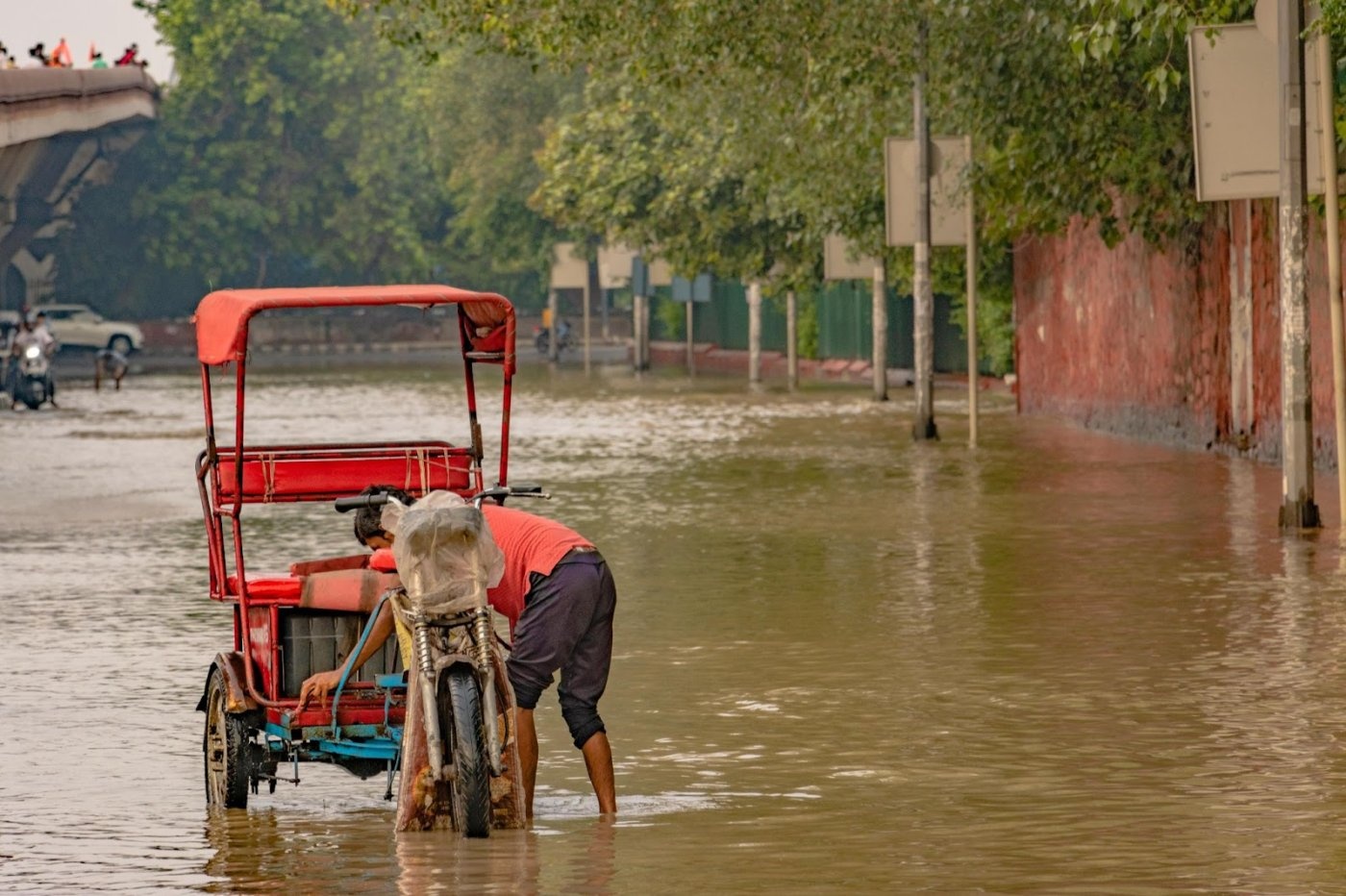
Delhi Weather Extremes Disrupt Infrastructure And Daily Life
A sharp swing from record-breaking heat to unseasonal rainfall within days has placed Delhi’s urban systems under stress, underscoring how climate volatility is beginning to reshape planning priorities in the national capital. The city experienced one of its hottest early March spells in decades, followed almost immediately by persistent rainfall that pushed monthly precipitation close to seasonal averages. Meteorological data indicates that temperatures crossed 35°C during early March, before a sudden shift brought thunderstorms and steady rain. Within a span of less than two weeks, the city moved from heatwave-like conditions to one of its wettest March periods in recent years. Officials monitoring weather patterns attribute the shift to interacting western disturbances and changing atmospheric circulation patterns across northern India.
For urban planners, this emerging pattern of Delhi weather extremes presents a growing challenge. Heat stress and sudden rainfall events require different—and often conflicting—responses in infrastructure design. While high temperatures strain power demand, water supply and public health systems, intense short-duration rainfall exposes gaps in drainage networks and flood preparedness. Urban development experts note that such rapid fluctuations highlight the limitations of conventional planning models that rely on historical climate data. “Cities are now dealing with compressed weather cycles, where extreme heat and heavy rainfall occur in quick succession. Infrastructure must be flexible enough to handle both,” said an urban climate researcher involved in resilience planning. The impact is particularly visible in mobility and public infrastructure. Sudden rain spells can disrupt traffic flows, damage road surfaces, and overwhelm stormwater drains—many of which are already operating at capacity. At the same time, prolonged heat events contribute to surface degradation and increase maintenance costs across transport networks.
From an environmental standpoint, the rainfall has offered short-term relief by lowering temperatures and improving air quality. However, experts caution that such episodic benefits do not offset long-term risks associated with erratic climate behaviour. Inconsistent rainfall patterns can also complicate groundwater recharge cycles, affecting water security in a city already facing seasonal shortages. The phenomenon is also influencing real estate and building design. Developers are increasingly being pushed to adopt climate-responsive architecture, including better insulation, heat-resistant materials, and improved rainwater harvesting systems. Green building standards and urban forestry initiatives are gaining attention as tools to moderate microclimates and reduce vulnerability. Public agencies are now under pressure to align infrastructure investments with these evolving risks. This includes upgrading drainage systems, integrating heat action plans, and expanding green cover to mitigate urban heat island effects. Climate-resilient planning is gradually shifting from a policy aspiration to an operational necessity.
As Delhi continues to face unpredictable weather cycles, the focus is likely to move towards adaptive infrastructure that can respond to both extremes—intense heat and sudden rainfall—within the same season. How effectively the city integrates these lessons into its planning frameworks will determine its ability to safeguard public health, infrastructure, and economic activity in the years ahead.