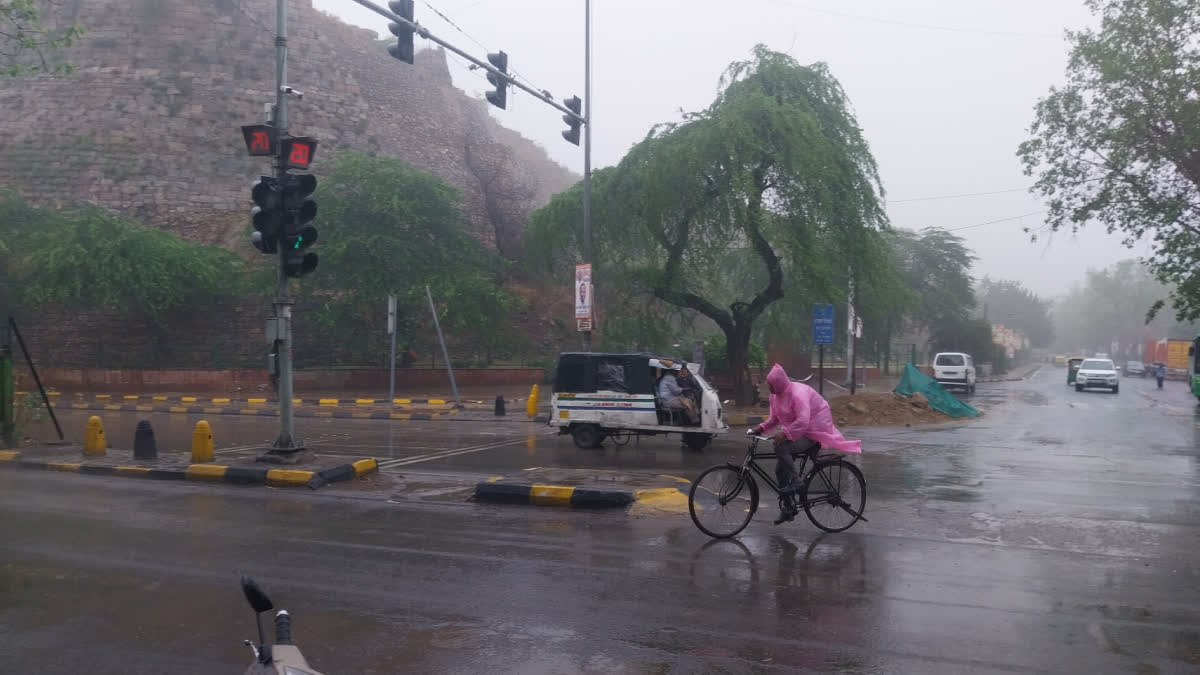
Delhi Weather Alert Signals Shift In Urban Climate Patterns
A fresh weather alert for light rainfall across Delhi on Sunday has drawn attention to the growing intersection of urban climate variability, air quality, and city resilience, as authorities caution residents about changing atmospheric conditions in the national capital. The India Meteorological Department has forecast light precipitation accompanied by gusty winds later in the day, with temperatures expected to remain above seasonal norms. While such intermittent showers may offer short-term relief from heat and dust, urban planners note that these events increasingly reflect broader shifts in Delhi’s climate behaviour, where erratic rainfall patterns are becoming more frequent.
The Delhi weather alert comes at a time when the city’s air quality remains in the ‘moderate’ category, with an Air Quality Index hovering below the ‘poor’ threshold. Environmental analysts suggest that even light rainfall can temporarily reduce particulate matter levels, but the relief is often short-lived in the absence of sustained emission control measures. Experts point out that Delhi’s built environment—characterised by dense construction, limited green cover, and high vehicular emissions—amplifies the effects of such weather fluctuations. Sudden changes in humidity and wind speed can influence pollutant dispersion, while also exposing gaps in urban infrastructure, particularly drainage systems and heat mitigation strategies. From a civic perspective, these weather advisories are no longer routine updates but signals of a shifting urban climate system. A senior urban planner noted that short-duration rainfall events, when combined with rising temperatures, are consistent with patterns observed in climate-stressed cities. This places additional pressure on infrastructure designed for more predictable seasonal cycles.
The implications extend beyond immediate weather conditions. For transport systems, even light showers during peak hours can disrupt traffic flow and increase commute times, particularly in areas with inadequate stormwater management. For informal workers and outdoor labourers, fluctuating weather conditions can affect daily earnings and workplace safety. At the same time, the Delhi weather alert highlights the need for integrated urban responses that combine climate adaptation with environmental management. Measures such as expanding urban green spaces, improving drainage networks, and strengthening real-time air quality monitoring are increasingly seen as essential components of resilient city planning. Urban policy experts also emphasise the importance of aligning weather forecasting with public communication systems. Timely advisories, coupled with localised preparedness measures, can help reduce disruption and improve citizen response to changing conditions.
As Delhi continues to navigate the dual challenges of air pollution and climate variability, such weather events underscore the urgency of building systems that are not only responsive but also anticipatory. The focus is gradually shifting from managing isolated incidents to planning for long-term urban resilience in the face of an evolving climate reality.