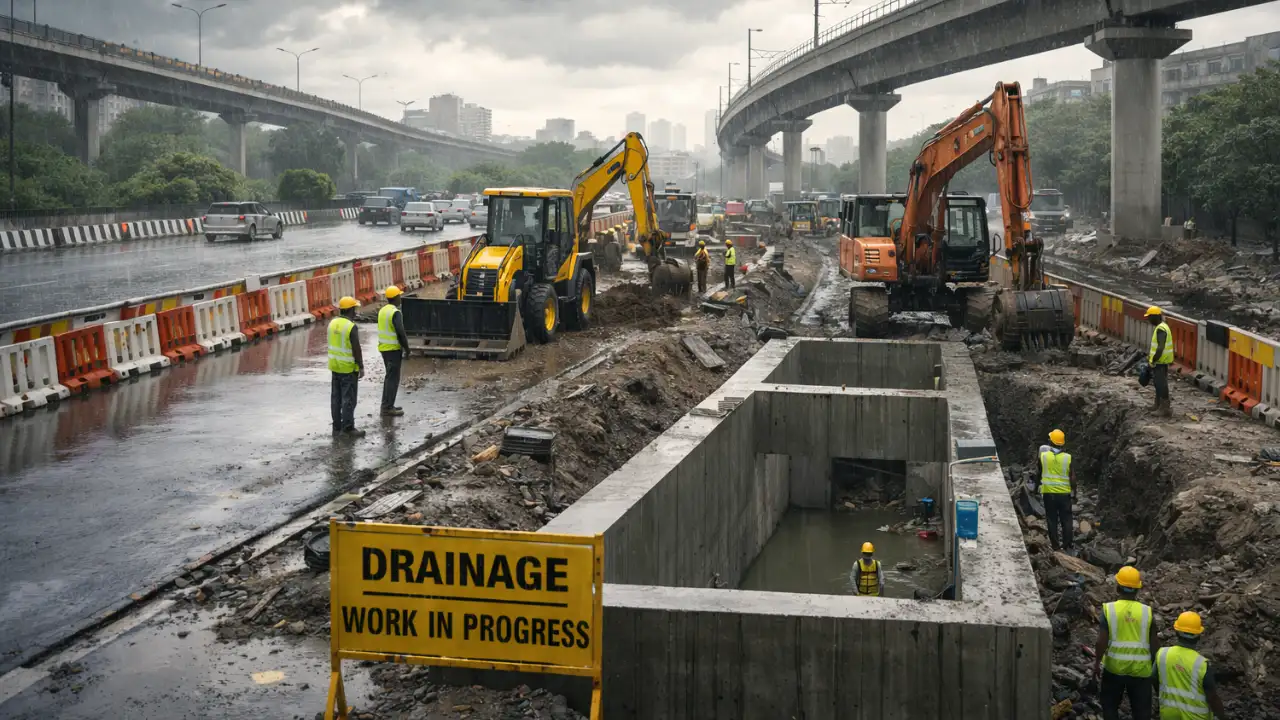
Delhi has begun a large-scale overhaul of its stormwater drainage network, signalling a structural shift in how the capital addresses chronic monsoon flooding. Four major trunk drain projects across west, south and north-west Delhi are being advanced under a revised Drainage Master Plan, reflecting an attempt to align urban infrastructure with climate risks, population growth and decades of underinvestment.
The initiative focuses on expanding the city’s primary drainage arteries systems designed to carry rainwater safely to the Yamuna without overloading sewer lines or flooding streets. For residents and businesses in repeatedly waterlogged neighbourhoods, the programme has implications beyond inconvenience, affecting mobility, property values, public health and local economic activity during the monsoon months. Urban planners note that Delhi’s drainage framework was last comprehensively designed more than four decades ago, when the city’s built footprint and rainfall patterns were vastly different. Since then, dense construction, shrinking open land and changing climate conditions have pushed legacy systems beyond capacity. The current intervention aims to correct that mismatch by increasing discharge capacity and integrating fragmented secondary drains into unified corridors.
One of the most significant projects is a new trunk drain planned along a railway alignment in west Delhi, intended to serve fast-growing residential and industrial pockets. Designed to carry runoff from over 1,500 acres, the drain is expected to relieve pressure on local sewer networks that routinely fail during peak rainfall. Officials involved in planning say routing the infrastructure along transport corridors reduces land acquisition risks and speeds execution. In south Delhi, a long flood-prone arterial road is being retrofitted with a continuous stormwater drainage system on both sides. This corridor has seen repeated service disruptions due to inadequate and damaged drains, often worsened by utility works. The redesign incorporates coordinated shifting of services, pedestrian infrastructure and tree management, highlighting the complexity of rebuilding drainage in fully developed urban areas.
Another trunk drain connecting north-western neighbourhoods is being revived after regulatory delays stalled construction. Once completed, it will significantly raise drainage capacity in an area that has seen rapid population growth but limited infrastructure upgrades. Urban infrastructure specialists say resolving environmental clearances early will be key to preventing future project bottlenecks.
Along a major national highway corridor, drain improvement works are being fast-tracked with partial central funding support. This stretch functions as both a mobility spine and an economic corridor, and flooding here has historically disrupted freight movement and daily commuting.
Beyond individual projects, the broader Delhi Drainage Master Plan reflects a more systems-based approach. The emphasis is on separating stormwater from sewage, reducing surface flooding, and ensuring predictable discharge into natural water bodies. Climate resilience has become a central design consideration, with planners factoring in more intense rainfall events. For Delhi’s real estate markets and neighbourhood economies, reliable drainage is foundational infrastructure. As execution gathers pace, the success of the programme will depend on inter-agency coordination, maintenance planning and transparency in timelines factors that will determine whether these investments translate into lasting urban resilience.
Delhi Waterlogging Plan Focuses On Trunk Drains