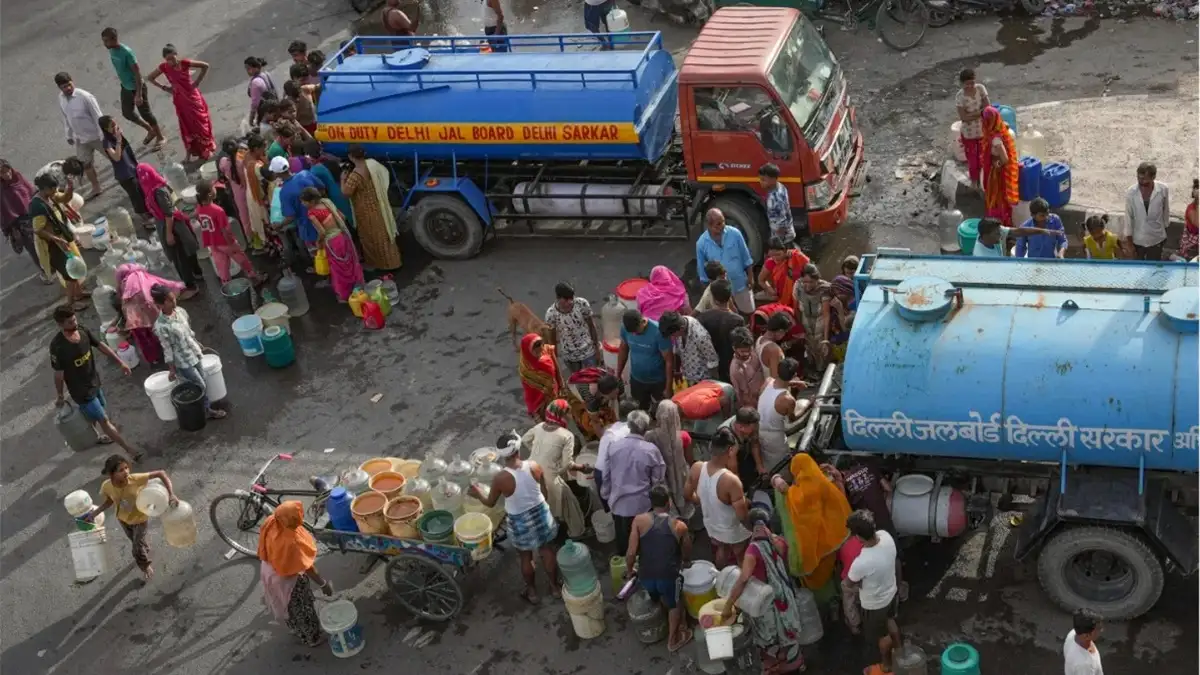
Delhi Water Supply Maintenance Affects Multiple Areas
Parts of the national capital are expected to experience temporary service interruptions as routine maintenance of the city’s distribution network begins, with authorities confirming that Delhi water supply will be affected during scheduled flushing operations at several underground reservoirs and booster pumping stations. The maintenance exercise forms part of an annual programme undertaken by the city’s water utility to clear accumulated sediment and ensure the continued efficiency of the distribution system. While essential for maintaining water quality and system performance, the operation is expected to cause short-term disruptions in a number of residential neighbourhoods across the capital.
According to officials involved in water network management, the flushing process involves draining and cleaning underground reservoirs that store treated water before it is pumped into local supply pipelines. These reservoirs play a critical role in maintaining water pressure and ensuring consistent delivery across urban districts. As the reservoirs are temporarily taken offline for cleaning, the Delhi water supply in surrounding areas may experience reduced pressure or intermittent availability. Several residential pockets in western and north-western Delhi are expected to see the most immediate impact during the maintenance window. Housing complexes and neighbourhoods dependent on nearby booster stations could face temporary shortages as water distribution is paused for the cleaning cycle. Urban water experts note that such periodic maintenance is vital in large metropolitan systems where ageing infrastructure and high population density place considerable pressure on distribution networks. Sediment accumulation within reservoirs and pipelines can reduce storage efficiency and compromise water quality if left unaddressed.
Routine flushing programmes are therefore considered a preventive measure aimed at preserving infrastructure reliability. By removing silt deposits and residues from storage units, utilities can improve water flow and extend the operational life of pumping equipment. However, temporary supply interruptions also highlight the broader challenges associated with managing Delhi water supply in a rapidly growing megacity. The capital relies on an extensive network of reservoirs, pumping stations and pipelines to distribute treated water across millions of households. Maintaining this infrastructure while meeting rising urban demand requires continuous investment in upgrades, monitoring systems and distribution efficiency. To reduce inconvenience during the maintenance work, the water utility has advised residents in affected areas to store adequate water in advance. Authorities have also indicated that emergency tanker services will be deployed if required to support neighbourhoods experiencing prolonged supply disruptions. Urban planners emphasise that strengthening water infrastructure will remain a key component of building climate-resilient cities. Reliable water systems are essential not only for households but also for healthcare facilities, commercial districts and urban economies.
As Delhi continues to expand, experts say routine maintenance programmes like reservoir flushing will remain an important tool in safeguarding public water systems. Ensuring consistent Delhi water supply will depend on both proactive infrastructure upkeep and long-term investments in modernising urban water distribution networks.