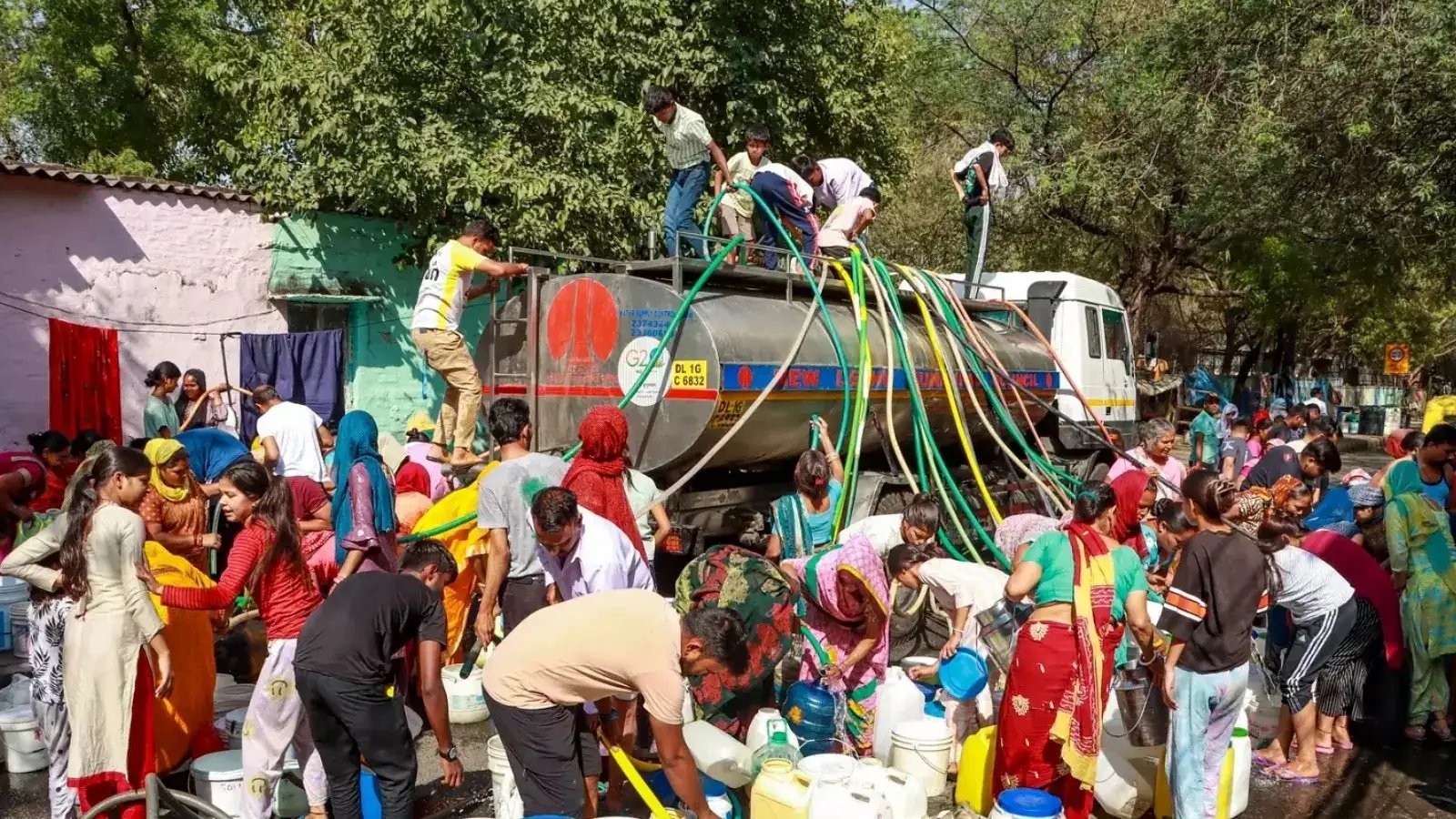
A prolonged disruption in piped water supply across central parts of Delhi has highlighted the fragility of the city’s urban utilities, after a key treatment facility was partially knocked out by infrastructure failure earlier this week. The incident has affected thousands of households and businesses, underlining the growing pressure on ageing water systems in a rapidly expanding metropolis. The disruption stems from operational setbacks at a major treatment plant in north Delhi, where flooding in a pump house—triggered by a pipeline rupture—forced a partial shutdown. While emergency restoration measures have enabled limited operations, supply to several dense neighbourhoods has remained inconsistent for days. Authorities indicate that full service restoration is expected once electrical systems are stabilized and safety checks are completed.
For residents, the impact has been immediate and severe. Localities in central Delhi, characterized by mixed-use development and high population density, have reported acute shortages, forcing households to rely on private tanker services and bottled water. Urban planners note that such disruptions disproportionately affect lower- and middle-income groups, who often lack access to alternative water sources or storage capacity. The episode also exposes structural vulnerabilities in Delhi’s water distribution network. Experts point out that legacy infrastructure—much of it decades old—faces mounting stress due to population growth, unplanned urbanization and climate variability. Flooding of critical installations during pipeline failures suggests gaps in system design, particularly in resilience planning and risk mitigation. Officials involved in the recovery process have indicated that multiple pump units are gradually being brought back online to restore capacity.
However, the incident has prompted renewed calls for systemic upgrades, including redundancy in key installations, better flood-proofing of pump houses, and real-time monitoring of pipeline health. Beyond immediate repairs, the disruption has broader implications for urban governance. Analysts emphasize the need for integrated water management strategies that align infrastructure investments with climate resilience goals. With rising instances of extreme weather and infrastructure stress, cities like Delhi must transition from reactive maintenance to predictive and adaptive systems. The crisis also highlights the importance of communication and service accountability. Residents reported limited clarity on restoration timelines, pointing to the need for more responsive grievance systems and transparent public updates during service disruptions.
As supply stabilizes, attention is likely to shift toward long-term reforms. Strengthening water infrastructure, improving operational resilience and ensuring equitable access will be central to preventing similar disruptions in the future. For a city striving to balance growth with sustainability, the incident serves as a reminder that reliable basic services remain foundational to urban liveability.