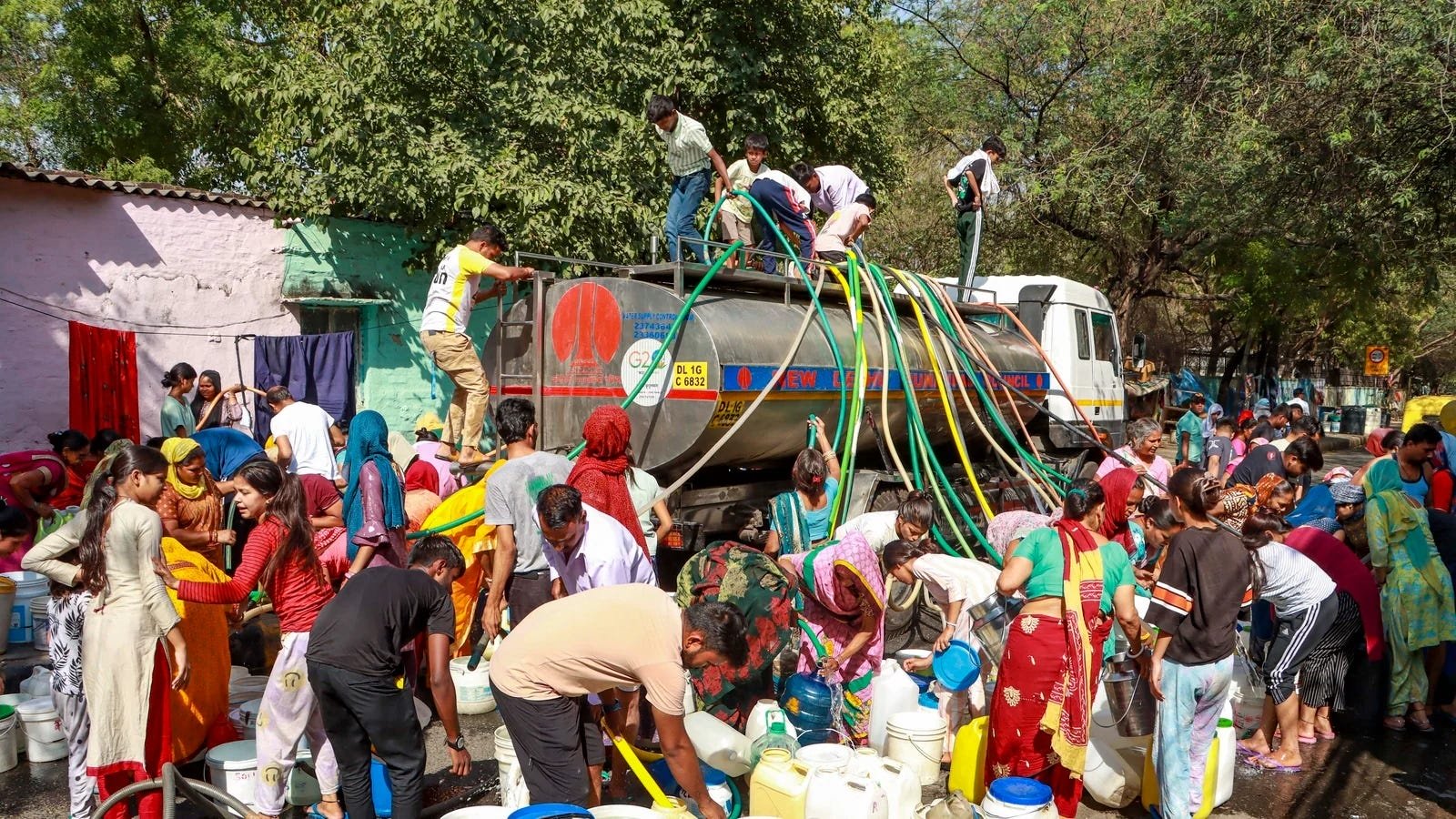
Delhi Water Project Delays Raise Oversight Concerns
Delays in key water infrastructure projects in Delhi have prompted a parliamentary review panel to call for tighter oversight and financial reassessment, highlighting risks to service delivery in one of India’s most water-stressed urban regions. The findings underline how execution bottlenecks and funding gaps could affect long-term urban resilience and equitable access to essential utilities. According to officials familiar with the review, progress on a major water treatment facility in the Chandrawal area—designed to significantly augment potable water capacity—has been uneven despite nearing completion. Parallel efforts to upgrade distribution networks across parts of the city have also seen timeline slippages, raising concerns about system efficiency and last-mile delivery.
Urban infrastructure experts note that such delays are not isolated but reflect systemic challenges in large-scale utility projects, including land constraints, legacy pipeline networks, and coordination across agencies. In a city where demand continues to rise due to population growth and real estate expansion, timely execution of water projects is closely linked to housing viability, public health, and economic productivity. A central issue flagged in the review is the mismatch between projected expenditure requirements and budgetary allocation for the upcoming financial year. Estimates submitted by the city administration indicate a substantially higher funding need than what has been provisioned. Analysts suggest that this divergence could slow capital-intensive works such as treatment capacity expansion and network modernisation, potentially leading to cost escalations over time. The parliamentary panel has advised more frequent progress tracking mechanisms, with coordination between the Union government and the local administration. Such monitoring, experts argue, can help identify execution risks early, streamline fund utilisation, and reduce the likelihood of overruns—an issue that has historically affected urban infrastructure delivery across Indian metros.
Beyond timelines and budgets, the implications extend to sustainability. Modern water treatment plants and efficient distribution systems are central to reducing non-revenue water losses, lowering energy consumption, and supporting climate-resilient urban planning. Delayed commissioning of such assets can prolong reliance on inefficient systems, increasing both environmental and economic costs. From a real estate perspective, reliable water supply remains a critical determinant of urban liveability and investment attractiveness. Developers and housing markets depend on predictable infrastructure upgrades to sustain growth, particularly in peripheral and high-density zones where supply gaps are more pronounced. The panel has also emphasised the need to ensure that allocated funds are fully utilised within the financial cycle, pointing to underutilisation as a recurring governance challenge. Strengthening financial planning and aligning it with on-ground execution capacity will be essential to avoid project stagnation.
As Delhi continues to expand, the effectiveness of its water infrastructure strategy will hinge on bridging funding gaps, improving project management, and ensuring accountability across agencies. The coming fiscal cycle is likely to test whether these recommendations translate into measurable improvements in delivery timelines and service outcomes.