


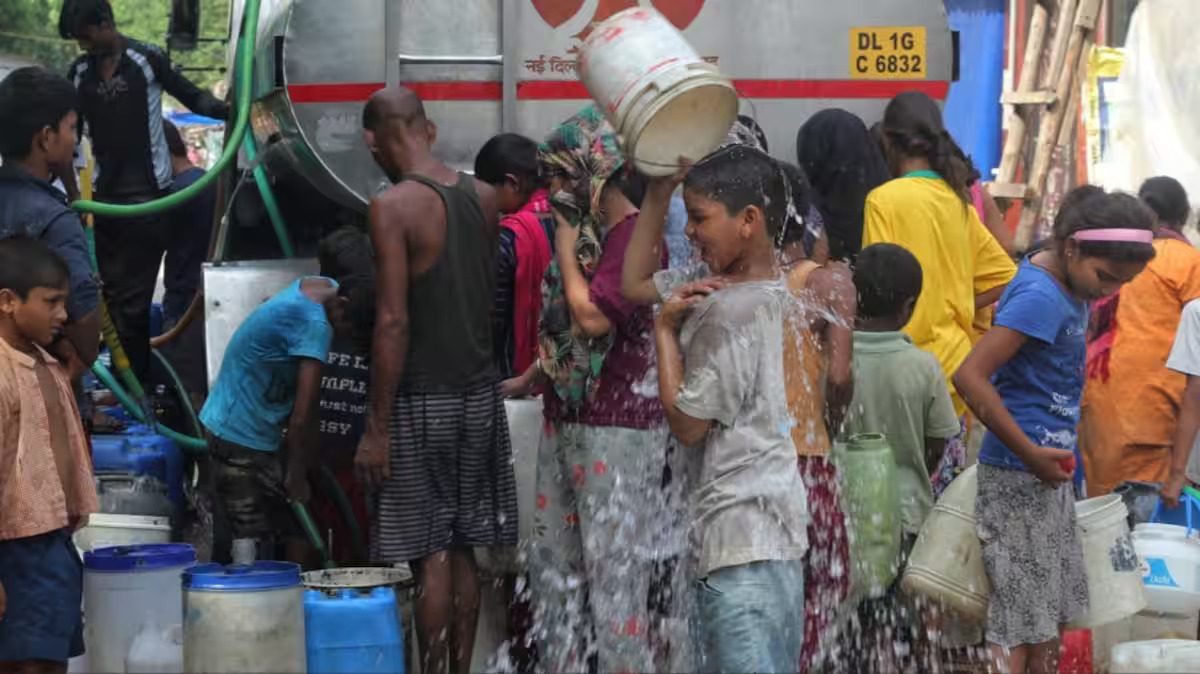
Delhi residents are bracing for significant disruptions to their fresh water supply on May 31 and June 1, as the Delhi Jal Board (DJB) undertakes critical maintenance and repair work on its main water pipelines.
This planned interruption, affecting large swathes of South and New Delhi, underscores the ongoing challenges in maintaining and upgrading a sprawling urban water infrastructure vital for a burgeoning metropolis. Beyond the immediate inconvenience, this event highlights the imperative for robust and resilient urban water management systems to ensure equitable access to this fundamental resource, a cornerstone for building truly sustainable and liveable cities amidst a changing climate.
The core of the current disruption stems from the DJB’s intensive efforts to upgrade and extend the 900 mm Kilokari main pipe. This intricate operation necessitates the temporary blockage of Drain No. 12 near Hans Bhawan at ITO. Consequently, the water supply from the Wazirabad Water Treatment Plant, a crucial source with a capacity of 40 Million Gallons per Day (MGD), will be directly impacted. This technical necessity means several key areas will experience either a complete cessation or significantly reduced water pressure during the stipulated maintenance period, underscoring the delicate balance between urban development and essential utility services. Among the prominent areas slated to face this temporary water supply disruption are historically significant and densely populated localities. These include Majnu ka Tilla, the bustling Rajghat precinct, the legislative hub of Vidhan Sabha, the entire NDMC Zone, the administrative complex of Hans Bhawan, CGO Complex, the historic Nizamuddin area, the upscale Defence Colony, and the commercially vibrant South Extension, along with its adjacent neighbourhoods. The sheer geographic spread of these affected zones underscores the extensive nature of the maintenance work and its far-reaching implications across the city’s complex water distribution network.
Further complicating the situation, communities connected to the Mehrauli network in South Delhi will also experience parallel water supply cuts. This is attributed to the critical task of integrating a new 1,000 mm pipeline at four strategic points within the Deer Park pumping station. The affected areas within this network include the Mehrauli Township, Begumpur, Kalu Sarai, Sarvodaya Enclave, Vijay Mandal DDA Flats, Azad Apartments, Adchini, Katwaria Sarai Village, and the academic hub of Qutub Institutional Area. These zones are served by the Malviya Nagar Water Services (MNWS) network, a public-private partnership with Suez that has been in operation since 2013, highlighting the multi-layered governance of Delhi’s water infrastructure. The DJB has explicitly warned residents that “The water supply will not be available or will be at low pressure on the evening of May 31 and the morning of June 1.” To mitigate the unavoidable impact of these essential disruptions, the DJB has proactively provided helpline numbers, enabling residents to request emergency water tankers. These crucial contact points include the Central Control Room at 1916 / 23527679 / 23634469 / 9650291021, the Vasant Kunj Zone at 26137216, and the Malviya Nagar Water Services (Suez) at 8427312731. While these measures offer a temporary reprieve, the recurrent nature of such disruptions underscores the critical need for long-term strategic planning in Delhi’s water sector. This includes investing in smart water grids, promoting water conservation among citizens, and ensuring robust infrastructure that minimises wastage and maximises equitable distribution.
Such concerted efforts are vital for securing Delhi’s water future, particularly as the city continues to expand and face the dual pressures of climate change and rapid urbanisation, ensuring water security for all its inhabitants in a truly sustainable manner.
Also Read : Bengaluru Battles Monsoon New Flood Gear Sparks Debate
