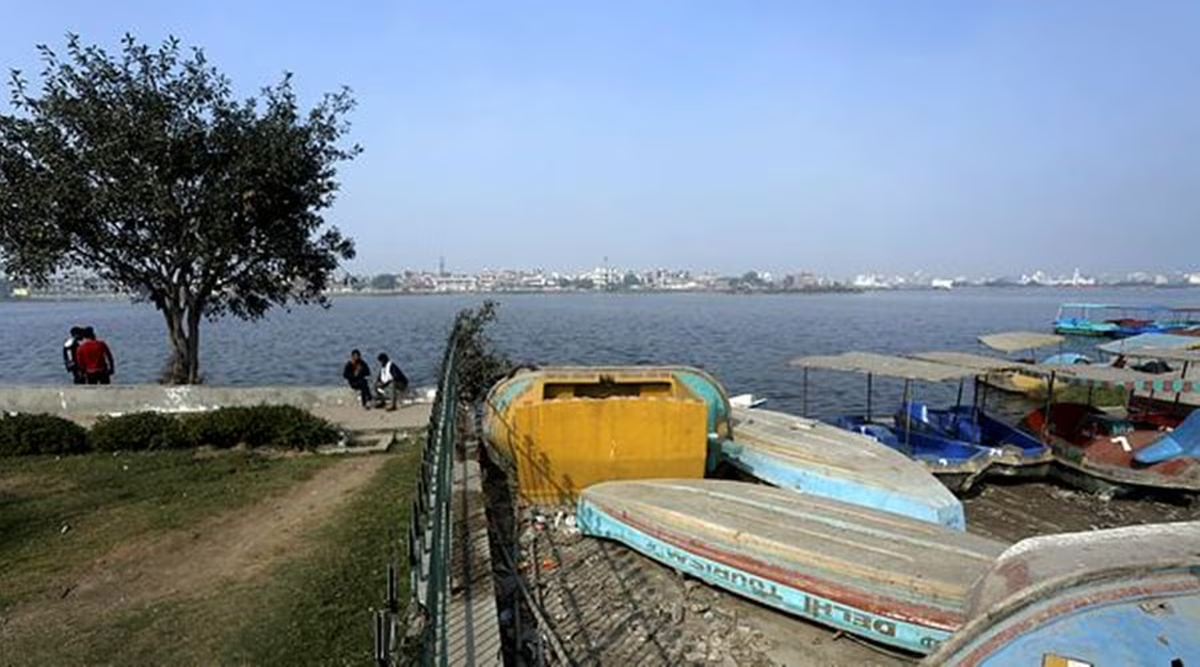
Delhi’s long-standing water stress is becoming harder to ignore as multiple lake rejuvenation projects across the capital remain incomplete or non-functional, despite years of planning, funding approvals, and public commitments. The situation highlights a widening gap between infrastructure creation and ecological outcomes, raising questions about how effectively urban water bodies are being integrated into the city’s climate resilience strategy.
Across several neighbourhoods, renovated parks and landscaped precincts sit alongside dry or seasonal depressions where lakes once held water year-round. Urban planners point out that these water bodies were historically critical to groundwater recharge, local cooling, and flood moderation. Their continued degradation has implications not only for water security but also for liveability in high-density urban zones. Official records indicate that Delhi has identified more than 1,300 water bodies through a mix of ground surveys and satellite mapping over the past five years. Yet, many of these sites remain encroached upon, dry, or functionally disconnected from sustainable water sources. While plans were announced to formally notify major lakes as protected wetlands a step that would grant legal safeguards and unlock central funding none have completed the notification process so far.
Environmental governance experts say delays stem from fragmented institutional responsibility. While a dedicated wetland authority exists to coordinate protection efforts, land ownership remains spread across multiple civic and state agencies. The absence of complete technical documentation such as catchment boundaries, water inflow sources, and flood levels has slowed statutory approvals and weakened accountability. The consequences are visible on the ground. In east and south Delhi, several revived sites depend largely on monsoon rainfall, causing them to dry up within days once precipitation stops. Treated wastewater was intended to provide a year-round source for many lakes, but incomplete sewage treatment infrastructure and diversion of flows have disrupted these plans. As a result, public investments have delivered aesthetic upgrades without restoring hydrological function.
The Delhi water crisis also carries economic and planning implications. Real estate analysts note that functional water bodies improve microclimates, stabilise land values, and reduce heat stress in surrounding residential areas. Conversely, stalled lake projects limit the environmental returns on public spending and weaken confidence in long-term urban regeneration programmes. Judicial and regulatory scrutiny has increased in recent years, with courts directing authorities to complete surveys, remove encroachments, and restore degraded wetlands within set timelines. However, missed deadlines suggest that compliance remains uneven. Urban ecologists argue that without legally defined protection and dedicated water sources, restoration efforts risk becoming symbolic rather than systemic.
Officials maintain that progress is underway, citing completed boundary demarcation at several sites and ongoing revival works at selected locations. Yet experts caution that unless governance processes are streamlined and inter-agency coordination improves, Delhi’s water bodies will continue to fall short of their potential role in climate adaptation. As extreme heat, erratic rainfall, and groundwater depletion intensify, the future of Delhi’s lakes will be central to how the city manages water scarcity. Turning dormant depressions into living ecosystems will require moving beyond park beautification towards integrated water planning an outcome that remains unfinished.
Delhi Water Crisis Deepens Despite Lake Revival Plans