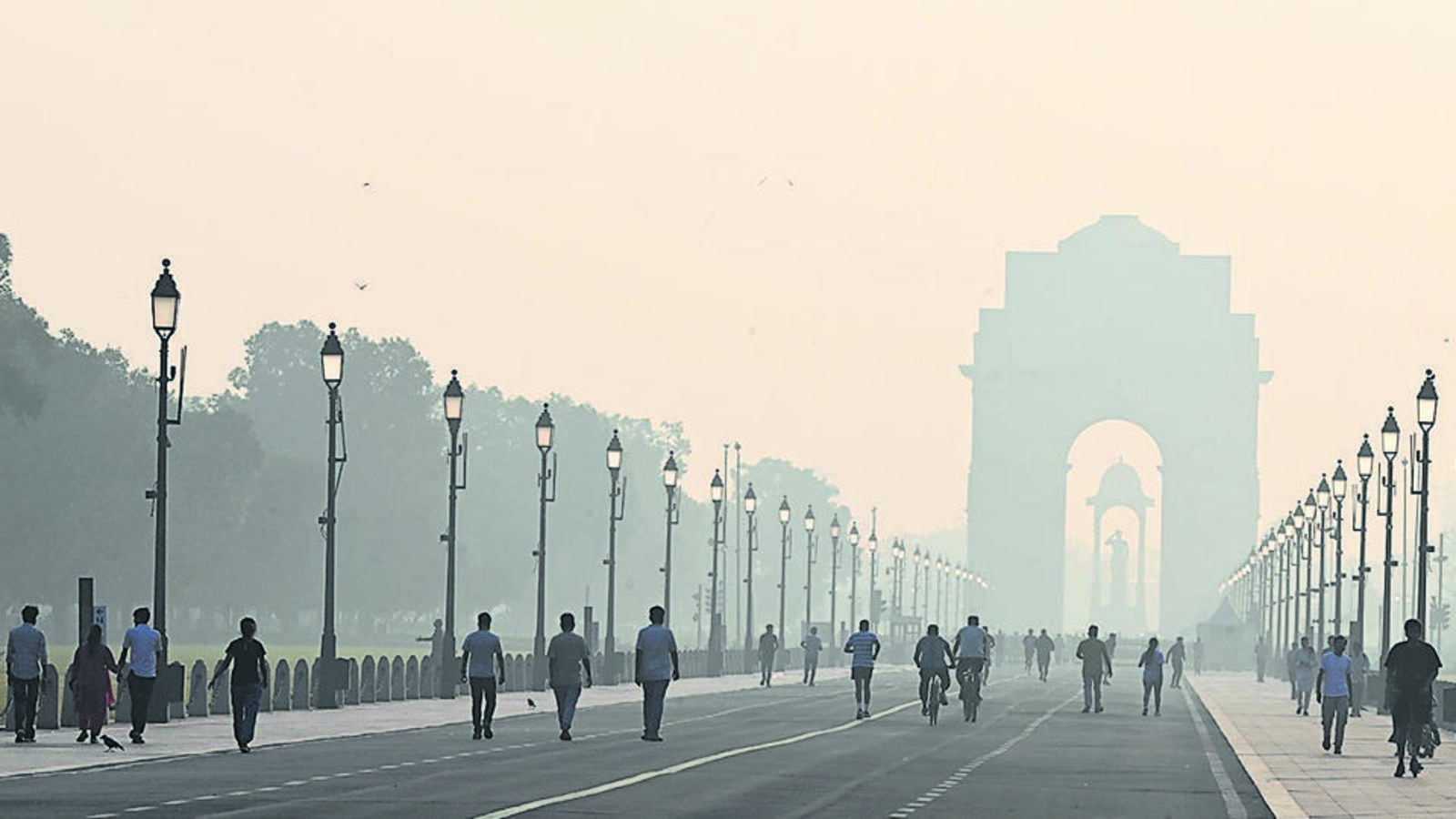
Delhi began Friday under a veil of haze as Delhi Air Quality remained in the ‘poor’ bracket, even as temperatures signalled an early shift towards summer. With maximum readings already touching 30 degrees Celsius this week, urban planners warn that rising heat combined with stagnant pollution could intensify stress on public health and city infrastructure. Data released by the Central Pollution Control Board showed multiple monitoring stations reporting Air Quality Index (AQI) values within the 200–300 range, categorised as ‘poor’. Areas such as Anand Vihar, North Campus, Wazirpur and Jahangirpuri registered higher readings compared to parts of central Delhi, where AQI levels were relatively lower but still elevated.
The continued presence of particulate matter at these levels carries implications beyond short-term discomfort. Respiratory specialists note that early morning pollution peaks when atmospheric mixing is limited pose heightened risks for senior citizens, children and those with pre-existing lung conditions. Advisory notices have urged residents to moderate outdoor exposure during high-concentration hours. Meteorological conditions appear to be compounding the challenge. According to forecasts issued by the India Meteorological Department, daytime temperatures are expected to hover between 31 and 33 degrees Celsius in the coming days, several degrees above typical late-February averages. While clear skies and light winds offer visual brightness, the absence of strong dispersive systems limits the natural dilution of pollutants.
Urban climate analysts observe that warmer winters and compressed transition seasons are becoming more frequent across north Indian cities. Higher temperatures can accelerate certain chemical reactions in the atmosphere, influencing secondary pollutant formation. Simultaneously, energy demand for cooling begins earlier in the year, placing added strain on power infrastructure and increasing emissions from thermal generation. Two weak western disturbances are forecast to pass over the western Himalayan region in the coming days. However, experts caution that unless accompanied by sustained rainfall or stronger winds across the Indo-Gangetic plains, their impact on Delhi’s air quality may remain limited.
For a city of over 20 million residents, recurring ‘poor’ AQI episodes underline structural challenges including vehicular density, construction activity, industrial emissions and regional crop-residue burning patterns. Urban development specialists argue that mitigating Delhi Air Quality concerns requires long-term coordination across transport planning, building efficiency standards and clean energy adoption. Real estate developers and infrastructure firms are also watching conditions closely.
Poor air quality influences workplace productivity, construction timelines and housing demand patterns, particularly in emerging suburbs marketed as sustainable or wellness-oriented communities. As Delhi transitions into warmer months, the intersection of climate variability and pollution management will remain central to urban governance. For policymakers, the immediate task lies in short-term mitigation while accelerating structural reforms that align economic growth with breathable air and climate resilience.
Delhi Warm Spell Worsens Air Quality