Delhi Vehicle Growth Strains Urban Mobility Systems
Delhi’s roads are facing mounting pressure as the capital records one of the highest concentrations of motor vehicles among Indian metropolitan regions, intensifying congestion and raising concerns over sustainable urban mobility. Government transport statistics indicate that Delhi vehicle growth has reached levels comparable to the combined vehicle counts of several other major metros, reflecting the scale of the city’s dependence on private transport. With the total number of registered vehicles exceeding 15 million, the capital now hosts a fleet roughly equivalent to the cumulative totals recorded in Mumbai, Kolkata and Chennai. The pace of expansion remains rapid, with an estimated addition of nearly 1,800 vehicles entering the city’s registry every day. Urban mobility analysts say such growth is stretching the limits of road infrastructure that was never designed to support this volume of private traffic.
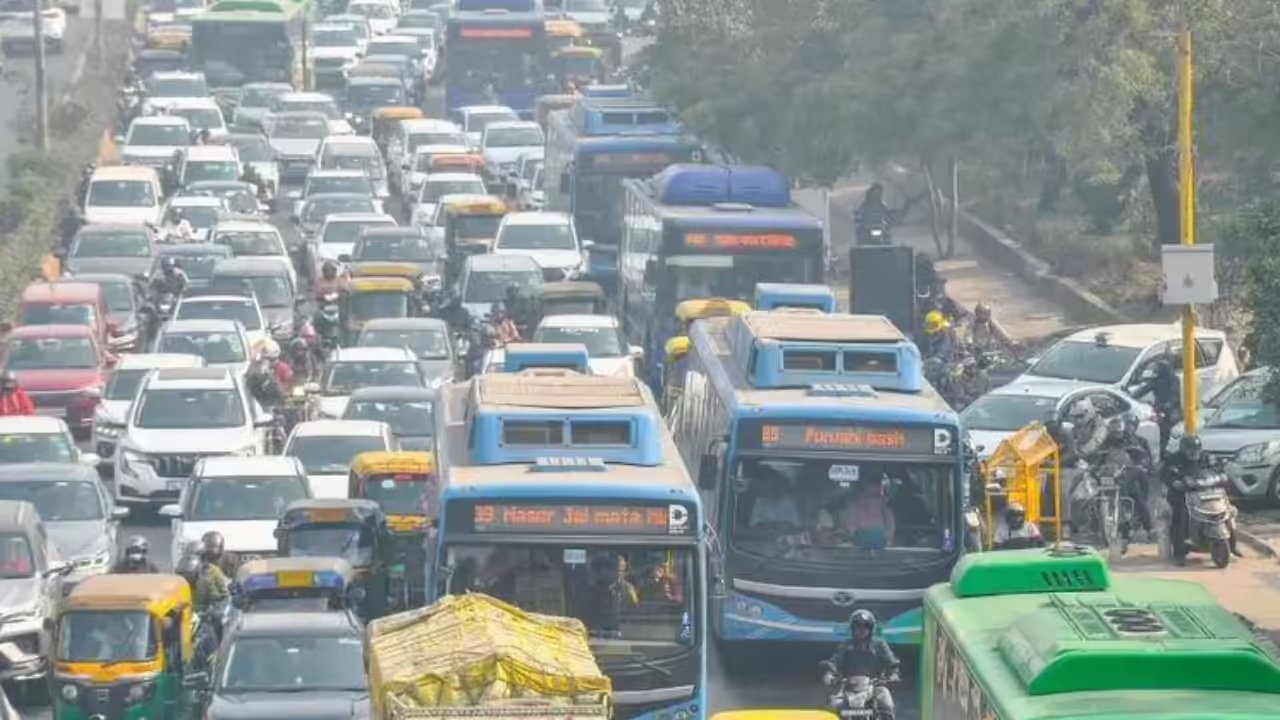
Evening rush hours in many parts of the capital illustrate the consequences of unchecked Delhi vehicle growth. Major arterial roads and neighbourhood connectors frequently experience long queues of slow-moving vehicles, particularly after sunset when commuters return from workplaces and commercial districts. In several corridors, traffic flows are dominated by private cars and two-wheelers, while public transport occupies a comparatively smaller share of road space. Urban planners note that Delhi has invested heavily in transport infrastructure over the past two decades, including an extensive metro rail network and expanding bus corridors. However, rising income levels, urban sprawl and changing commuting patterns have continued to drive private vehicle ownership. As a result, improvements in public transport capacity have not always translated into a proportional shift away from personal vehicles. Transport policy experts say the challenge goes beyond infrastructure expansion. While expanding metro lines and bus fleets remains essential, long-term congestion relief also depends on behavioural changes in travel choices. Encouraging commuters to prioritise public transport, cycling and walking is widely regarded as critical to managing Delhi vehicle growth and reducing pressure on urban roads.
The environmental implications are equally significant. Higher vehicle density contributes to increased fuel consumption and transport-related emissions, which in turn affect air quality in a city already grappling with pollution challenges. Sustainable mobility strategies—such as transit-oriented development, improved last-mile connectivity and integrated ticketing systems—are increasingly being discussed as potential solutions to reduce reliance on private vehicles. Urban development specialists also point out that traffic congestion has broader economic implications. Longer travel times affect worker productivity, increase logistics costs and reduce the efficiency of city infrastructure. As Delhi continues to expand outward, ensuring that housing developments, workplaces and transit systems remain closely connected could help moderate commuting distances and limit future vehicle demand. The trajectory of Delhi vehicle growth highlights the complexity of managing mobility in rapidly expanding megacities. Without coordinated policy measures—ranging from public transport upgrades to demand-management strategies—traffic congestion and environmental pressures are likely to intensify.
For the capital, the challenge ahead lies not only in building more infrastructure but also in shaping travel behaviour and urban planning patterns that support cleaner, more efficient mobility systems.