


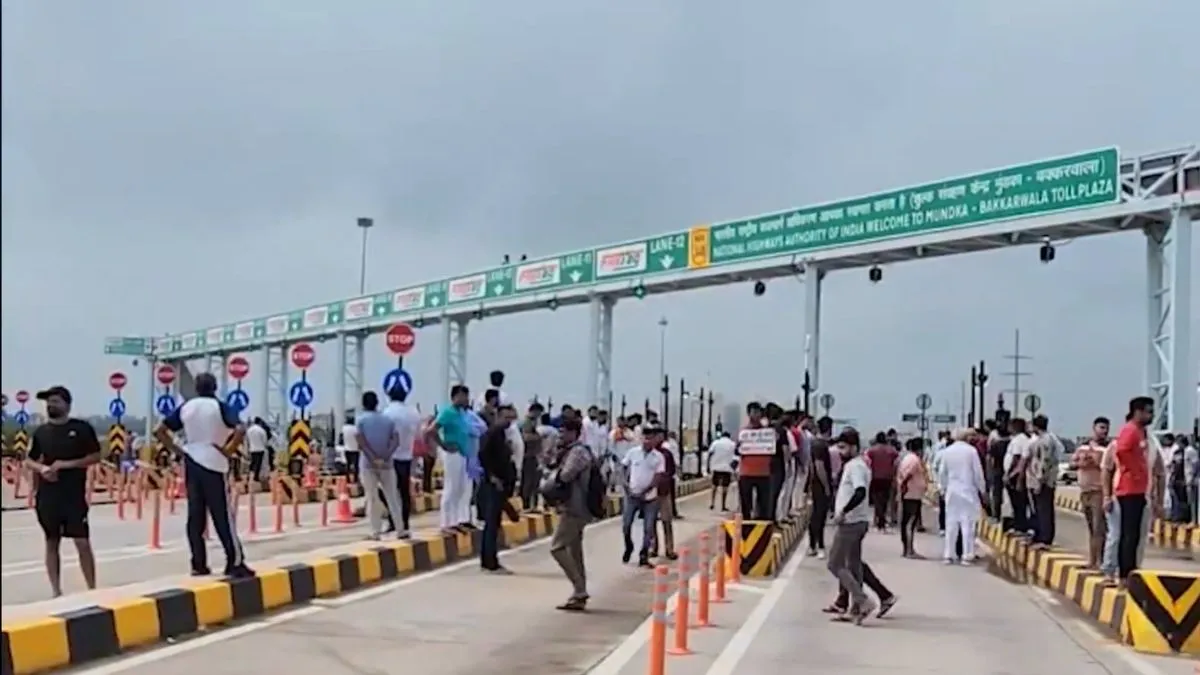
Delhi’s UER-2 toll plaza at Mundka-Bakkarwala became the centre of a fierce local protest on Tuesday, as villagers from approximately 20 surrounding settlements took control of the toll area, demanding exemptions from toll charges. The escalation forced toll employees to abandon the plaza, temporarily halting all fee collection and effectively rendering the route toll-free.
Authorities had recently introduced toll collection on UER-2, a key corridor along Delhi’s third ring road, with rates ranging from Rs 235 to Rs 2,260 depending on vehicle type. Light motor vehicles, including cars, jeeps, and vans, are charged Rs 350 for a return trip, with monthly passes available for residents within a 20-kilometre radius. However, residents from Bakkarwala, Mundka, Rani Khera, Rasoolpur, Madanpur, and Dabas have criticised these fees as unaffordable, triggering mass protests.
Also Watch: An Exclusive Interview with Sanjeev Jaiswal (IAS), CEO MHADA
Officials from the National Highways Authority of India (NHAI) and regional traffic authorities acknowledged the unrest and are exploring interim solutions. “Entry exemptions should be granted to local residents after Aadhaar verification, as has been implemented in other regions. Discussions with central and state transport authorities are underway to ensure equitable toll policies while maintaining smooth operations,” said a senior traffic official. Urban mobility experts note that the incident reflects wider challenges in balancing infrastructure financing with equitable access for local populations. While toll revenues are essential for road maintenance and expansion, rates perceived as excessive can create significant public backlash and disrupt commuter flow, particularly in densely populated corridors.
