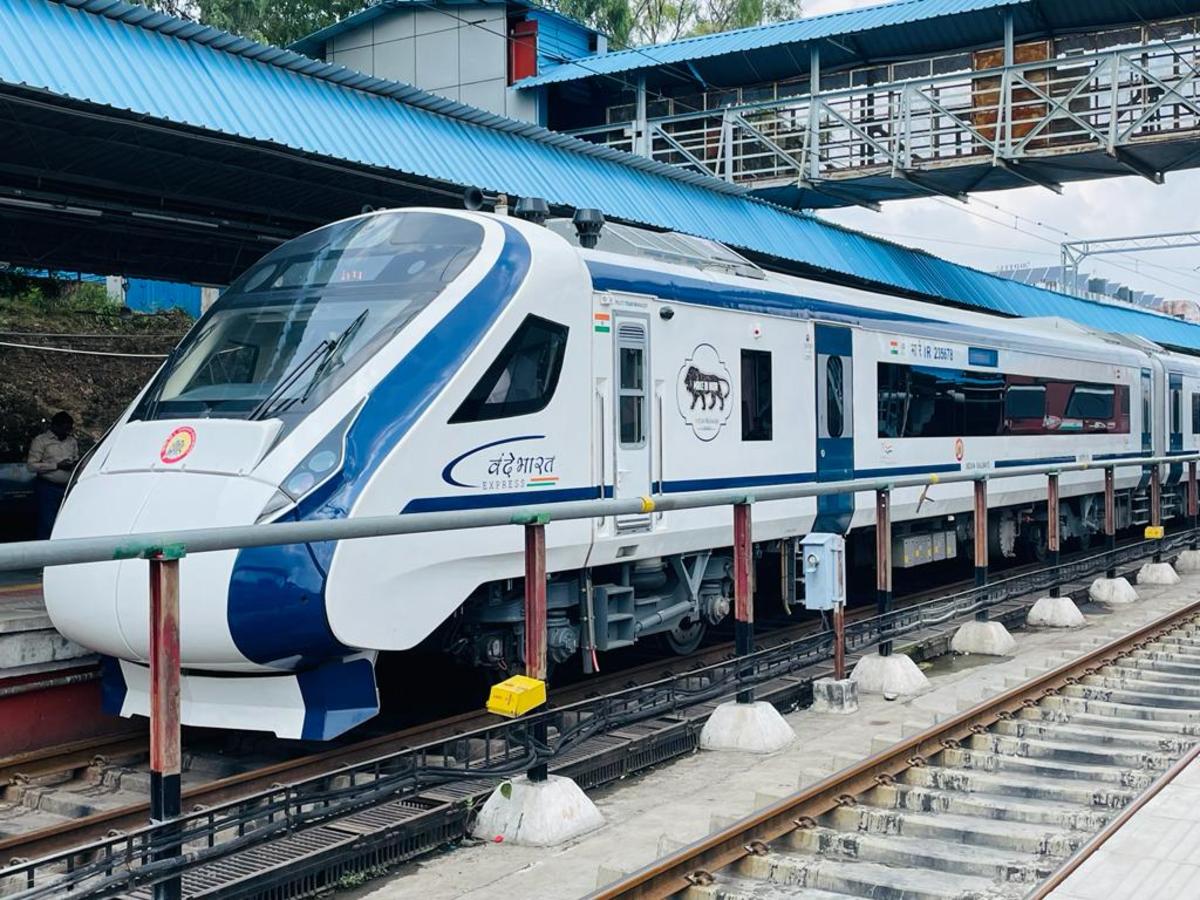
Delhi Udaipur Vande Bharat demand grows with South India rail link
Udaipur’s rail aspirations are set to take centre stage at a high-level review meeting later this month in Jaipur, as elected representatives press for a Vande Bharat service between Udaipur and Delhi alongside stronger rail links to South India. The proposals, expected to be placed before the North Western Railway management, aim to transform connectivity in Rajasthan’s southern region and improve passenger experience.
The meeting, scheduled for 19 September at the North Western Railway headquarters, will bring together Members of Parliament representing constituencies under the Ajmer and Jodhpur divisions. Senior railway officials, including the General Manager of the division, will oversee deliberations on connectivity and infrastructure gaps that have long impacted regional mobility.Officials from Udaipur are preparing to highlight several long-pending demands that resonate with both passenger convenience and economic necessity. Chief among them is the introduction of a Vande Bharat train linking Udaipur to Delhi, a demand gaining traction as travellers increasingly seek faster and more sustainable travel options between the capital and Rajasthan’s tourism hub.
Equally significant is the call for a dedicated rail connection from Udaipur to South India. At present, long-distance travel from Udaipur requires multiple interchanges, discouraging passengers and limiting trade routes. A direct service would not only bridge the gap between the north and the south but also reinforce national integration through reliable and accessible transport.The agenda also includes proposals for a train service from Udaipur to Sammed Shikharji, a site of religious significance, and the doubling of the Udaipur–Chittorgarh railway line. Experts say doubling the line is critical to address congestion, improve punctuality, and increase freight handling capacity. For a region aspiring to position itself as an economic and cultural corridor, efficient infrastructure is key to unlocking potential.
Transport analysts note that India’s broader ambition of sustainable and equitable cities cannot be achieved without robust and carbon-efficient public transport. Trains, particularly electric and semi-high-speed services like Vande Bharat, represent a pathway to reducing road congestion, lowering carbon emissions, and providing gender-neutral, accessible, and affordable mobility.Industry observers believe that the growing chorus of demands from Rajasthan underscores the urgency of expanding rail infrastructure in a way that balances speed with sustainability. While aviation and highways continue to expand, the railways remain the backbone of India’s mobility system, offering greener and more equitable access for millions.As Udaipur waits for clarity on its proposals, the upcoming meeting will be closely watched by residents, businesses, and tourism operators alike. For the city, the outcomes could redefine connectivity, strengthen sustainable mobility, and bring equitable growth closer to reality.