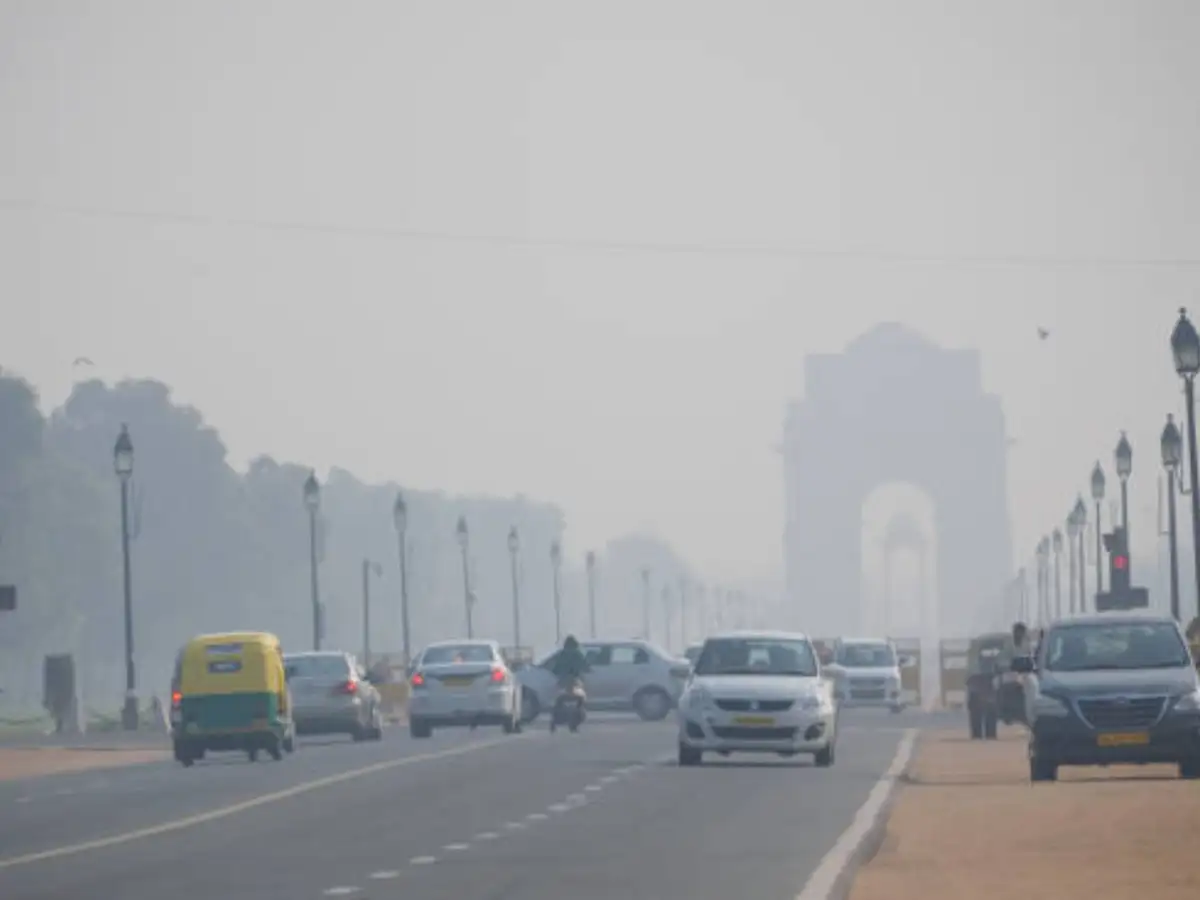
Delhi’s worsening air quality has once again triggered a national debate on urban mobility and environmental accountability, after a senior Union minister publicly acknowledged that transport-related emissions contribute nearly 40 per cent of the capital’s pollution load. The admission comes as toxic smog continues to blanket large parts of the city, reinforcing concerns that existing policy responses are failing to keep pace with the scale of the crisis.
Speaking at a public event in the national capital, the minister responsible for road transport highlighted the personal and public health toll of Delhi’s polluted air, noting that even short stays in the city lead to respiratory infections. More significantly, he accepted institutional responsibility for the transport sector’s role in deteriorating air quality, an unusually direct statement amid growing public frustration over recurring winter smog episodes. Urban air quality experts say transport emissions in Delhi are driven by a combination of high vehicle density, ageing internal combustion fleets, freight traffic congestion and limited modal shift to cleaner alternatives. While emission standards have improved over the past decade, enforcement gaps and rising vehicle ownership have diluted their impact.
According to urban planners, Delhi’s development model has remained car-centric despite repeated evidence linking mobility choices to public health outcomes.
The remarks also revived the economic dimension of India’s pollution challenge. The minister questioned the country’s heavy reliance on imported fossil fuels, pointing out that annual import costs run into tens of lakh crore rupees. Energy economists argue that this dependence not only strains public finances but also locks cities into pollution-intensive growth, undermining long-term sustainability goals. As smog levels intensified midweek, authorities activated the strictest stage of the Graded Response Action Plan across Delhi and the wider NCR. Construction activity, diesel vehicle movement and certain industrial operations were curtailed as air quality readings in central districts remained firmly in the ‘very poor’ category. Health professionals warn that repeated emergency measures signal systemic failure rather than effective pollution management.
The political fallout has also been significant. Opposition leaders have sought a dedicated parliamentary discussion on air pollution, framing it as a public health and economic productivity issue rather than a seasonal inconvenience. Government representatives have indicated willingness to debate the matter, though legislative disruptions have delayed substantive discussion. Urban policy analysts say the episode underscores the urgency of rethinking transport-led growth in India’s largest cities.
Accelerating electric mobility, scaling up public transport, incentivising clean fuels and redesigning freight movement are increasingly seen as essential, not optional, reforms. As one sustainable mobility expert noted, “Cities that prioritise clean transport protect both economic competitiveness and citizen health.”
For Delhi, the acknowledgment from within the transport establishment may mark a critical inflection point. Whether it translates into coordinated action will determine if the capital can shift towards a cleaner, more resilient and inclusive urban future or remain trapped in a recurring cycle of smog and short-term fixes.
Delhi Transport Causes Forty Percent Pollution Amid Severe Smog Crisis Current Winter