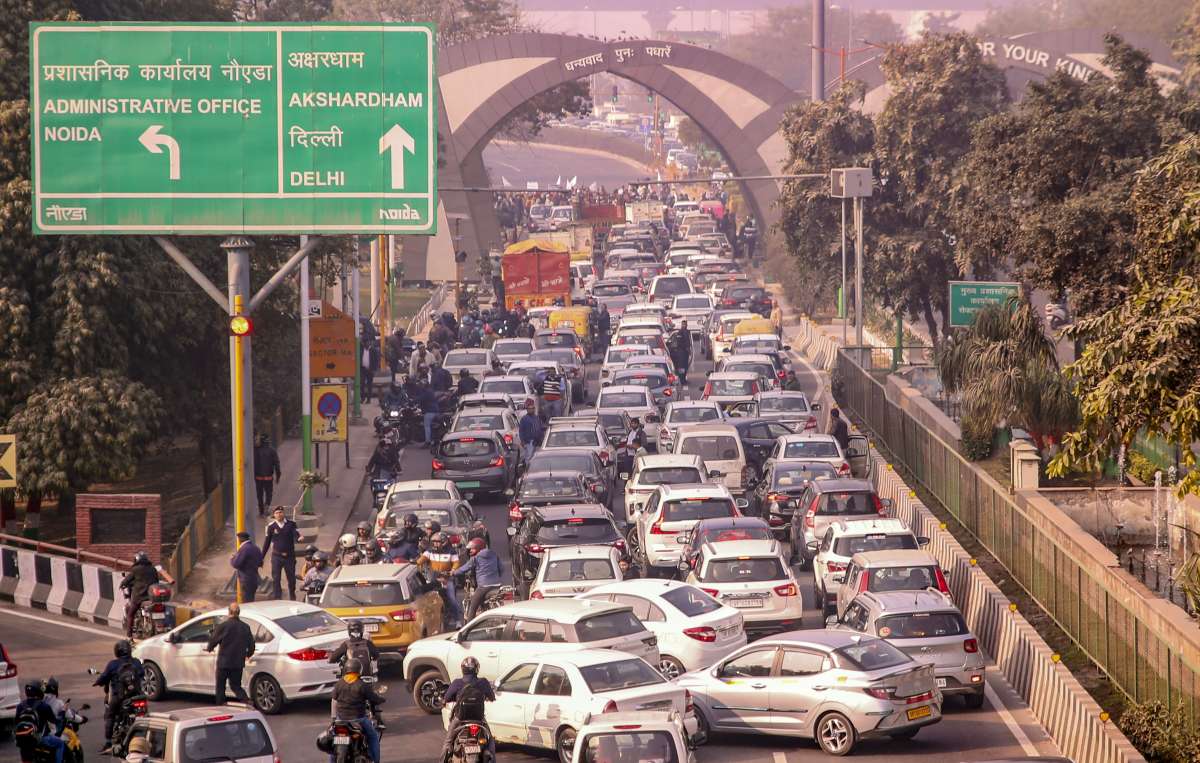
Delhi traffic diversions disrupt major routes today amid protest restrictions
Delhi braces for a day of heightened traffic diversions and restrictions as the city police issued a fresh advisory following a protest call, urging commuters to reconsider their travel choices. Major road corridors in North and West Delhi, particularly around Madhuban Chowk, Rohini Court and the Outer Ring Road, are expected to witness disruptions.
Officials have strongly recommended the use of Metro and peripheral routes to ease congestion.The advisory, released midweek, reflects growing concerns about traffic gridlock in the capital, where protests and civic demonstrations frequently spill into the road network. According to officials, diversions are in place across stretches such as Lala Jagannath Marg, Sai Baba Chowk, Kohat Enclave, Aashiana Chowk and the approach roads leading to Shiva Market. Motorists travelling from Rithala to Wazirpur will be redirected through longer loops touching Sai Baba Chowk, Rohini’s M2K Cinema, and Outer Ring Road before rejoining their regular routes.
Experts tracking urban mobility note that Delhi’s recurring traffic advisories highlight a systemic dependence on road-based commuting, despite the city boasting one of the most extensive metro networks in Asia. The repeated diversions also expose the pressure on arterial corridors, where bottlenecks remain acute whenever public gatherings or seasonal disruptions occur.In response, police officials have suggested UER-II for commuters bound towards Dwarka, the international airport and Gurugram, reiterating that Metro travel remains the most reliable option under present circumstances. The advisory appeals for cooperation from motorists, requesting adherence to traffic regulations to minimise inconvenience.
The situation also underscores the urgent need for more sustainable transport solutions in Delhi. Mobility analysts argue that while advisories mitigate short-term challenges, long-term resilience will only come through reduced dependency on private vehicles. Better first-and-last mile connectivity to Metro stations, wider cycling tracks and integrated public transport can significantly cut congestion and carbon emissions.Delhi has already set ambitious goals to reduce vehicular pollution, one of the highest contributors to its deteriorating air quality. Traffic snarls not only worsen emissions but also affect economic productivity, as businesses and workers face delays. With monsoon showers further straining road conditions, the city finds itself at a crossroads: relying on temporary advisories or investing in systemic mobility reforms.For commuters today, however, patience and planning remain the immediate tools. Officials reiterate that those heading to business districts, residential hubs or transit points must factor in additional travel time. The coming hours will test not only Delhi’s traffic management capacity but also its citizens’ ability to adapt swiftly.