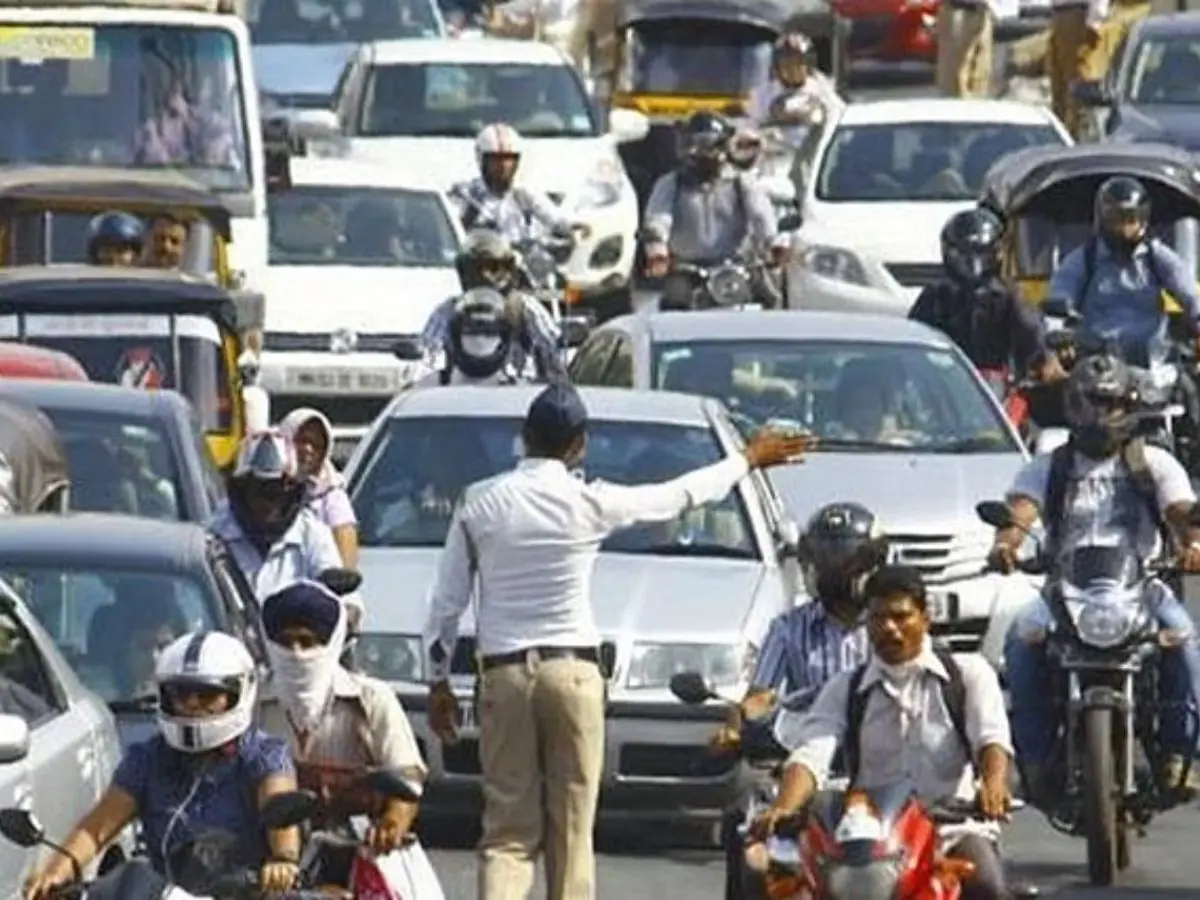
Delhi’s central administrative district will see coordinated traffic restrictions on Tuesday evening as authorities prepare for the full-dress rehearsal of the Beating Retreat ceremony at Vijay Chowk. The curbs, scheduled between 4 pm and 6 pm, are expected to affect some of the capital’s busiest civic corridors, highlighting the continuing challenge of balancing ceremonial security needs with everyday urban mobility.
Key stretches around Vijay Chowk, Raisina Road and Kartavya Path will remain either fully closed or subject to controlled access for general traffic. Movement towards the ceremonial zone from multiple approach points including major roundabouts connecting to central government offices will be regulated to ensure secure passage for rehearsal convoys and personnel. Transport planners say the restrictions are essential for public safety but come at a time when traffic volumes typically peak due to office closures and inter-district travel.
For commuters, the temporary closures translate into longer travel times and potential congestion across diversion routes such as Ring Road, Ridge Road, Aurobindo Marg, Safdarjung Road, Rani Jhansi Road and Minto Road. Traffic management teams have advised motorists to plan journeys in advance and avoid central Delhi where possible during the two-hour window. Public transport operators are also adjusting schedules to accommodate detours, particularly on routes serving government offices, embassies and institutional zones.
Urban mobility experts note that recurring ceremonial roadblocks expose structural gaps in Delhi’s traffic resilience. “Large-scale events are predictable, yet the city still relies heavily on last-minute advisories rather than integrated, tech-enabled traffic forecasting,” said a senior transport consultant. The absence of dynamic signal management and real-time rerouting apps linked to official advisories continues to limit the city’s capacity to absorb such disruptions efficiently.
The economic implications, though short-term, are tangible. Central Delhi hosts high-density office clusters, hospitality assets and retail hubs, all of which depend on smooth evening access. Delays can impact service sector productivity, logistics schedules and informal livelihoods such as street vending and ride-hailing services. In climate terms, idling vehicles on diversion routes also contribute to avoidable emissions, complicating the capital’s push towards low-carbon urban transport. Authorities have deployed traffic personnel across affected junctions to manage diversions and ensure emergency vehicle access. A senior official said the rehearsal schedule was coordinated with multiple civic agencies to minimise overlap with other major events and infrastructure works. However, urban planners argue that Delhi needs a long-term protocol for ceremonial logistics, including designated secure corridors and off-peak rehearsal windows.
From a sustainability and infrastructure lens, the episode underscores the importance of decentralised work zones, staggered office timings and enhanced public transport integration during planned disruptions. “Cities aspiring to climate resilience must treat mobility continuity as critical infrastructure,” an urban governance expert noted. The rehearsal curbs are expected to be lifted by early evening, restoring normal traffic flow. Yet, with Republic Day events and security exercises continuing through the week, residents are likely to face intermittent disruptions. For policymakers, the moment offers an opportunity to refine event-based mobility planning aligning civic pride with people-first, low-emission urban movement systems.
Delhi Traffic Curbs Disrupt Central Commute