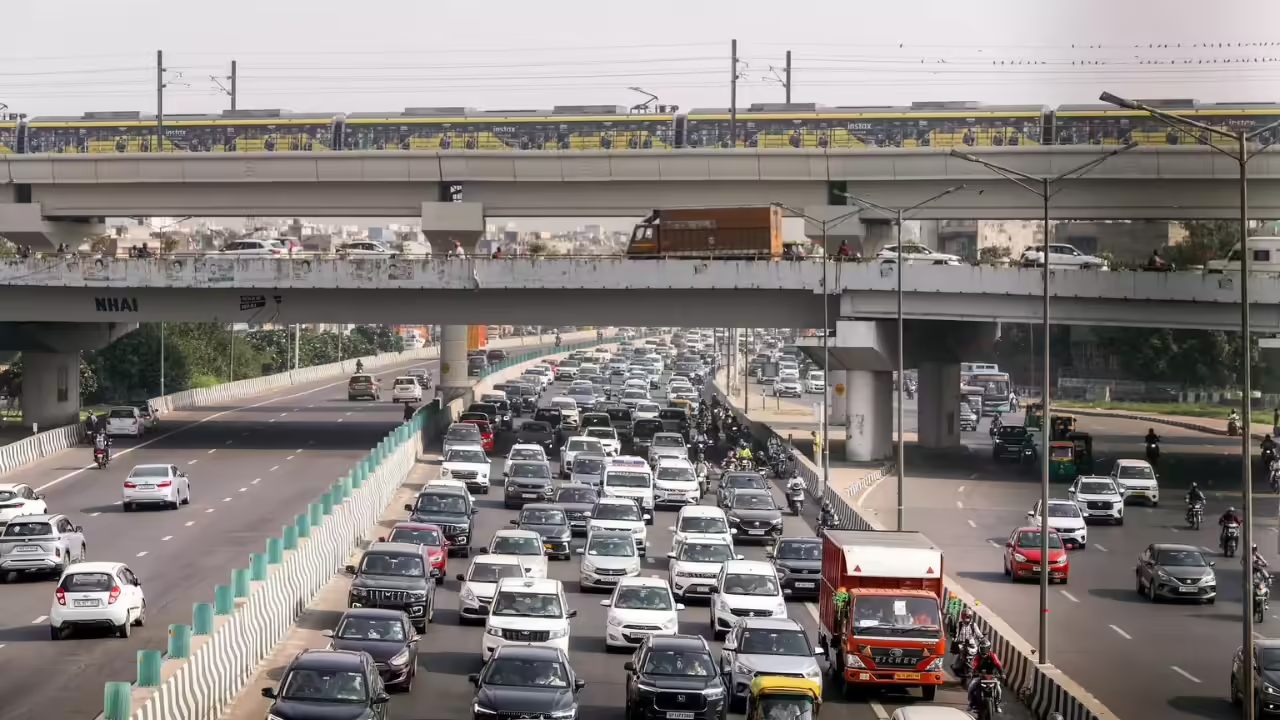
Delhi has mapped out 215 targeted engineering and enforcement measures to ease gridlock at 62 of its most persistently clogged junctions and corridors, signalling a shift towards data-driven management of urban mobility. The initiative, embedded in the capital’s air quality action strategy submitted to regional regulators, links congestion relief directly with emission reduction and commuter productivity.
City officials confirmed that more than 80 location-specific interventions ranging from road redesign and parking reorganisation to removal of encroachments have already been completed. Around 50 additional works are scheduled over the next six months, while certain proposals deemed technically unviable are under review.
The Delhi traffic congestion plan was shaped using assessments by traffic enforcement agencies that identified recurring choke points across central, south, east and west Delhi. These include commercial districts, hospital zones, railway station approaches and market-heavy neighbourhoods where peak-hour traffic volumes frequently overwhelm carriageway capacity.
Transport planners involved in the exercise said each site required a distinct response rather than a uniform engineering template. In some corridors, informal parking and roadside vending were constricting carriageways. In others, poorly positioned bus stops or market spillover were intensifying bottlenecks. Measures therefore include relocation of bus bays, formalisation of parking areas, stricter anti-encroachment drives and selective road widening where feasible. At a few stretches where physical expansion is impractical due to built-up density or ongoing metro infrastructure, authorities are focusing on traffic circulation changes and better parking management. In select peripheral corridors, longer-term solutions such as flyovers are being examined, subject to feasibility and environmental clearance.
Urban mobility analysts view the Delhi traffic congestion plan as an incremental but necessary step in reducing localised emissions. Stop-start traffic increases particulate and nitrogen oxide concentrations, particularly in dense commercial zones. Smoother traffic flow, even without major infrastructure additions, can reduce fuel wastage and lower tailpipe emissions. However, transport experts caution that decongestion alone cannot deliver sustained air quality gains. Without parallel improvements in bus frequency, metro integration and last-mile connectivity, private vehicle usage may continue to rise. Investments in walking and cycling infrastructure are also critical to shifting short trips away from motorised modes.
From a real estate perspective, improved traffic conditions in high-footfall districts could enhance commercial viability and property values. Yet planners note that capacity expansion must be balanced with pedestrian safety and inclusive street design, particularly near hospitals, transit hubs and markets where vulnerable users dominate. Officials estimate that more than half of the identified locations could see measurable relief by year-end if timelines hold. The larger test will be whether congestion management evolves from episodic fixes to continuous monitoring supported by technology and public transport reform.
For a city grappling with pollution, rapid motorisation and spatial inequality, the success of this programme will hinge on integrating engineering solutions with long-term mobility planning that prioritises cleaner, people-first streets.
Delhi Traffic Congestion Plan Targets 62 Hotspots