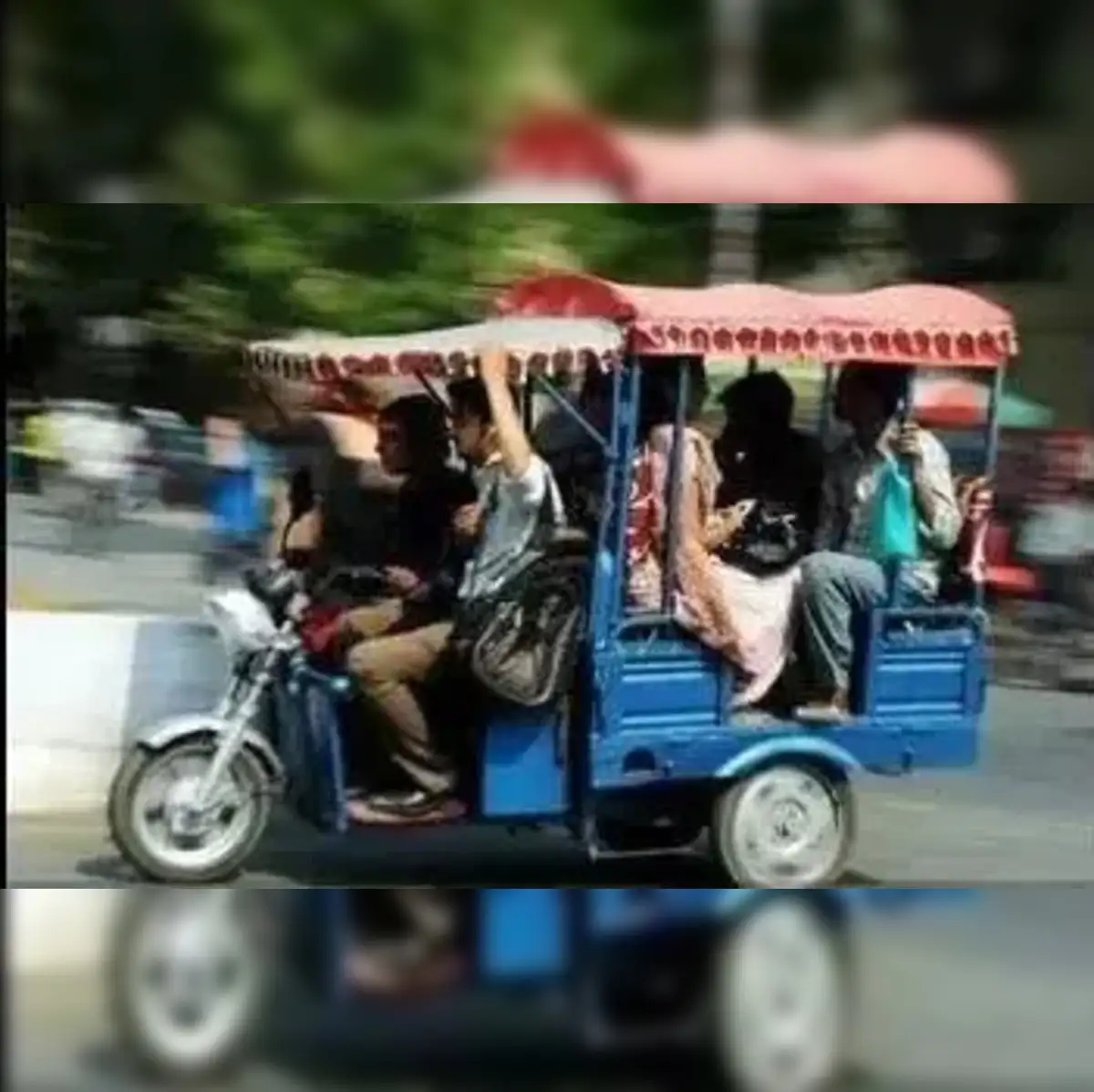
Indore Enforces New E‑Rickshaw Traffic Rules From March
Delhi’s growing fleet of e-rickshaws, once celebrated as a green solution for last-mile travel, is now straining the city’s roads. Data shows violations involving these vehicles have more than tripled between January and July in just two years, rising from nearly 90,000 cases in 2023 to over 2.6 lakh in 2025. The surge has amplified congestion, particularly near metro stations and busy markets, triggering frustration among commuters and concerns among transport planners.
The official number of registered e-rickshaws stands at around 1.2 lakh, but experts estimate that the actual count on the streets may be double. Their mushrooming presence is not just a question of numbers but also of behaviour. Erratic driving, wrong-side entry, and rampant red-light violations are increasingly common, and camera-based penalties confirm the trend. Recorded challans climbed from 1.2 lakh in 2023 to nearly three lakh in 2025. Improper parking has become the most frequent offence, with more than 25,000 notices issued this year alone. Driving without a licence and allowing unauthorised persons to operate the vehicles rank high among other violations. Worryingly, fatalities linked to e-rickshaws are also on the rise, with 17 fatal accidents reported till July 2025.
Residents across the city voice growing discontent. In localities such as East of Kailash and South Extension, e-rickshaws often block arterial lanes, leaving commuters struggling in prolonged jams. On social media, calls for curbing their spread are intensifying, with users arguing that the unregulated expansion undermines both mobility and the city’s aesthetics. Experts argue that structural solutions, rather than piecemeal penalties, are the need of the hour. A senior scientist from the Central Road Research Institute stressed the importance of designating fixed stands near transit hubs and capping numbers in high-density zones. He noted that many drivers are underage or lack formal training, leading to frequent safety violations. The absence of clear policy on whether these vehicles belong on arterial or collector roads has compounded the crisis.
Policy ambiguity further fuels the challenge. While traffic police continue to issue challans, they argue that the authority to cap vehicle numbers rests with the transport department. A 2014 High Court ruling had declared unregistered e-rickshaws illegal and directed restrictions across over 230 road stretches, but enforcement remains inconsistent. Missing signage and fragmented jurisdiction have left gaps that operators exploit. As Delhi attempts to position itself as a future-ready city, balancing the eco-friendly promise of e-rickshaws with the realities of urban order remains crucial. Without stronger planning, clear regulation, and citizen-centric enforcement, the city risks allowing a sustainable mobility option to turn into a long-term urban liability.