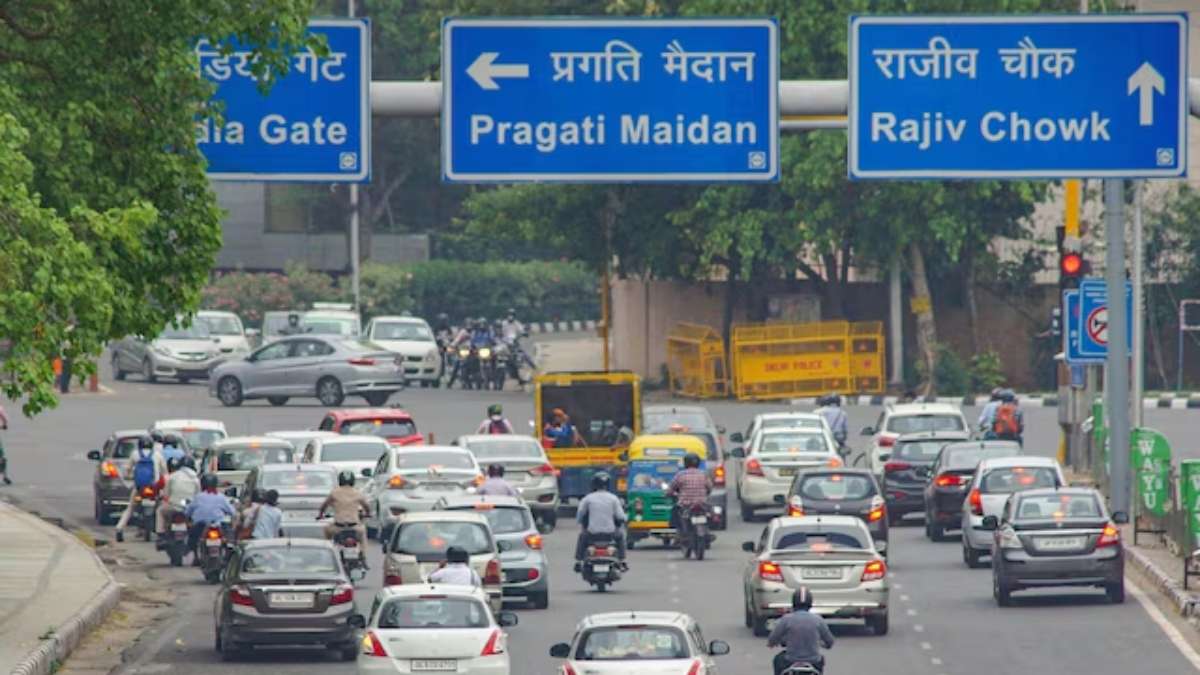
Delhi Traffic Advisory Warns Of Navratri Rush And Road Diversions
Delhi’s traffic police have issued a detailed advisory cautioning commuters about disruptions expected near the Jhandewalan Temple during the Navratri festival, compounded by ongoing road repair work at the Eidgah Roundabout. The advisory, effective until 2 October, highlights the potential for moderate to heavy congestion on Rani Jhansi Road, one of the arterial corridors linking central Delhi with surrounding neighbourhoods.
Traffic is expected to be particularly affected between 7:00 am and 11:00 pm when temple footfall peaks and repair activity continues. Officials have urged commuters to avoid the affected stretch and instead use alternate roads such as Faiz Road, New Rohtak Road and Panchkuian Road. These diversions are intended to balance religious mobility with the practicalities of urban infrastructure management.
Delhi Police have deployed additional personnel at key junctions to manage vehicular flow and reduce the likelihood of prolonged gridlocks. Yet, authorities caution that minor delays remain inevitable, especially during peak evening hours. Emergency services, including ambulances and fire brigades, have been granted unhindered passage to ensure that public safety is not compromised during the period of restrictions.This advisory highlights the challenge of balancing cultural celebrations with urban mobility in a city already burdened by congestion and poor air quality. The Navratri festivities, while integral to Delhi’s social fabric, also place additional stress on civic infrastructure. Experts note that improved planning, eco-friendly transport choices, and timely public communication are key to managing such seasonal disruptions more sustainably.
Beyond immediate traffic management, the situation underscores the importance of transitioning towards smarter, greener and more equitable transport systems in the capital. With the festival expected to draw thousands of devotees daily, officials are encouraging the use of public transport to limit private vehicle dependency and reduce emissions. Greater reliance on metro connectivity and non-motorised mobility could provide long-term relief not only during religious events but throughout the year.
Urban planners also suggest that temporary diversions should be coupled with digital traffic updates and community awareness campaigns. Such measures, they argue, can prevent bottlenecks, improve commuter confidence, and align with the broader vision of building a zero-carbon, climate-resilient Delhi.As Navratri continues, the city’s traffic grid will remain under close observation. The advisory may serve as a reminder that mobility in a megacity like Delhi requires more than quick fixes. It calls for integrated planning that respects cultural traditions while safeguarding the environment and ensuring that the right to move freely is preserved for all.