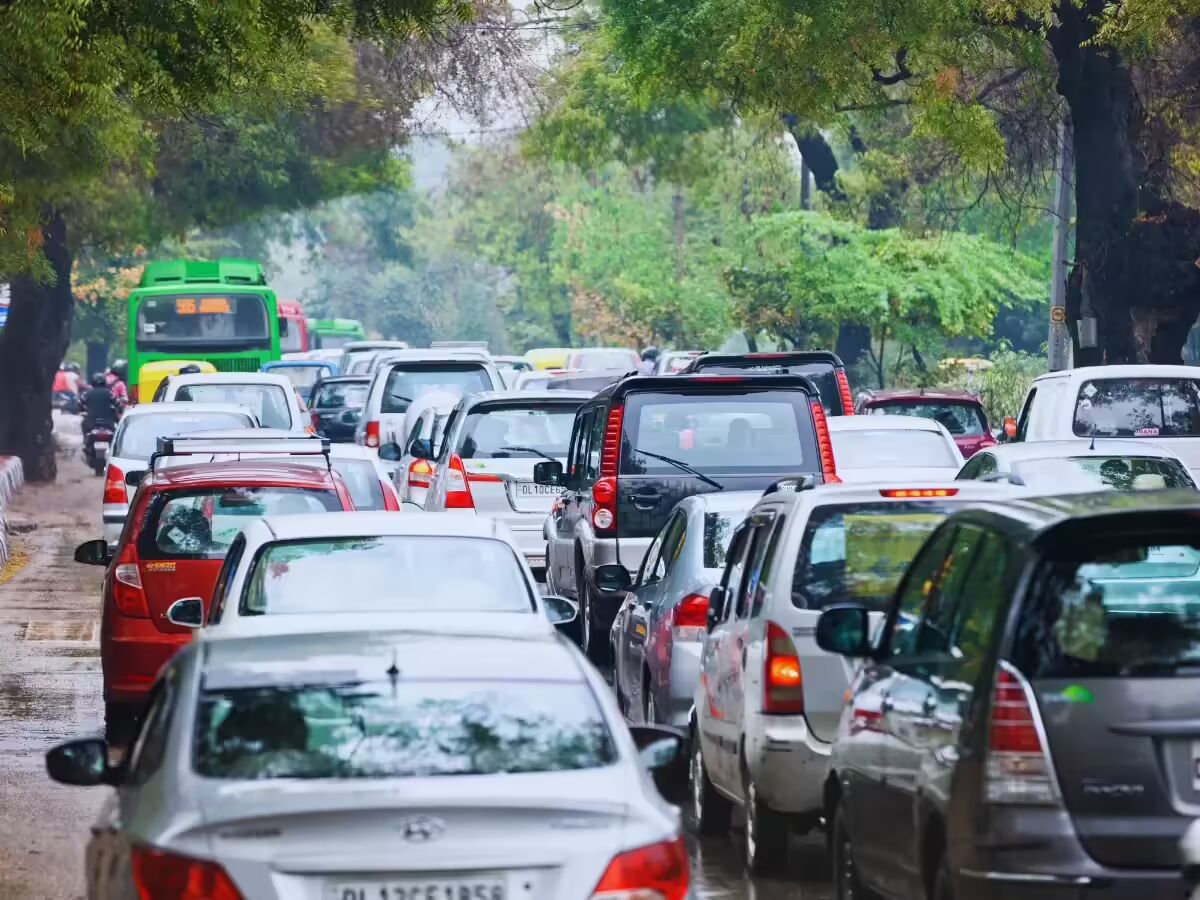
Authorities in the national capital have issued a citywide travel advisory for South Delhi as large public gatherings are expected to significantly affect road movement between 6 and 8 March. The Delhi traffic advisory warns commuters to avoid several key roads near the Chhatarpur–Bhatti Mines area, where heavy congestion is anticipated due to a major religious congregation drawing hundreds of thousands of visitors.
According to officials managing traffic operations in the capital, special mobility arrangements have been introduced around the Radha Soami Satsang complex in Bhatti Mines, located near Chhatarpur in South Delhi. The event is expected to attract between three and four lakh attendees over three days, with tens of thousands staying overnight at the venue. The influx of visitors is likely to intensify vehicle movement across surrounding neighbourhoods throughout the day. Under the Delhi traffic advisory, several arterial routes in South Delhi are expected to witness heavy congestion. These include Chhatarpur Road (SSN Marg), Bhatti Mines Road, the Mehrauli–Gurugram Road corridor, and Mandi Road—roads that connect the capital with Gurgaon and other parts of the NCR. Authorities anticipate peak pressure between early morning and evening hours, particularly as visitors arrive and depart from the event venue.
Traffic management teams have also restricted the movement of heavy vehicles on some stretches, particularly along Bhatti Mines Road between Chhatarpur Road and the Gurgaon Road junction, in order to reduce bottlenecks and improve emergency access. Officials noted that traffic diversions will be implemented depending on congestion levels and may change dynamically throughout the day. Commuters travelling between Delhi and neighbouring NCR cities such as Gurugram and Faridabad are being advised to plan alternate routes where possible. Traffic authorities have suggested diversions through roads linking Mandi Road and Jonapur toward the Mehrauli–Gurugram corridor. Vehicles approaching from the Haryana side may also be redirected through the Dera border route to ease congestion near the religious complex.
Urban mobility experts note that temporary restrictions linked to large events are increasingly common in megacities where road networks must accommodate both daily commuting and large gatherings. South Delhi, in particular, has multiple banquet halls, farmhouses and event venues that often generate additional traffic during the ongoing wedding season, potentially compounding congestion during large religious or cultural events. The situation also highlights broader transport challenges in dense metropolitan regions such as Delhi, where urban road infrastructure must balance everyday commuter demand with periodic high-footfall events. As the city’s population and regional mobility networks continue to expand, managing event-related traffic disruptions remains a key operational challenge for urban authorities.
Officials have urged residents to rely on real-time navigation updates and public transport wherever possible while the Delhi traffic advisory remains in effect. For daily commuters and logistics operators, early route planning is expected to be crucial in navigating South Delhi’s transport corridors during the three-day event window.