


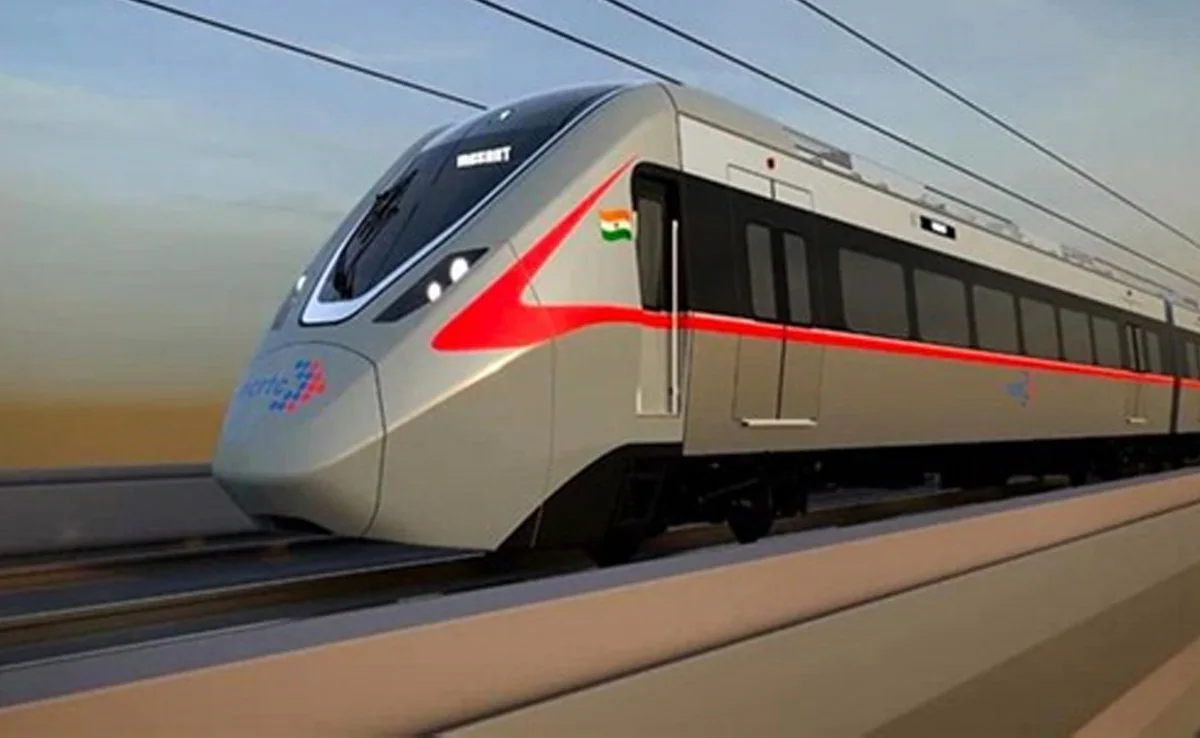
Delhi and Meerut are on the cusp of a transformative transport breakthrough as the Namo Bharat Regional Rapid Transit System (RRTS) and the Meerut Metro prepare for their commercial debut. Once operational, passengers will be able to cut travel time between the two cities to as little as 30 minutes, promising to reshape commuting patterns and reduce dependence on road transport.
Officials overseeing the project confirmed that both train services are undergoing their final trial runs and are expected to open for public use shortly. The RRTS, branded as Namo Bharat, is designed as a semi-high-speed corridor capable of operating at 160 kilometres per hour. With services planned at 10-minute intervals, this marks a significant shift towards high-frequency, sustainable urban mobility for the northern region. The Meerut Metro, which shares a 23-kilometre stretch of tracks with Namo Bharat, will operate with 13 stations across the corridor. Trains will run every seven minutes, offering passengers seamless interchange with Namo Bharat services without requiring a separate ticket. This integration makes the corridor India’s first intercity rapid and urban metro system operating on shared infrastructure.
Operational timings for the twin services are set to accommodate daily commuters and weekend travellers alike. Services are expected to run from 6 a.m. to 10 p.m. on weekdays and Saturdays, with slightly adjusted hours on Sundays. Fare structures are likely to be announced soon, though officials have suggested that the pricing strategy will balance affordability with long-term sustainability of operations. Transport experts note that the Delhi–Meerut RRTS and Metro project is not just about speed but about broader social and environmental impact. By offering a viable, reliable, and energy-efficient alternative to road travel, the project aims to ease traffic congestion on the Delhi–Meerut expressway, lower vehicular emissions, and contribute to the creation of a zero-carbon transit ecosystem.
The corridor’s design is also aligned with equitable and inclusive urban planning. Officials emphasise that both services have been structured to improve accessibility for diverse communities, including women, students, and office-goers, thereby addressing issues of social mobility and gender-neutral urban transit. The economic implications are equally significant. With Meerut emerging as an industrial and residential hub, faster rail connectivity to Delhi is expected to spur real estate development, attract investments, and strengthen employment opportunities across the National Capital Region. Businesses and commuters alike are preparing for a fundamental shift in mobility, where long, exhausting road journeys will be replaced with fast, predictable, and environmentally responsible transit.
As the countdown begins, the Delhi–Meerut rail corridor stands as a landmark in India’s efforts to integrate speed, sustainability, and inclusivity into public transport. Once trains begin commercial operations, it is poised to redefine how millions move between two of the most dynamic cities in northern India.
Also Read : Kochi Metro Floats Telecom Tender For Phase 2 Pink Line Expansion
