


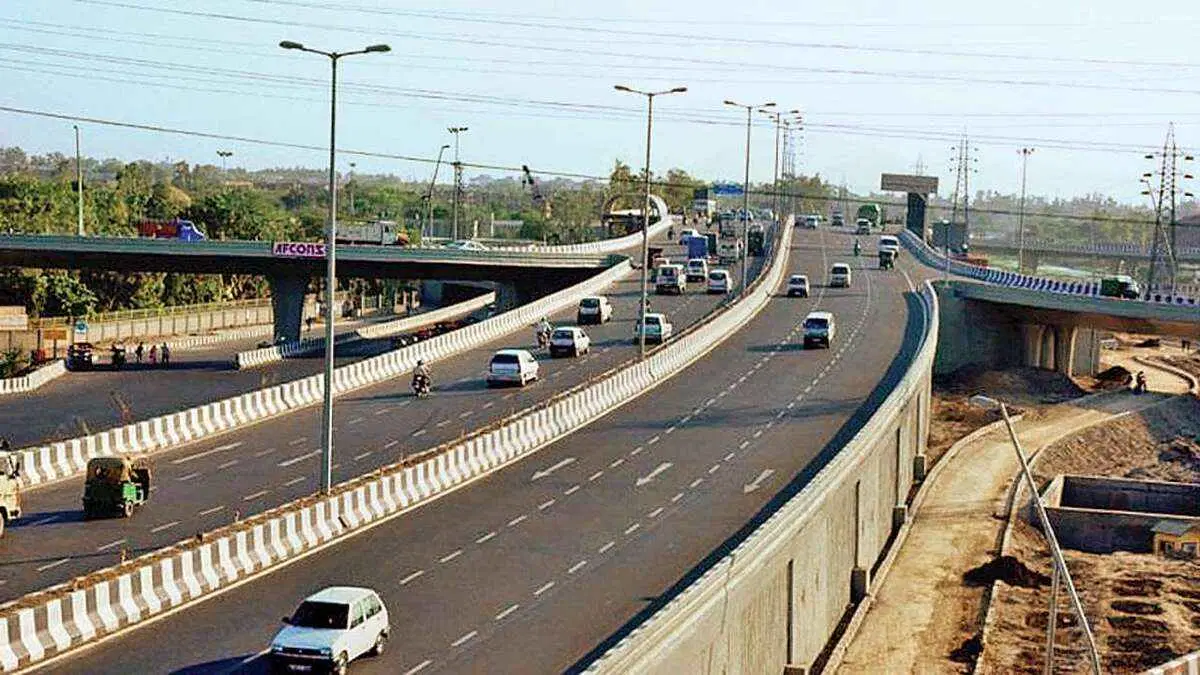
Delhi is set for one of its largest infrastructure pushes in recent years, with the Union government allocating ₹50,000 crore for road projects across the Capital over the next six months. The announcement highlights a wider strategy to strengthen connectivity and modernise transport corridors, even as experts warn that urban expansion must align with sustainable and climate-resilient goals.
Officials confirmed that the investment is part of an ongoing pipeline of development projects valued at nearly ₹1,00,000 crore. These projects are expected to accelerate work on new expressways, ring roads, and arterial connections, with the Urban Extension Road-2 (UER-2) already being highlighted as a milestone in easing travel around Delhi’s congested peripheries.Infrastructure specialists note that such large-scale funding comes at a critical moment for the Capital. With traffic congestion consistently ranking among the worst globally, smoother highways and bypass routes could reduce travel time, improve logistics, and lower vehicular emissions caused by idling.
Also Watch: An Exclusive Interview with Sanjeev Jaiswal (IAS), CEO MHADA
However, analysts also caution that without parallel investment in sustainable mobility such as public transport, electric vehicle infrastructure, and cycling networks the gains from new highways could be short-lived.The government’s renewed focus on infrastructure is being framed not only as an economic stimulus but also as part of India’s ambition to position itself as a global leader in sustainable growth. Officials stressed that investment in modern roads should reflect the principles of justice, efficiency, and long-term ecological responsibility.At the project unveiling in Rohini, experts described the ongoing transformation of Delhi’s road network as both symbolic and practical. Symbolic, because it signals the intent to bridge traditional challenges of poor infrastructure with new-age solutions; practical, because roads remain the backbone of trade, mobility, and urban integration.
Transport economists argue that while big-ticket projects enhance connectivity, the ultimate test will be their contribution to Delhi’s broader vision of becoming a zero-net-carbon and equitable city. For example, the inclusion of green corridors, advanced drainage to handle extreme rainfall, and pedestrian-friendly designs could ensure that investments deliver benefits beyond short-term traffic relief.
Community voices have also pointed out that the push for expressways should not overshadow the need for equitable development within neighbourhoods. Local roads, last-mile connectivity, and access to safe non-motorised transport remain crucial for the majority of daily commuters.As construction timelines compress to a six-month horizon, all eyes will be on how efficiently projects are rolled out and whether they are designed to complement the city’s long-term climate and sustainability goals. The ₹50,000 crore commitment signals scale and urgency, but its true success will lie in ensuring Delhi’s infrastructure growth is as green and inclusive as it is ambitious.
