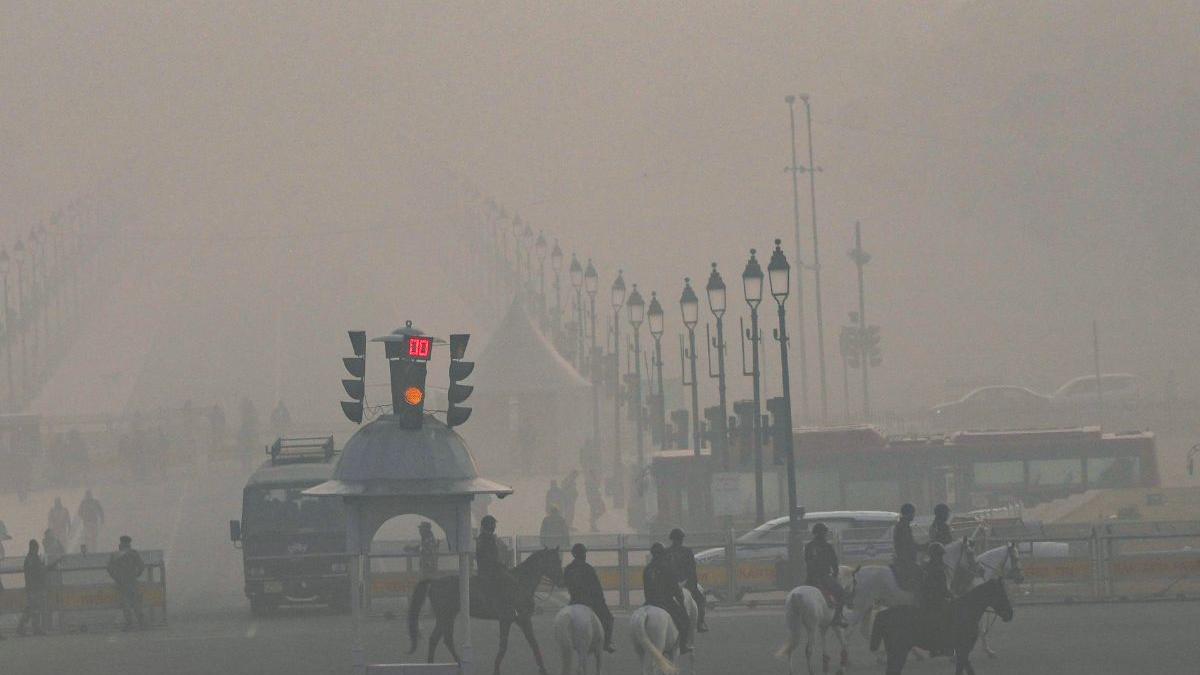
The Supreme Court has stepped in to address Delhi’s intensifying air pollution crisis, urging authorities to examine traffic bottlenecks at city borders and the economic fallout of pollution-related restrictions on vulnerable workers. The court asked highway and municipal agencies to consider shifting or temporarily closing nine toll plazas around the capital, while also advising the Delhi government to explore alternative employment for construction workers left idle during enforced curbs.
The intervention reflects judicial concern that congestion at Delhi’s entry points is exacerbating emissions at a time when air quality remains critically poor. Long queues of vehicles waiting at toll plazas often lead to prolonged idling, significantly increasing particulate and nitrogen oxide emissions. Urban mobility experts have repeatedly flagged border congestion as a structural contributor to pollution, particularly during winter when atmospheric conditions trap pollutants closer to the ground. senior transport official said the court’s suggestion could help improve traffic flow during peak pollution periods. “Re-evaluating toll operations, even temporarily, may reduce congestion-related emissions without disrupting essential movement,” the official noted. Urban planners add that such measures could accelerate the transition towards barrier-free tolling and smarter freight management systems in the National Capital Region.
Beyond traffic, the court also highlighted the human cost of pollution control measures. Construction bans imposed during severe air quality episodes have left thousands of daily-wage workers without income. The bench asked the Delhi government to consider whether alternative work could be provided to those affected, signalling that environmental action must account for social equity. Labour economists point out that construction workers form a significant part of the informal urban workforce, often lacking savings or social security. “Environmental restrictions are necessary, but without parallel livelihood planning, they can deepen urban inequality,” said an expert on informal labour markets. Providing temporary public works or maintenance roles during shutdowns could help cushion income shocks while supporting city upkeep.The court’s remarks underline a broader shift towards integrated urban governance, where pollution mitigation is linked with transport planning, labour welfare, and economic resilience. While emergency measures such as construction halts and traffic restrictions offer short-term relief, experts argue that Delhi needs long-term solutions rooted in cleaner mobility, decentralised employment, and low-carbon infrastructure.
Transport analysts emphasise that easing border congestion should be paired with stronger public transport links, cleaner freight corridors, and coordinated planning across state boundaries. Similarly, protecting workers during environmental emergencies requires institutionalised safety nets rather than ad-hoc responses.
As Delhi grapples with recurring air quality emergencies, the Supreme Court’s guidance adds momentum to a more balanced approach one that recognises that sustainable cities are built not only on cleaner air, but also on inclusive policies that protect livelihoods while reducing emissions.
Delhi Supreme Court Urges Shifting Nine Toll Plazas And Work For Workers