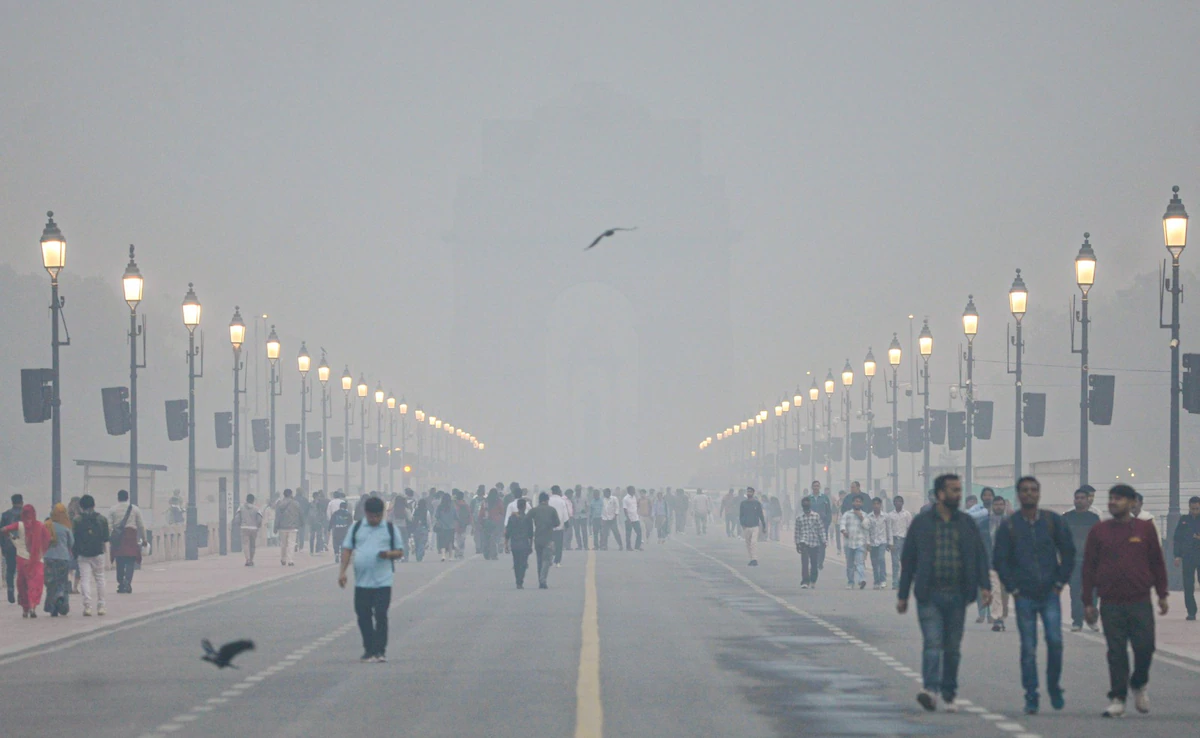
The Supreme Court is set to hear a fresh plea on the worsening air pollution crisis in Delhi NCR on December 17, signalling renewed judicial scrutiny of how environmental orders are being implemented on the ground. The case assumes wider significance as toxic air continues to disrupt daily life, education, and livelihoods across India’s largest urban region, exposing gaps between policy intent and real-world enforcement.
During a preliminary hearing, the court indicated that any directions issued would be practical, enforceable, and capable of compliance. Legal observers said this marks a shift from symbolic interventions towards outcomes that can realistically be delivered by urban authorities. The bench took note of submissions highlighting that despite existing restrictions, violations continue, particularly involving outdoor activities during periods of severe air pollution. According to submissions made by a court-appointed adviser, preventive frameworks such as the Graded Response Action Plan are in place, but weak implementation has diluted their impact.
Restrictions on outdoor sports and physical activities, including those involving children, were reportedly being bypassed by some institutions, undermining both public health safeguards and judicial authority. Regulatory notifications prohibiting such activities were also cited as being inadequately enforced. The court underlined that air pollution cannot be treated as a seasonal inconvenience limited to winter months. Judges observed that poor air quality is a structural urban challenge linked to construction practices, transport choices, energy use, and lifestyle patterns in rapidly expanding cities like Delhi. Importantly, the bench acknowledged that the burden of pollution falls disproportionately on lower-income communities, even though emissions are often driven by consumption patterns of more affluent groups.
Concerns were also raised about the socio-economic impact of emergency measures. With stricter controls leading to construction shutdowns, daily-wage workers have faced sudden income loss. The court noted that environmental protection orders must account for equity, ensuring that climate and clean-air actions do not deepen urban inequality. Industry experts argue that this balance is essential for building inclusive and sustainable cities rather than reactive, short-term fixes.The judges urged stakeholders to route all suggestions and data through the court-appointed adviser, discouraging publicity-driven litigation.
Legal analysts said this reflects judicial fatigue with fragmented interventions and a preference for coordinated, evidence-led decision-making. As Delhi NCR continues to grapple with hazardous air quality, the upcoming hearing is expected to focus on accountability, compliance mechanisms, and long-term urban solutions. Urban planners stress that durable improvements will require cleaner mobility, regulated construction practices, and coordinated regional governance measures that align public health with economic resilience. The court’s approach could shape how India’s cities pursue cleaner air while safeguarding jobs, equity, and urban liveability.
Delhi Supreme Court To Hear Delhi NCR Air Pollution Plea December Seventeen