


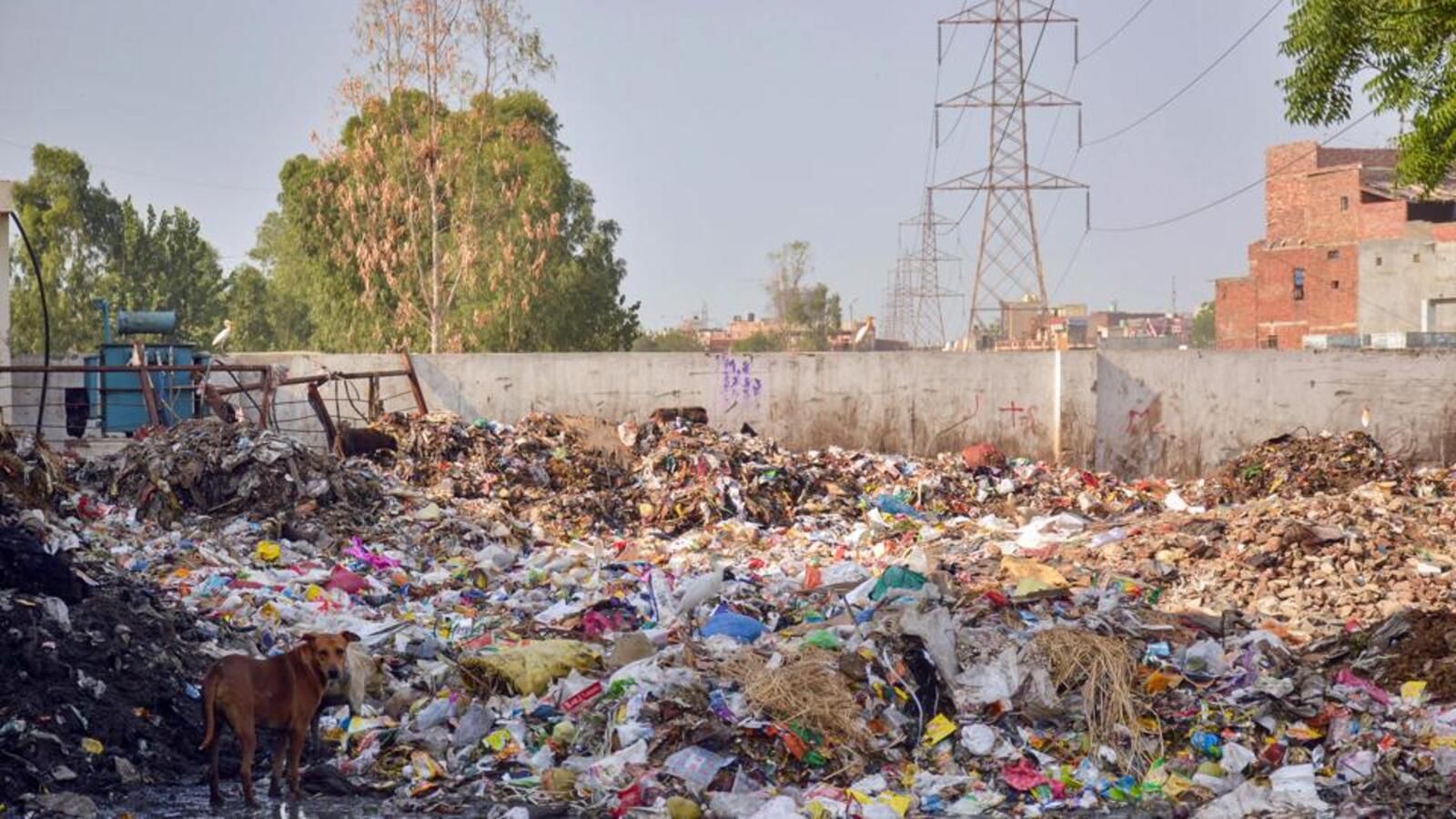
Nearly two years after being penalised for failing to comply with national waste management norms, the Delhi government has submitted a revised solid waste action plan to the National Green Tribunal (NGT). The document outlines new processing infrastructure, stricter accountability measures and timelines extending to 2028.
If executed as planned, Delhi could significantly reduce the volume of untreated solid waste sent to landfills—an issue long associated with public health risks, fires, methane emissions and declining liveability across the National Capital Region. According to the submission, the roadmap includes the commissioning of four additional waste-to-energy facilities and two decentralised bio-gas plants. These new assets are expected to create a cumulative processing capacity of roughly 7,750 tonnes per day (TPD), strengthening the city’s ability to manage increasing volumes of waste as population and urban density grow.
“The updated framework reflects both infrastructural gaps and operational targets,” a senior government official said on condition of anonymity. A key element of the plan focuses on legacy waste clearing—particularly the large mounds at Ghazipur, Bhalswa and Okhla.
These landfill sites, which together once held an estimated 28 million tonnes of accumulated municipal waste, have become symbols of the Capital’s environmental governance challenges. The government claims that 20.5 million tonnes have already been bio-mined, with the remainder expected to be processed between 2026 and 2027. The NGT had previously imposed a cumulative penalty of ₹3,132 crore on Delhi for violations under the Solid Waste Management Rules, 2016. The order operationalised the ‘polluter pays’ principle, holding the administration financially accountable for long-standing lapses. While the penalty was briefly contested before the Supreme Court, the government has now withdrawn its challenge.
Beyond infrastructure, the plan places renewed emphasis on source segregation, bulk-waste generator compliance and material recovery. Current reported segregation levels vary across governing bodies, with New Delhi Municipal Council areas performing considerably better than the rest of the Capital. The Municipal Corporation of Delhi has set a target of 100% segregation by January 2027. Urban planning researchers say the transition will require not only new facilities but also behavioural and institutional shifts. “Cities that manage waste well do so through regulation, incentives and public participation—not infrastructure alone,” noted an independent waste governance expert.
As the tribunal prepares for its next hearing, the plan represents both a policy reset and a reminder that waste systems must evolve as cities evolve. Whether Delhi can shift from reactive crisis management to a circular, climate-aligned waste ecosystem will depend on execution, transparency and sustained civic participation.
Also Read: Mumbai Secures CRZ Nod For ₹3,000 Crore Dharavi–Bhandup Recycled Water Tunnel
Delhi Submits ₹3,132 Crore Waste Plan After NGT Penalty And Delays
