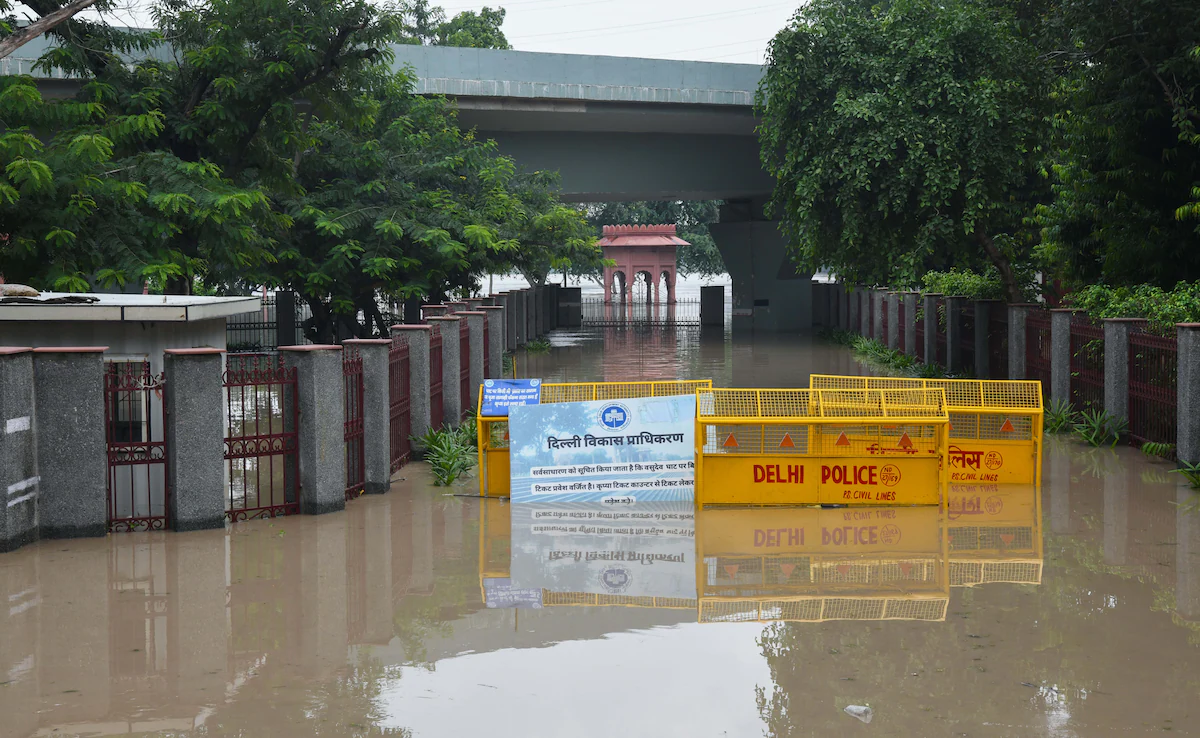
Delhi struggles as Yamuna river overflows flooding low lying areas
Delhi woke up today to alarming visuals of the swollen Yamuna spilling into low-lying neighbourhoods, triggering severe waterlogging, evacuation drives and a citywide flood warning. Continuous downpours in recent days have pushed the river above the official danger mark, forcing closures, halting traffic, and disrupting everyday life across the capital.
At Loha Pul, the old iron bridge connecting northern parts of the city, authorities suspended vehicular movement after water levels climbed past the critical threshold of 205.33 metres. Residential areas around Civil Lines, Bela Road and Monastery Market were among the worst affected, with submerged vehicles, flooded homes, and shopkeepers emptying stores as precautionary measures.
Officials confirmed that relief camps established to house evacuated residents in Mayur Vihar and nearby areas also witnessed flooding, underscoring the scale of the crisis. Local administrations have shifted families from riverside communities to safer grounds as a precaution against rising waters.The India Meteorological Department has forecast continued rainfall over the next four days, with thunderstorms predicted for September 4 and 6. Meteorologists warn that sustained rainfall could aggravate the situation further, prolonging waterlogging and worsening flood risks across northern Delhi.
Experts note that the Yamuna’s periodic overflow highlights Delhi’s longstanding vulnerabilities in urban planning and climate adaptation. Rapid concretisation of riverbanks, inadequate stormwater drainage, and unchecked construction in floodplains have left the capital more exposed to extreme weather events. Climate researchers caution that the city’s dependence on embankments alone cannot prevent urban flooding in the face of erratic monsoon behaviour driven by climate change.
For local businesses, the flooding has translated into immediate financial stress. Shopkeepers in Monastery Market closed operations for the coming week after being advised by officials to evacuate, while roadside vendors in Civil Lines reported losing stock to the encroaching water. The disruption also extended to commuters as major roadways and underpasses were rendered unusable.Experts argue that Delhi’s response must go beyond ad-hoc measures of evacuation and sandbagging. They emphasise the need for long-term investments in resilient drainage infrastructure, strict enforcement of zoning rules along the Yamuna floodplains, and eco-friendly urban design that respects natural water channels. Without such interventions, each monsoon risks becoming an annual humanitarian and economic setback for the capital.
While authorities continue to monitor the Yamuna’s levels closely, residents in flood-prone neighbourhoods are bracing for further disruption in the coming days. For Delhi, the unfolding crisis once again reinforces the urgency of building a sustainable, climate-resilient city capable of withstanding both natural and man-made pressures.