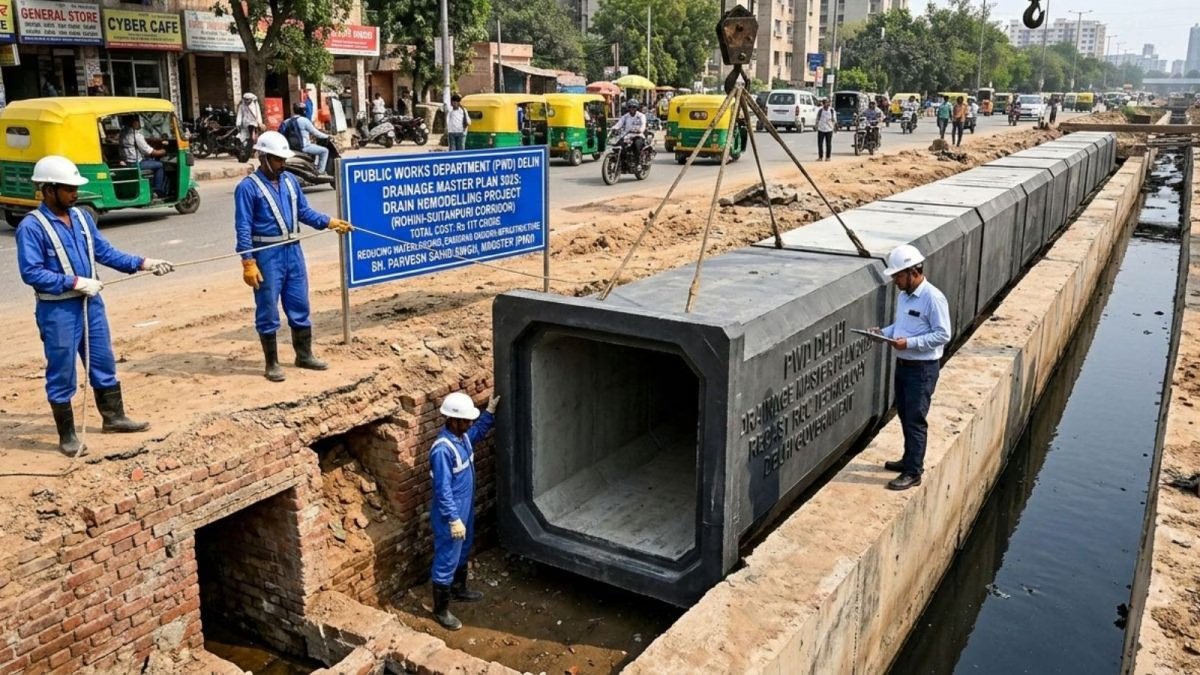
A major stormwater drainage project along Rohtak Road in western Delhi is approaching completion, raising hopes of reducing chronic monsoon flooding that has disrupted traffic and daily life in several neighbourhoods for years. The infrastructure upgrade, led by the city’s public works authorities, aims to improve rainwater management along one of the capital’s key arterial corridors and strengthen urban resilience as extreme rainfall events become more frequent. Stretching across a long section of Rohtak Road, the stormwater drainage project focuses on building and upgrading an underground drainage network designed to channel rainwater away from roads and residential areas more efficiently. Officials overseeing the work say the initiative addresses long-standing waterlogging problems affecting densely populated localities and busy transport routes in West Delhi.
Urban planners note that poor stormwater management has historically posed a challenge in this part of the city, where rapid urbanisation and expanding road networks have reduced natural drainage pathways. During intense rainfall, water often accumulates on roads and in nearby colonies, slowing traffic and affecting businesses, public transport and emergency mobility. According to project engineers, the drainage system under construction will run between a major local drain near Nangloi and another drainage channel in the outer western zone of Delhi. The reinforced concrete network, varying in width to accommodate different water volumes, is designed to carry large flows of stormwater during peak monsoon conditions. Authorities estimate that most of the drainage corridor has already been completed, with only a smaller remaining section still under construction. Once operational, the system is expected to move rainwater more quickly from low-lying neighbourhoods into larger drainage channels connected to the city’s broader flood management network. Transport analysts say improvements along Rohtak Road could also deliver indirect economic benefits. The corridor serves as an important route linking residential districts, industrial zones and interstate highways toward Haryana. Flooded roads during heavy rain often disrupt freight movement and public transport services, causing delays and financial losses for local businesses.
The drainage upgrade also coincides with broader flood-control efforts in the area. Engineers from irrigation and flood management departments have recently completed a separate project designed to divert excess water from a nearby drain into a supplementary channel. Together, the projects are expected to improve overall water flow across the western edge of the capital during intense rainfall events. Climate specialists say such investments reflect a growing shift in Indian cities toward infrastructure that supports climate adaptation. With urban flooding becoming more common due to heavier rainfall patterns and expanding built-up areas, drainage upgrades are increasingly seen as essential urban infrastructure rather than secondary utilities.
For residents and commuters in West Delhi, the real test will come with the next monsoon. If the upgraded stormwater drainage project performs as intended, it could mark an important step toward more reliable mobility, safer neighbourhoods and stronger climate resilience in one of the capital’s busiest urban corridors.