


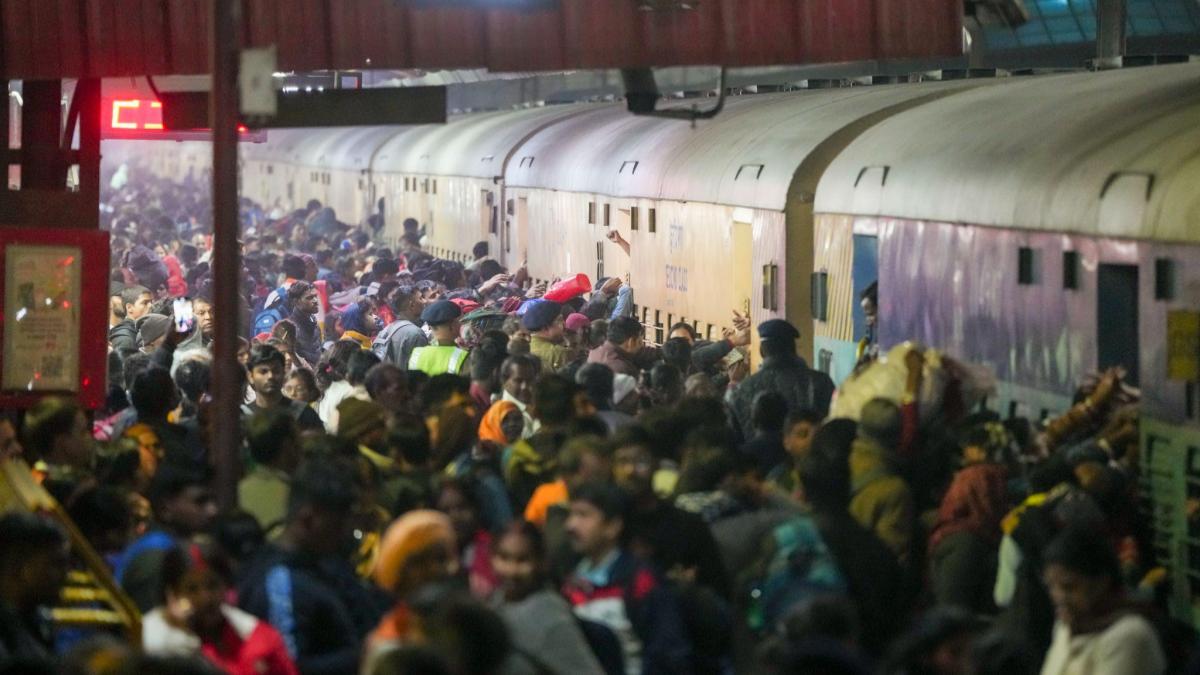
Delhi’s busiest railway terminal is preparing for a major upgrade as construction of a new passenger holding area near Ajmeri Gate moves towards completion. The initiative aims to significantly improve crowd management during peak hours, particularly during festive seasons when the station sees an extraordinary surge in footfall.
Officials have underscored the urgency of the project, describing the facility as critical to ensuring smoother passenger flows in a city where railway congestion has long been a persistent challenge. The permanent holding area is being developed in three dedicated zones pre-ticketing, ticketing, and post-ticketing – to streamline movement and reduce bottlenecks.The pre-ticketing zone will cover 1,950 square metres with capacity for nearly 2,700 passengers, ensuring adequate space for those waiting to purchase tickets. The ticketing zone, spread across 2,288 square metres, will be able to accommodate about 3,100 passengers, supported by 22 counters designed for faster transactions. Meanwhile, the post-ticketing zone of 1,570 square metres will serve approximately 1,350 passengers, providing space for security checks, queuing, and luggage scanning.
Also Watch: An Exclusive Interview with Sanjeev Jaiswal (IAS), CEO MHADA
Authorities have highlighted that the facility will be fitted with modern amenities such as electronic information boards, a public address system, AI-enabled surveillance cameras, toilet blocks, luggage scanners, and clear signage. Connectivity with the metro network will be integrated, allowing travellers to seamlessly switch between railway and metro services.
However, the construction has not been without challenges. Relocating existing ATM kiosks, mobile towers, high masts, a prepaid taxi stand, and even a police cabin has slowed progress. Officials remain confident that despite these hurdles, the project will be delivered within the planned timeframe.
Experts believe that the new holding area is more than a capacity expansion; it represents a shift in how India’s major transport hubs must adapt to the pressures of rapid urbanisation. As Delhi grows into a denser and more complex megacity, public transport nodes need to combine efficiency with resilience. “Passenger convenience cannot be treated as an afterthought in a city moving towards sustainable mobility. Infrastructure has to evolve to meet the demands of millions while reducing chaos and carbon footprint,” said a senior urban transport expert.
The holding area is being seen as a step towards more organised and eco-friendly travel experiences, cutting down on crowd spillovers and unmanaged queues that often result in safety risks and increased emissions from idling vehicles outside stations.For a city striving towards inclusive and sustainable growth, the facility could become a benchmark for how public transport infrastructure should be reimagined. As construction progresses, the real test will lie in timely delivery and whether the design truly delivers on its promise of easing passenger congestion.
