


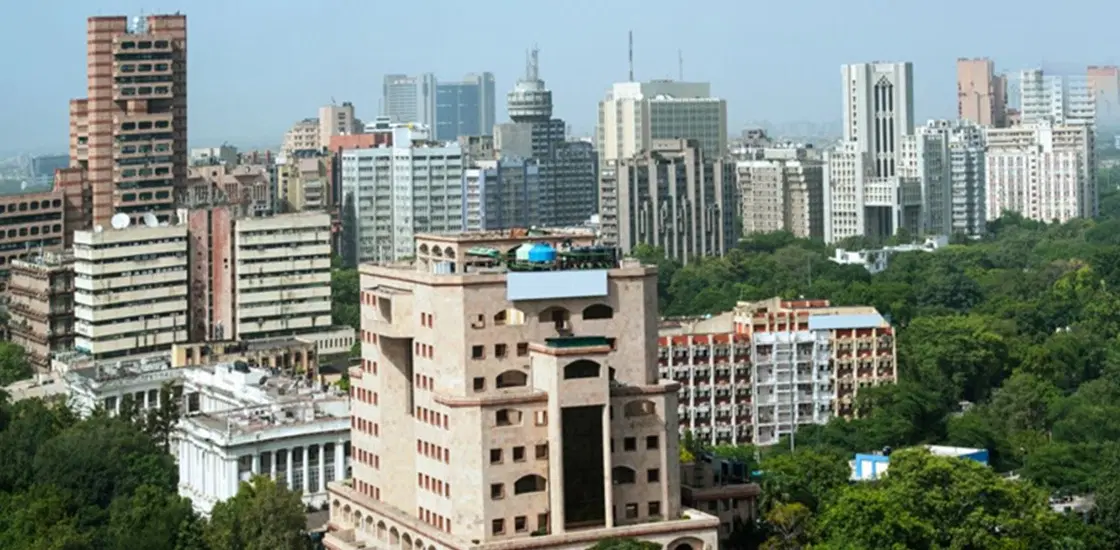
A major institutional investment in South Delhi is signalling a quiet but consequential shift in how the capital’s most established neighbourhoods may urbanise in the coming decade. An alternative investment fund focused on real estate has committed Rs 260 crore to a premium residential development planned on a large land parcel in South Delhi, marking one of the first instances of institutional capital backing a vertical luxury housing project in an area long defined by independent floors.
The site, acquired from a corporate landholder for approximately Rs 350 crore, has received approvals for high-density residential construction across nearly half a million square feet. For a city where land scarcity, ageing housing stock and fragmented redevelopment have constrained supply, the transaction highlights how capital is increasingly aligning with compact, managed communities rather than horizontal expansion. Urban planners say South Delhi’s housing model is under pressure from demographic change. Multi-generational households, rising security concerns and the demand for professional facility management are reshaping buyer expectations. Vertical developments, while still limited in number, offer a controlled way to introduce density without expanding the city’s footprint a priority as Delhi grapples with congestion, air quality and infrastructure stress. The investment also reflects a broader recalibration among long-term capital providers. Institutional investors are moving beyond traditional commercial assets and peripheral townships, instead targeting city-centric residential land where regulatory clarity and end-user demand intersect. According to industry observers, this approach reduces speculative risk while supporting urban consolidation a key principle of climate-resilient city planning.
The proposed project will offer large-format apartments in a market dominated by individually redeveloped plots. Analysts note that while luxury housing is often criticised for exclusivity, vertical gated communities can deliver efficiencies in energy use, water management and waste systems when compared to fragmented low-rise construction. If executed responsibly, such projects can reduce per-capita resource consumption in dense urban zones. This investment follows earlier institutional backing for a similar high-end residential project in Gurugram, suggesting a regional strategy focused on well-located, approval-ready land parcels. Fund managers involved in the transaction have indicated that city-core residential assets remain a priority as India’s urban population grows and household preferences evolve. For South Delhi, the development raises larger civic questions. Infrastructure capacity, mobility planning and neighbourhood integration will determine whether vertical luxury housing becomes a sustainable urban solution or a source of local strain. Municipal authorities and developers alike will be tested on how effectively such projects contribute to liveability rather than simply monetising scarcity.
As institutional capital deepens its presence, South Delhi luxury housing may increasingly serve as a template for how legacy neighbourhoods adapt to modern urban realities balancing density, design and long-term resilience in one of India’s most complex cities.
Also Read: Mumbai Retail Leasing Reshapes Urban High Streets
Delhi South Delhi luxury housing attracts institutional capital
