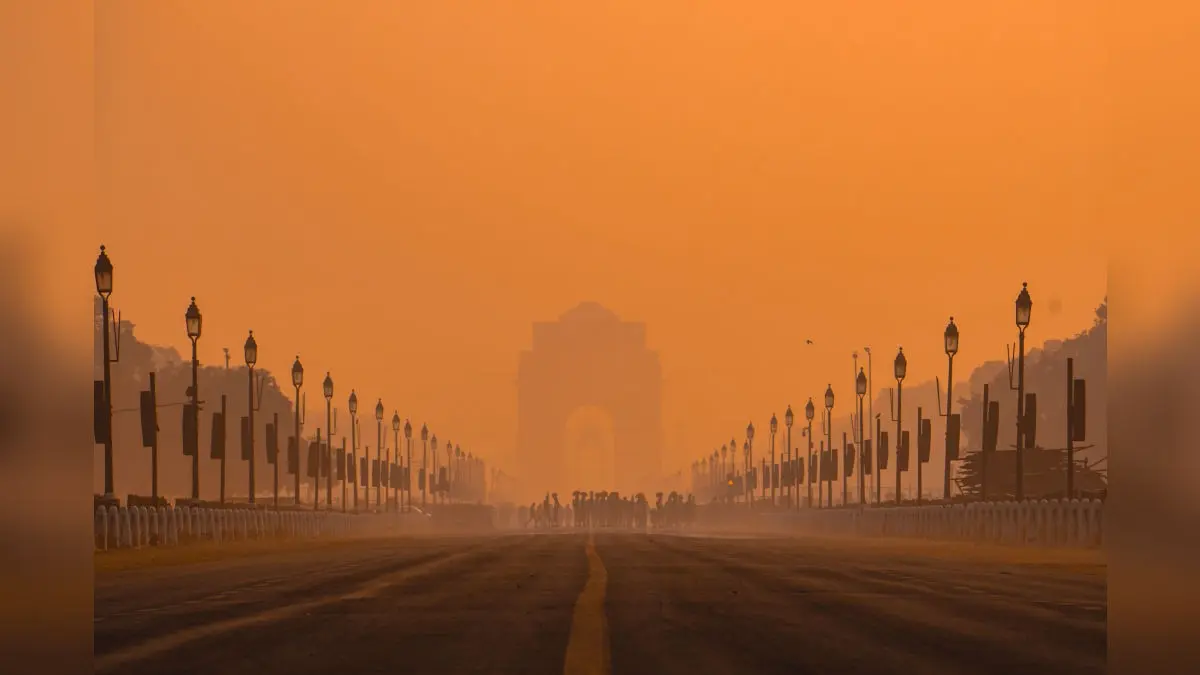
Delhi woke up on December 22 under a thick blanket of smog as air quality across the national capital deteriorated sharply, pushing several areas into the ‘severe’ category and disrupting flight operations. With an overall Air Quality Index of 366, the episode has once again exposed the capital’s vulnerability to winter pollution and its growing economic and public health costs.
\According to official pollution data, seven monitoring stations across Delhi recorded ‘severe’ air quality levels during the morning hours, while the rest of the city remained firmly in the ‘very poor’ bracket. Northern neighbourhoods emerged as the worst affected, with AQI readings exceeding 400 in multiple locations. Environmental analysts noted that stagnant atmospheric conditions and high particulate concentration contributed to the rapid deterioration. Weather conditions compounded the situation. The India Meteorological Department issued a yellow alert, forecasting moderate fog and low temperatures, with reduced wind speed limiting pollutant dispersion. Urban climate experts observed that such winter inversions are becoming more frequent, intensifying pollution episodes in landlocked megacities like Delhi.
The impact was immediately visible at Indira Gandhi International Airport, where dense fog and low visibility led to widespread flight disruptions. More than a hundred flights were cancelled, while hundreds faced delays, affecting passenger mobility and airline operations. Aviation industry representatives said such disruptions increase operational costs and erode confidence in time-sensitive travel through the capital. In response to the worsening conditions, authorities implemented the highest level of restrictions under the Graded Response Action Plan across Delhi-NCR. Measures included a ban on non-essential construction, tighter controls on diesel vehicles, and intensified enforcement against pollution sources. A senior government official stated that emergency actions were necessary to prevent further escalation but acknowledged that these measures are reactive rather than preventive.
Health systems across the city also reported increased strain. Medical professionals noted a sharp rise in patients presenting with respiratory distress, asthma flare-ups and bronchial infections. Public health experts warned that repeated exposure to severe air quality not only affects vulnerable populations but also leads to long-term productivity losses and rising healthcare expenditure in India’s largest urban economy. Urban planners and sustainability specialists argue that Delhi’s recurring winter smog reflects deeper structural challenges. Heavy dependence on private vehicles, construction-led growth, limited green buffers and regional pollution sources continue to undermine air quality management. Without coordinated action across transport, energy, construction and land-use planning, experts say emergency restrictions will remain an annual ritual. As India advances its urbanisation agenda, Delhi’s pollution crisis underscores the urgency of aligning growth with clean mobility, low-emission construction and regional air-shed planning. Building resilient, inclusive and low-carbon cities, urban economists suggest, is no longer an environmental ideal but a prerequisite for long-term economic stability and quality of life
Delhi Smog Triggers Severe AQI Flight Cancellations As Seven Areas Suffocate Today