


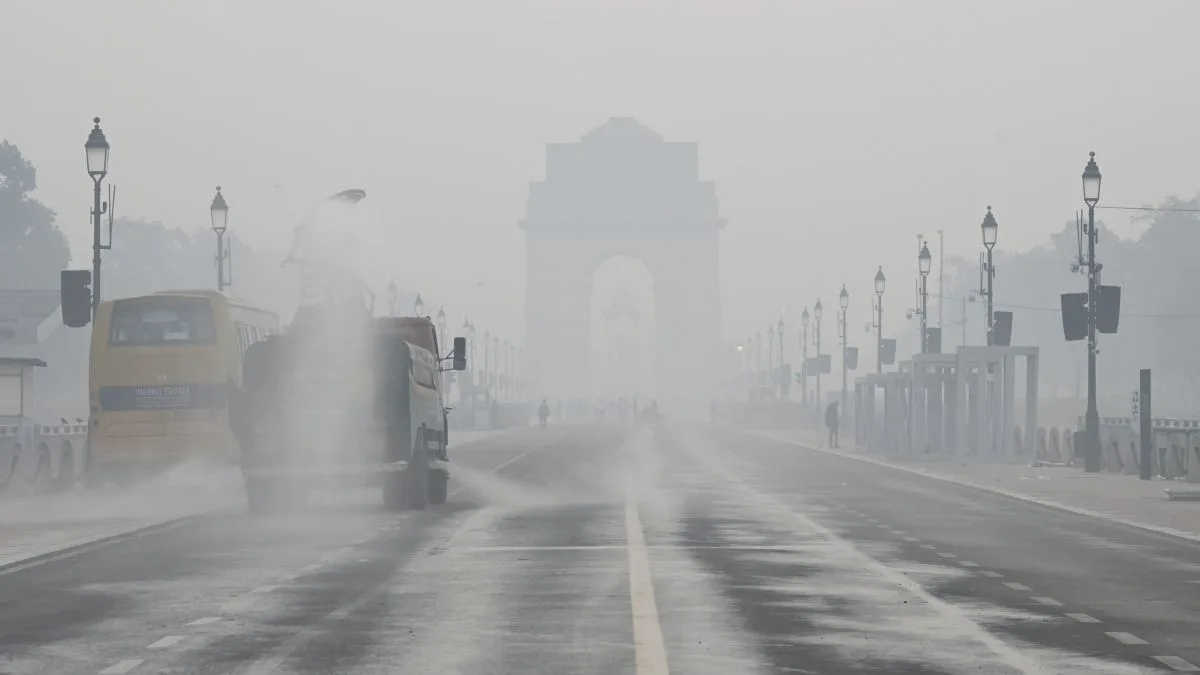
Delhi slipped back into a familiar winter pattern over the weekend as air quality levels deteriorated sharply, with the city’s air entering the Very Poor category. Dense smog reduced visibility across several neighbourhoods, raising fresh public health concerns and once again exposing the structural challenges facing India’s capital in managing urban air pollution.
Data from air quality monitoring stations showed a rapid rise in particulate matter concentrations, with PM2.5 and PM10 levels breaching safe thresholds across most parts of the city. Environmental experts said calm wind conditions, falling temperatures and seasonal atmospheric changes had trapped pollutants closer to ground level, allowing smog to accumulate through the morning hours. Several areas reported severely reduced visibility, affecting both road traffic and pedestrian movement. Public health professionals warned that recurring episodes of very poor air quality pose heightened risks for children, older residents and those with pre-existing respiratory or cardiac conditions. Clinics and neighbourhood health centres reported a noticeable uptick in patients complaining of breathlessness, coughing and eye irritation.
“Short-term exposure can aggravate asthma and bronchitis, while prolonged exposure increases long-term health risks,” a senior respiratory specialist noted.
Officials attributed the pollution spike to a combination of local and regional factors. Vehicular emissions, industrial activity, construction dust and biomass burning in surrounding areas were identified as major contributors. Urban planners pointed out that Delhi’s continued dependence on road-based transport and diesel-powered equipment remains a critical vulnerability during winter months, when dispersion conditions weaken.
In response, civic agencies urged residents to limit outdoor activity, particularly during early morning and late evening hours. Advisories recommended the use of protective masks and indoor air filtration where possible. Enforcement teams intensified checks on polluting vehicles and stepped up dust suppression measures, including mechanised road sweeping and water sprinkling on arterial roads. Municipal authorities also reminded construction firms to strictly comply with dust-control norms, including covering building materials and installing anti-smog barriers. Waste burning, a persistent contributor to localised pollution, remains under scrutiny, with regulators urging communities to rely on authorised waste management systems.
Urban policy experts argue that while emergency responses are necessary, they remain insufficient without long-term structural reforms. Expansion of clean public transport, faster electrification of vehicle fleets, tighter industrial emission standards and better coordination between neighbouring states are increasingly seen as essential to break the annual cycle of winter smog. As evening descended, the haze lingered across the capital, reinforcing concerns that poor air quality may persist in the coming days. The episode has once again highlighted the urgency for Delhi to align its urban growth with cleaner mobility, sustainable construction practices and climate-resilient planning key pillars for building healthier and more inclusive cities.
