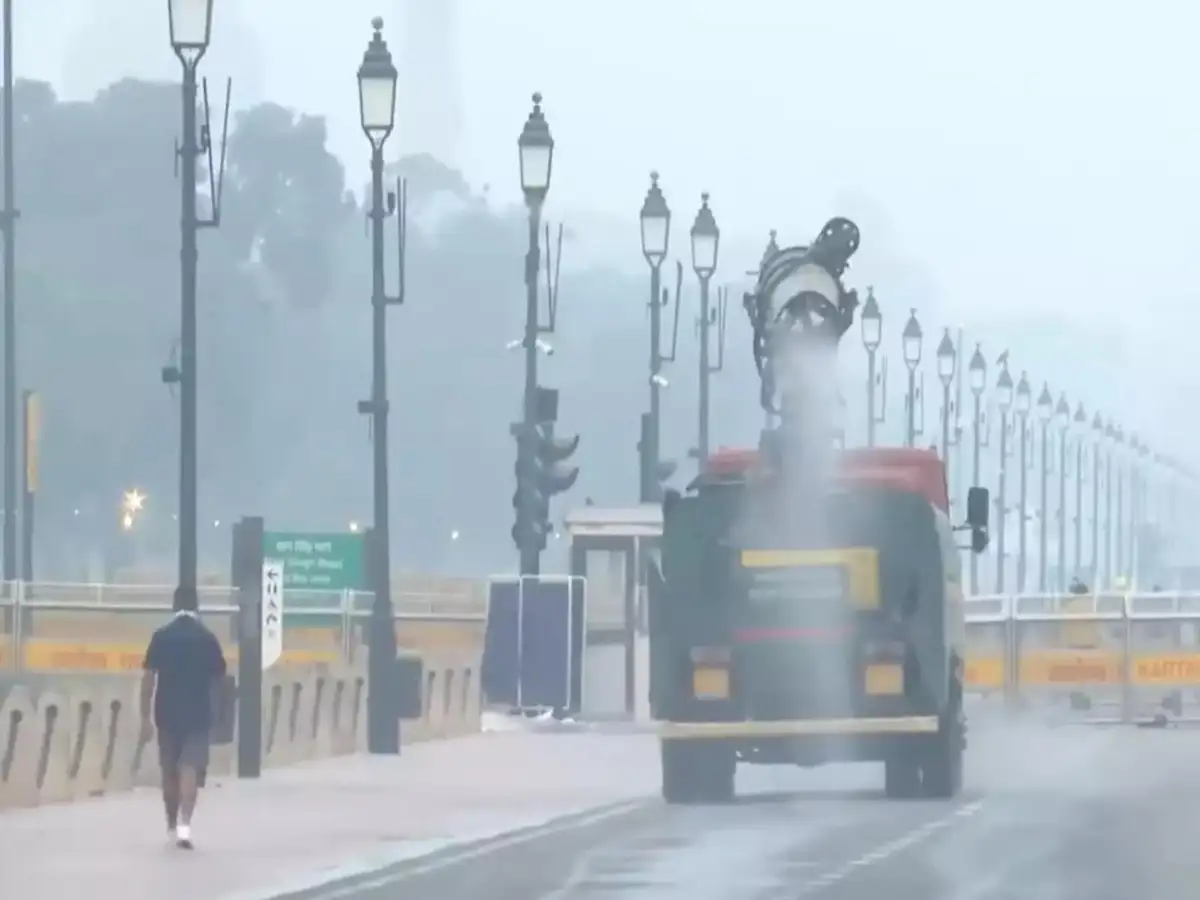
Delhi woke up to another morning under a dense haze as air pollution levels remained firmly in the “poor” category, reinforcing the city’s annual winter struggle with toxic air and its wider implications for urban health, productivity, and infrastructure resilience. With the Air Quality Index hovering close to the upper end of the poor range, visibility dropped across several districts, affecting daily mobility and raising concerns for vulnerable populations.
Data from national air monitoring systems showed that pollution levels varied sharply across neighbourhoods, reflecting the uneven distribution of emission sources and local meteorological conditions. Central business districts and traffic-heavy corridors recorded AQI readings well above safe limits, while pockets near the airport area fared slightly better. Even so, the overall citywide picture remained worrying, particularly as calm winds and colder temperatures trapped pollutants close to the ground. At Indira Gandhi International Airport, reduced visibility prompted the implementation of low-visibility operational protocols. While flights continued to arrive and depart, aviation experts noted that such conditions often lead to cascading delays, increasing fuel burn during holding patterns and placing additional strain on airport logistics. For a city positioning itself as a regional aviation hub, recurring smog episodes highlight the hidden economic costs of poor air quality.
Urban health specialists point out that repeated exposure to polluted air during winter months has long-term consequences. Children, older adults, and outdoor workers face elevated risks of respiratory and cardiovascular illnesses, which in turn affect workforce participation and healthcare expenditure. From an urban development perspective, this undermines efforts to create inclusive, people-first cities where public spaces and active mobility are safe year-round. The persistence of Delhi air quality challenges also raises questions for the real estate and infrastructure sectors. Developers and planners are increasingly factoring air filtration systems, green buffers, and building orientation into project design. However, experts caution that building-level solutions cannot substitute for citywide emission reduction strategies, including cleaner transport, better construction dust management, and regional coordination on pollution sources.
Climatologists attribute the current conditions to a familiar winter pattern: low wind speeds, temperature inversion, and seasonal emissions combining to create a pollution trap over the Indo-Gangetic plain. While short-term relief depends on weather changes, long-term improvement hinges on structural shifts in energy use, transport planning, and land management.
As Delhi continues to expand, the recurring smog serves as a reminder that economic growth and urban liveability are deeply intertwined with environmental performance. Strengthening early warning systems, improving public communication, and accelerating low-emission urban infrastructure will be critical if the capital is to break free from its annual air pollution cycle and move towards a more climate-resilient future.
Delhi Smog Persists Straining Health And Mobility