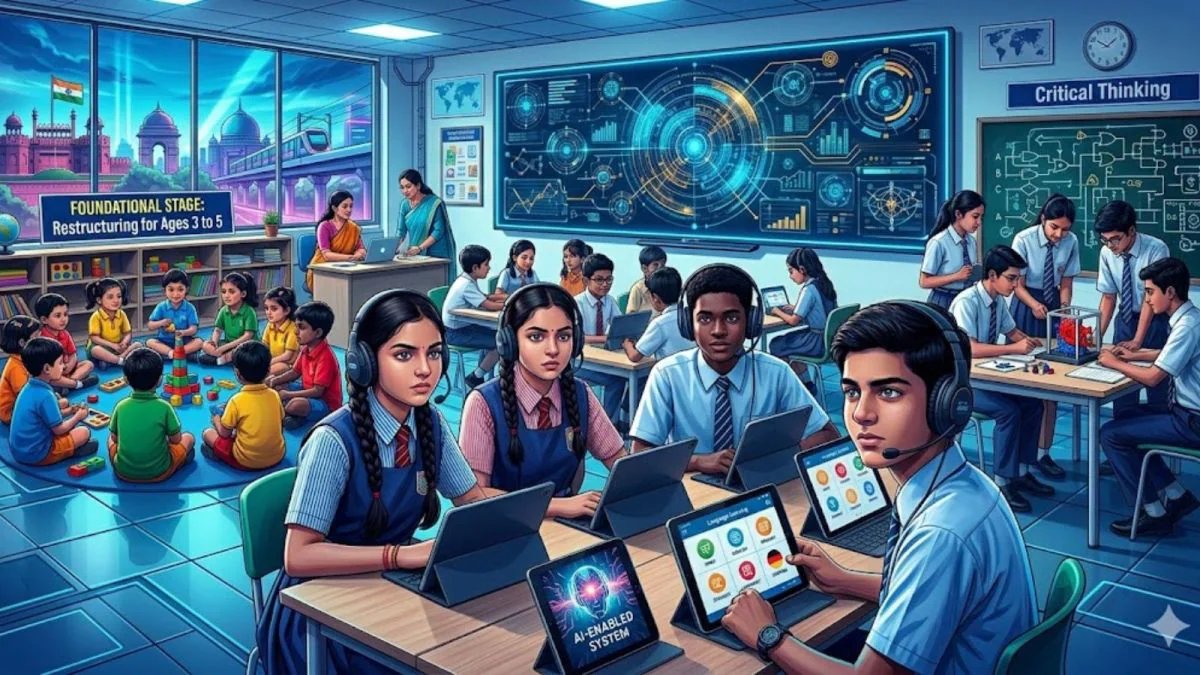
A new attempt to synchronize classroom learning with workplace expectations is taking shape in Delhi, where the government has convened a large-scale engagement platform linking schools, employers and students under its Skill Connect 2026 programe. The initiative signals a shift in urban education policy, recognizing that future economic growth depends not only on degrees but on practical, job-ready capabilities. Held in the Civil Lines area, the conclave brought together representatives from multiple sectors alongside educators and students, reflecting the city’s expanding demand for skilled labour across services, healthcare, retail and emerging technology domains. Officials involved in the programe indicated that over 30,000 internship opportunities are being made available through a wide network of employers, marking one of the largest coordinated efforts to integrate vocational exposure into school-level education.
The Skill Connect 2026 framework is designed to address a longstanding gap in Indian urban systems—where formal education often operates in isolation from labour market needs. Urban planners and education specialists note that such disconnects can limit productivity, particularly in rapidly growing metropolitan economies like Delhi, where industries require adaptable and digitally skilled workers. What distinguishes the initiative is its emphasis on structured pathways rather than one-off exposure. Supporting materials released alongside the programme aim to standardize internship access and guidance, indicating a move towards institutionalizing experiential learning. Officials suggest that this could help ensure equitable access for students across socio-economic backgrounds, a critical factor in inclusive urban development. The participation of companies across diverse sectors also highlights a broader shift in how industry engages with public education systems. Rather than relying solely on higher education institutions for recruitment, businesses are increasingly exploring early-stage engagement to shape skill pipelines. Industry observers say this approach could improve workforce readiness while reducing training costs in the long term.
Delhi’s vocational education ecosystem has been gradually expanding, with schools offering training in a wide range of trades, including emerging areas such as artificial intelligence and drone applications. The integration of entrepreneurship support—where student teams receive early-stage funding—further signals a policy push towards fostering job creators alongside job seekers. From a sustainability perspective, the initiative aligns with the broader vision of building resilient urban economies. By equipping young people with relevant skills, cities can better respond to technological disruption, climate-linked transitions and evolving employment patterns. Experts argue that skill-based education also supports more equitable access to economic opportunities, particularly for first-generation learners. However, the effectiveness of such programmes will depend on continuity, quality of mentorship and alignment with industry standards. Without sustained engagement and measurable outcomes, there is a risk that internships remain symbolic rather than transformative.
As Delhi positions itself as a knowledge and services hub, initiatives like Skill Connect 2026 could play a defining role in shaping its workforce. The next phase will likely focus on scaling participation, tracking outcomes and ensuring that the benefits extend beyond pilot institutions to the wider urban education system.