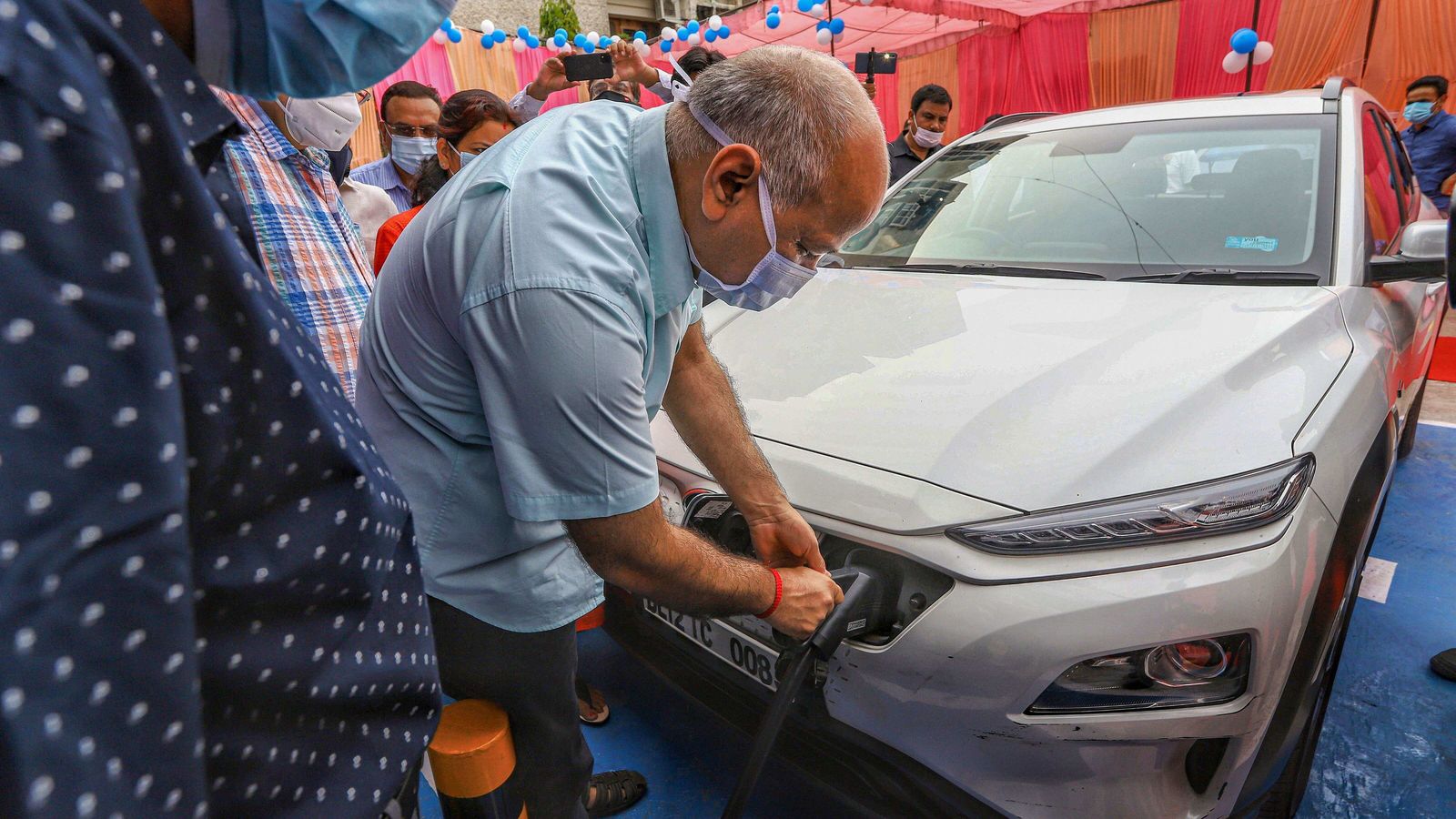
In a decisive stride towards carbon neutrality and ecological resilience, the Delhi Forest Department has announced a complete transition from diesel to electric vehicles (EVs) within a record span of 60 days.
This policy move, formally instituted by Delhi Environment, signals a paradigm shift in urban environmental governance—placing sustainability and clean mobility at the heart of the capital’s ecological mandate. As per the government’s directive, the Forest Department has been ordered to prepare a detailed roadmap within the next seven days to facilitate this fleet transition. Effective immediately, all non-essential and non-electric vehicles, whether operated by private individuals or government agencies, have been barred from entering Delhi’s forested and protected areas. This ban aims to significantly reduce vehicular emissions in ecologically sensitive zones and preserve the ambient biodiversity from the adverse effects of noise and air pollution.
“Delhi’s forests deserve silence, not smoke. This isn’t just a vehicle upgrade—it’s a vision upgrade,” remarked Minister Sirsa, emphasising the urgency of aligning mobility with ecological sensitivity. This initiative is not an isolated effort but a key component of Delhi Government’s larger environmental action plan. With an allocation of ₹506 crore in the current fiscal budget specifically earmarked for environment and forest-related initiatives, the city’s administration has made its clearest commitment yet to climate resilience and green transformation. These funds will also support pollution control systems, biodiversity conservation programmes, and the expansion of Delhi’s urban green spaces. Adding further momentum to this green vision, the government will launch a massive plantation drive aimed at planting over 70 lakh saplings across the capital. Officials believe this will substantially increase Delhi’s green cover, offset carbon footprints, and foster healthier urban living conditions for its 20 million residents.
Delhi’s aggressive push for EVs in public systems also aligns with India’s national goals under the Faster Adoption and Manufacturing of Hybrid and Electric Vehicles (FAME) scheme, as well as its global climate commitments under the Paris Agreement. The city’s shift to electric fleets in forest zones is expected to set a benchmark for other Indian metros grappling with deteriorating air quality and vehicular congestion. The initiative has been widely seen as a progressive, human-centric policy that combines environmental stewardship with technological innovation.
Environmentalists and urban planners have lauded the move as a necessary step towards building cities that prioritise nature, health, and equity over industrial convenience. While the road to complete green mobility may be long, Delhi’s swift and structured approach marks a turning point. In the capital’s dense thicket of development challenges, this green pivot sends a clear message—the city is ready to walk the talk on sustainability, one electric mile at a time.