


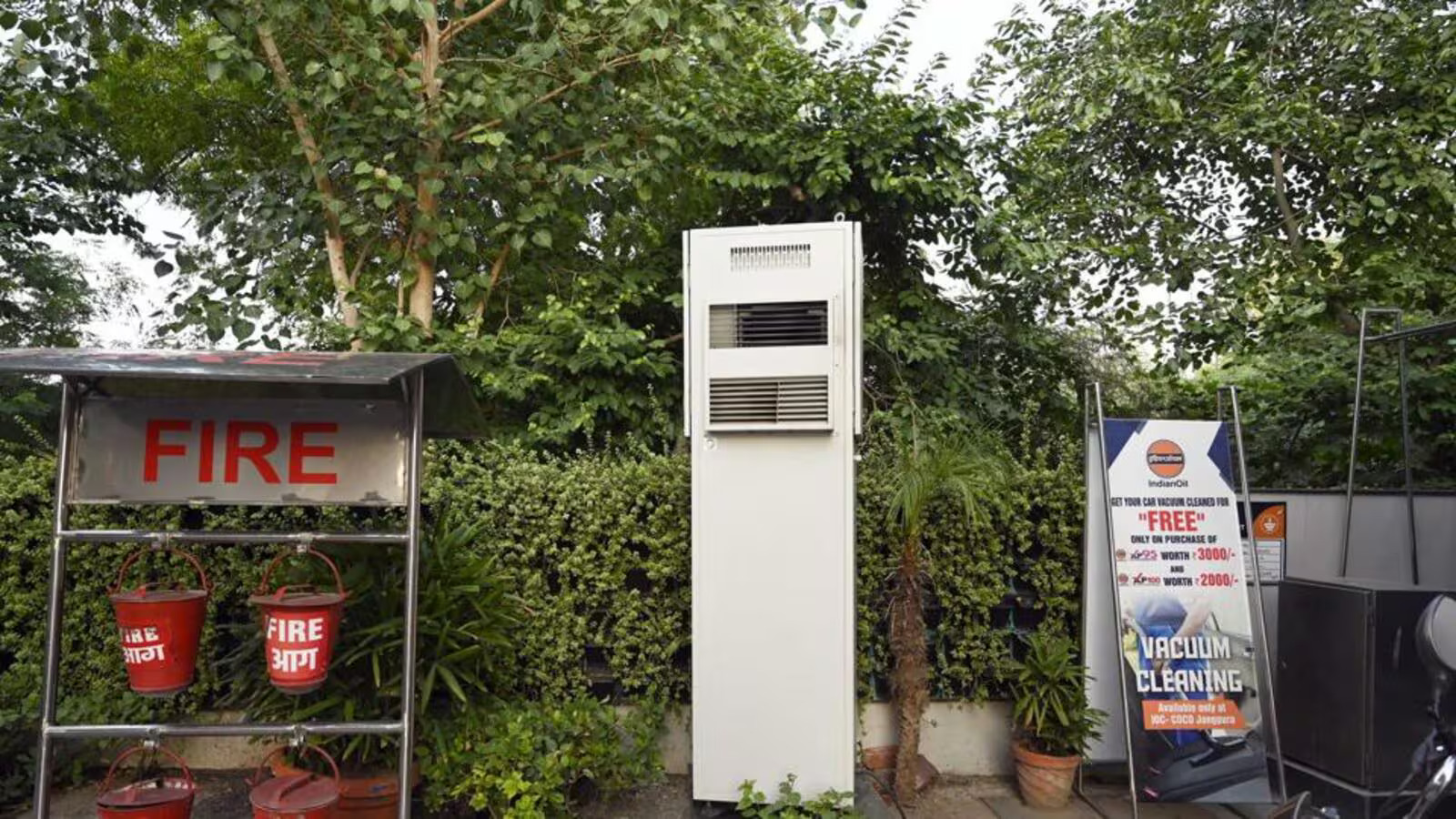
The Delhi government has officially decided to shelve its proposal to install 150 outdoor air purifiers in Nehru Park following survey feedback from park users. The move comes after a two-day opinion poll by the Delhi Pollution Control Committee (DPCC), in which a significant majority of walkers and joggers expressed a preference for preserving greenery over technological installations in the green lung of the city.
To secure public consent, DPCC sought responses from 221 park users in July. Only 33.9% supported installing air purifiers. In contrast, 38% insisted they wanted “only trees,” while 13% opposed the plan outright. A further 14.9% offered conditional support—agreeing only if the units were low-maintenance and low-cost. Given that less than 80% backed the project, as previously stipulated by policymakers, the government withdrew the proposal. DPCC and civic authorities—citing that public acceptance was central—made the announcement following the analysis. Experts and activists also questioned the efficacy of the planned smog towers. Observers pointed to past projects in Connaught Place and Anand Vihar that reportedly reduced PM2.5 levels by just 17%, while costing approximately ₹15 lakh per month to operate. Environmental advocates have argued that replicating such installations citywide could entail an untenable spend running into crores, with negligible environmental benefit.
Neurovascular and public health specialists emphasise that in Nehru Park—considered one of Delhi’s healthiest zones—ambient air quality routinely surpasses surrounding areas. They argue that the priority should remain on preserving mature tree canopies and extending green cover, rather than layering industrial equipment that may shift focus away from sustainable solutions. City officials have acknowledged that the idea was well-intentioned but based on pilot models whose performance did not match expectations. One DPCC spokesperson noted that while technological fixes may have a role in pollution hotspots, in established public parks the emphasis should be on planting, maintenance, and natural filtration. This episode raises broader questions about urban governance, public participation, and environmental priorities in the capital. Civic activists welcomed the reversal, citing it as an example of policy responsiveness when public sentiment is accurately gauged. Others, however, pointed to the need for more transparency upfront—for instance, mandating cost–benefit disclosures before piloting high‑cost installations in civic spaces.
As Delhi pursues its larger goal of building equitable, eco-friendly urban infrastructure, the Nehru Park case offers a template on how solutions must align with onsite ecology, public consensus, and long-term sustainability. For many walkers who visit the park daily, the decision reinforces their belief that true clean air lies in green spaces—not machines.
Also Read : Mumbai Metro Line 2B Nears Completion With 20 Stations
