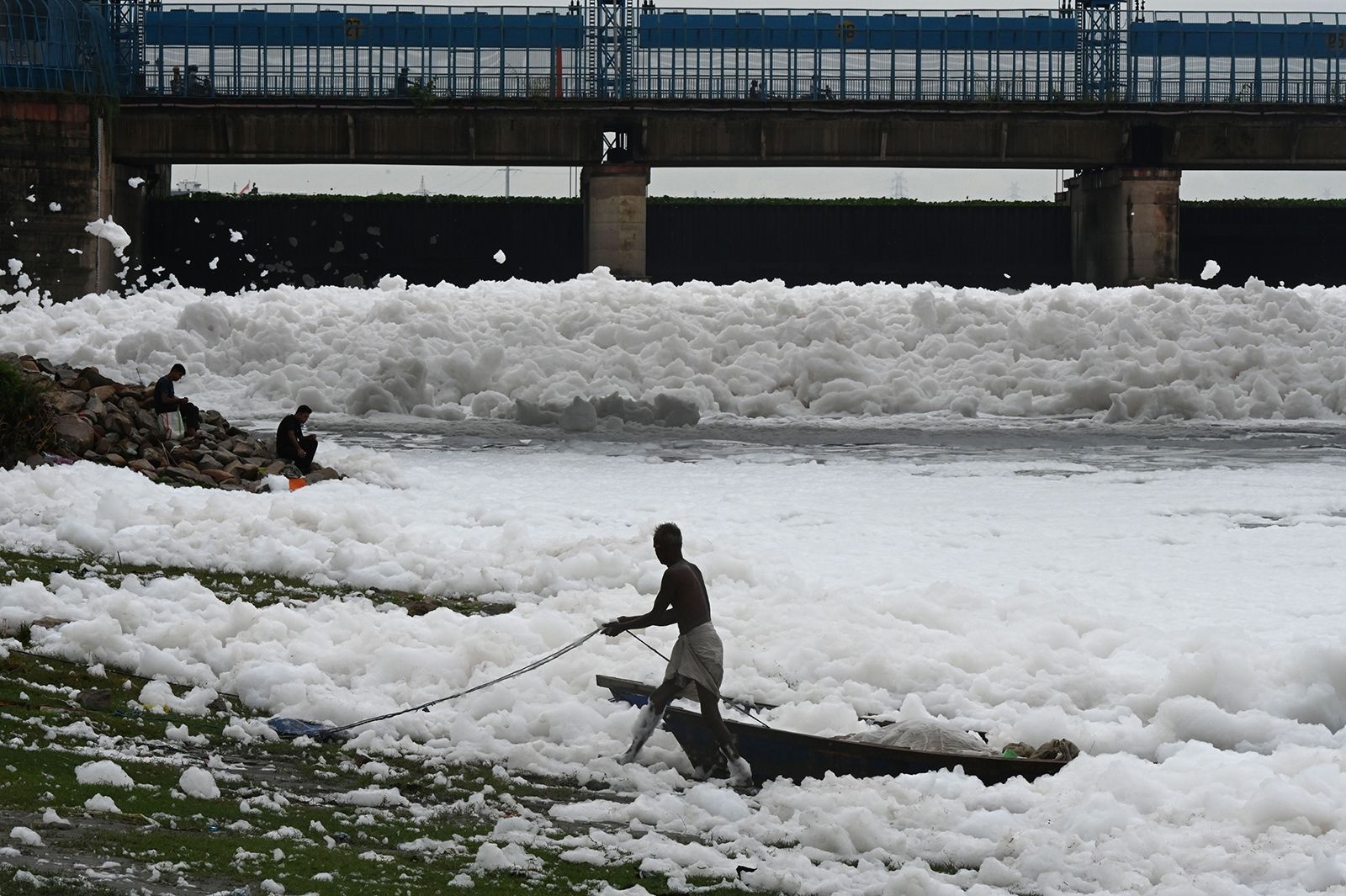
A long-running environmental case has brought renewed scrutiny to Delhi’s urban infrastructure gaps, with official submissions indicating that hundreds of informal settlements remain outside the city’s sewer network, continuing to discharge untreated waste into the Yamuna. The situation highlights systemic coordination failures between key civic agencies and raises concerns over the effectiveness of pollution control efforts in the national capital. Recent filings before a judicial forum monitoring river pollution reveal that approximately 675 slum clusters in Delhi lack formal sewer connectivity. In the absence of underground drainage systems, household wastewater is largely diverted into open drains and stormwater channels, many of which ultimately feed into the Yamuna. This has significant implications for both public health and river ecology in one of India’s most densely populated urban regions.
At the center of the issue is a jurisdictional impasse between two major agencies responsible for urban services in informal settlements. Each has outlined its operational mandate in a manner that places the responsibility for sewer infrastructure on the other. As a result, the foundational network required to collect and treat sewage has not materialized across these settlements, leaving a critical gap in the city’s sanitation framework. Urban planners note that such institutional overlaps are not uncommon in large metropolitan governance systems, but their impact is most visible in underserved communities. Without clear accountability, infrastructure delivery in informal areas tends to lag behind, reinforcing inequalities in access to basic services such as sanitation and clean water. The absence of sewer systems also limits the effectiveness of downstream investments in sewage treatment plants, as untreated waste never reaches these facilities. Data presented in the case further indicates that several major drains contributing to river pollution continue to carry substantial volumes of untreated sewage daily. While partial interception and diversion efforts have been undertaken, key high-load drains remain outside the treatment network due to pending approvals and technical constraints. Environmental experts warn that delays in addressing these high-impact sources undermine broader river rejuvenation strategies.
Compounding the challenge are inconsistencies in on-ground implementation. Independent assessments submitted to the tribunal suggest that physical barriers and waste-trapping mechanisms along certain drains are either incomplete or ineffective, allowing continued inflow of waste. In some residential areas, prolonged exposure to polluted drains has raised concerns over air quality and health risks, particularly due to gases released from stagnant sewage. Civic authorities have initiated steps such as tenders for desilting and infrastructure upgrades, but timelines and execution remain uncertain. The absence of awarded contracts in some cases points to procedural delays that could further extend project completion schedules. From a policy perspective, the situation underscores the need for integrated urban governance frameworks that align responsibilities across agencies. Addressing Yamuna pollution will require not only large-scale treatment infrastructure but also last-mile connectivity in informal settlements, where a significant share of untreated waste originates.
As the case continues, the focus is likely to shift towards enforceable accountability and time-bound implementation. For a city aiming to build a more sustainable and inclusive urban future, resolving these foundational gaps will be critical to restoring both environmental health and public trust.