


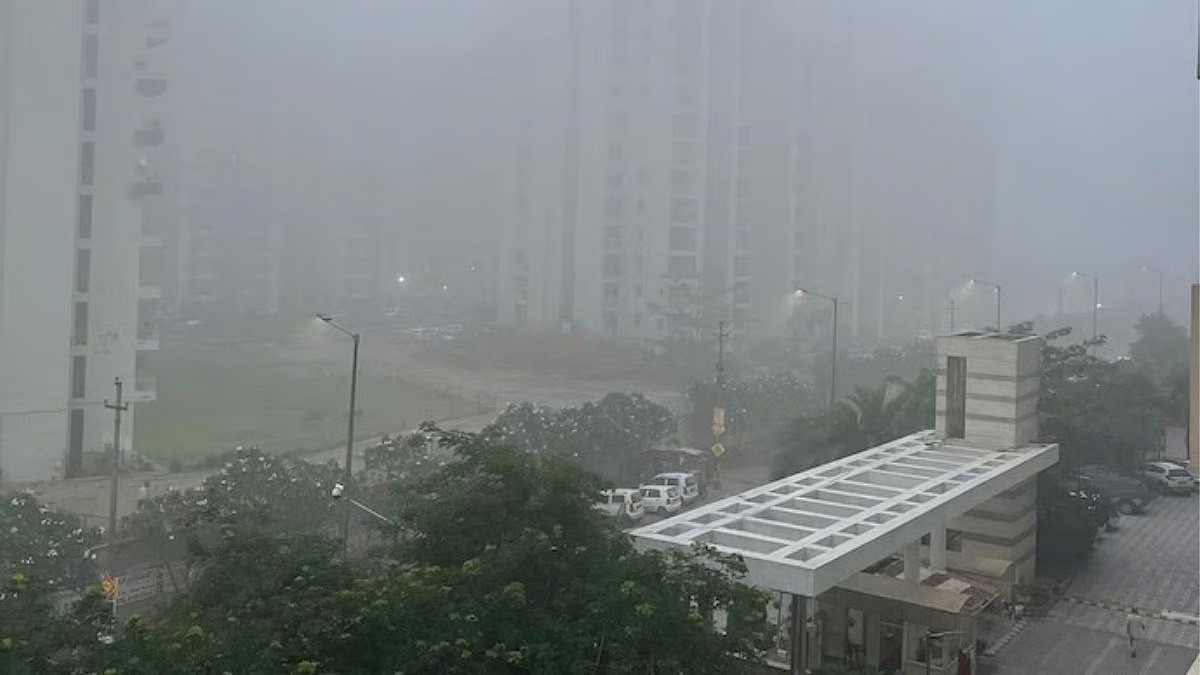
Light to moderate rain swept across Delhi on Friday, offering momentary relief from the city’s muggy and humid conditions. However, the much-needed showers also led to waterlogging in several parts and caused notable traffic congestion, renewing public concerns about the capital’s perennial struggle with monsoon preparedness. Although the India Meteorological Department (IMD) recorded no rainfall at the city’s main Safdarjung observatory, other locations experienced significant precipitation.
The Pusa station reported 13.5 mm of rainfall between 11:30 am and 2:30 pm, and another 21 mm from 2:30 pm to 5:30 pm. Janakpuri saw 15 mm of rain during the early hours and a negligible 0.5 mm later. Ridge and Palam recorded 4.4 mm and 5.2 mm respectively during the day. As per IMD categorisation, rainfall below 15.5 mm is classified as light, between 15.6 mm and 64.4 mm is moderate, while anything above that enters the heavy rainfall category. A yellow alert has been issued for the weekend, indicating the likelihood of light to moderate showers, accompanied by thunderstorms and lightning. This weather shift, expected to persist through July 8, is attributed to the monsoon axis drawing closer to the northern plains, particularly the National Capital Region. IMD officials stated that the rainfall activity is likely to intensify from Saturday onwards and peak in the first half of the coming week.
So far, the capital’s primary weather station has recorded just 4.1 mm of rain in July, compared to the normal mid-month average of 17.4 mm. July’s long-period average stands at 209.7 mm, and meteorologists believe there is scope for a catch-up in the second half of the month. A weather expert tracking the Delhi monsoon patterns noted that monsoonal currents are gaining strength and the coming days could see wider rainfall coverage, especially between July 6 and 8. While the showers brought relief from high humidity and heat, they also revealed gaps in urban flood management. Major roads remained relatively unaffected by long-standing water, but internal roads bore the brunt. Municipal agencies received complaints from multiple neighbourhoods including Narela, Rohini, Mundka, Badarpur, Mangolpuri, Kirari, Mahavir Enclave, Moti Bagh, and Aurobindo Marg. Later in the evening, water accumulation was reported along stretches such as Mehrauli-Badarpur Road near Sainik Farm and Saket Metro Station, near Tughlaqabad Air Force Station, and along Aurobindo Marg near IIT Delhi. Locations near Munirka Metro, Najafgarh, and Rohtak Road also witnessed similar issues.
Despite assurances from the Public Works Department that most of the city’s desilting work—about 90%—has been completed, these incidents raise questions about its efficacy. Officials attributed delays in completing the monsoon preparations to the late awarding of tenders. Additional workload stemming from increased monitoring and demand for regular status reports further slowed the pace, they claimed. No underpasses were reported to have flooded, but several commuters flagged disruptions due to vehicle breakdowns and deep potholes concealed by rainwater. Some motorists took to social media to share images of stalled buses and submerged low-lying roads, further drawing attention to the inadequacies in Delhi’s urban drainage systems. An official from the PWD acknowledged the situation, stating that ongoing construction work and pothole development in key areas are making the situation more challenging. Efforts are underway to patch up critical spots and redirect overflow where possible.
The rainfall, however, came with a silver lining. Delhi recorded its ninth consecutive day of “satisfactory” air quality, with the average Air Quality Index standing at 78 on Friday afternoon, according to the Central Pollution Control Board. The Air Quality Early Warning System forecasts that this trend will continue for the next few days, aided by continued rain and favourable wind movement. Given the expectation of a normal to above-normal monsoon season, the Delhi government had instructed all civic bodies as early as May to prioritise desilting and stormwater drain readiness. Despite this, the effectiveness of that directive appears limited, as repeated complaints of urban flooding continue to surface. With the monsoon now firmly established in the capital, city planners and civic agencies face renewed calls for deeper, more integrated action on flood management, road maintenance, and emergency response systems.
The rainfall on Friday serves as both a natural cleanser and a stress test for Delhi’s infrastructure. As more rain is forecast in the coming days, the city must now look beyond short-term fixes and towards a long-term strategy for building resilient, climate-proof infrastructure. This includes rethinking drainage design, ensuring timely maintenance, and integrating nature-based solutions that improve water absorption and reduce surface runoff. For Delhi, a city facing the dual challenges of rapid urbanisation and climate unpredictability, the monsoon is more than just a seasonal event—it is a reminder of how much more needs to be done to achieve sustainable, equitable, and resilient urban living.
Also Read : Navi Mumbai Airport To Offer Guided Layover Tours
