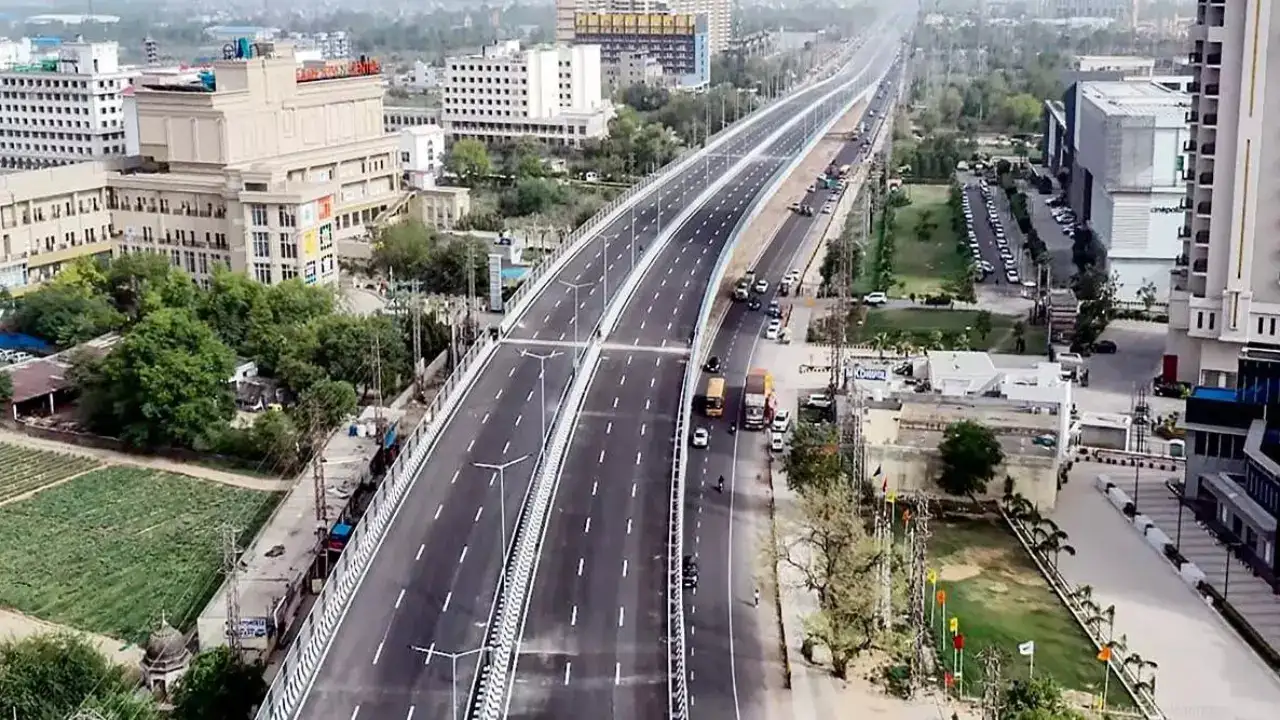
Delhi Seeks ₹1500 Crore Grant to Revamp Key City Road Corridors
The Delhi government has sought ₹1,500 crore from the Centre to fund urgent improvements in the capital’s urban road infrastructure, aiming to address mounting concerns over dust pollution, traffic congestion, and road surface degradation. The request was made under the Central Road and Infrastructure Fund (CRIF), during a recent high-level meeting on city mobility, where Union authorities and state representatives discussed critical bottlenecks and funding needs. If approved, this infusion of central support will supplement the city’s existing public works budget and help modernise key road corridors.
Delhi’s road network, managed primarily by the Public Works Department (PWD), spans over 1,400 kilometres and services both local and inter-state commuters. As part of its annual plan, the city intends to repair 600 kilometres of major roads and has identified 12 high-traffic corridors for focused upgrades. These include arterial routes connecting Delhi to neighbouring Haryana and Uttar Pradesh, where road damage, poor maintenance, and vehicle load issues frequently result in severe congestion. Officials say that state efforts are aligned with broader environmental goals, including reducing roadside dust and carbon emissions through scientific resurfacing. Traffic pressure at Delhi’s entry points—particularly around toll plazas—was flagged as another critical issue. Civic authorities were urged to eliminate temporary toll booths on national highways, which currently disrupt the seamless movement of vehicles and undermine the city’s decongestion strategy.
The Municipal Corporation’s toll booths on expressways such as Delhi-Gurugram and Delhi-Ghaziabad are known to create persistent bottlenecks, with long queues of vehicles adding to pollution and travel delays. In response, Union officials advised the state to explore compensatory revenue measures for local bodies while prioritising public convenience. Another major concern discussed was the need for seamless maintenance of infrastructure that spans both city and national jurisdictions. State representatives requested the National Highways Authority of India (NHAI) to take over the upkeep of service lanes and stormwater drains along three key highways—NH-9, NH-2, and NH-148A—that have recently been transferred to the Centre. This move aims to ensure cohesive planning and consistent quality standards across overlapping transport networks, especially as Delhi scales up preparations for increased vehicle flow and inter-city connectivity.
The capital’s pursuit of central funds reflects the growing demand for sustainable and resilient urban mobility systems in India’s megacities. Delhi’s proposal not only seeks to ease the daily struggles of its residents but also emphasises the importance of long-term, climate-conscious road infrastructure planning. As vehicular density and pollution levels continue to rise, such interventions are vital to building greener, more equitable urban spaces for all.