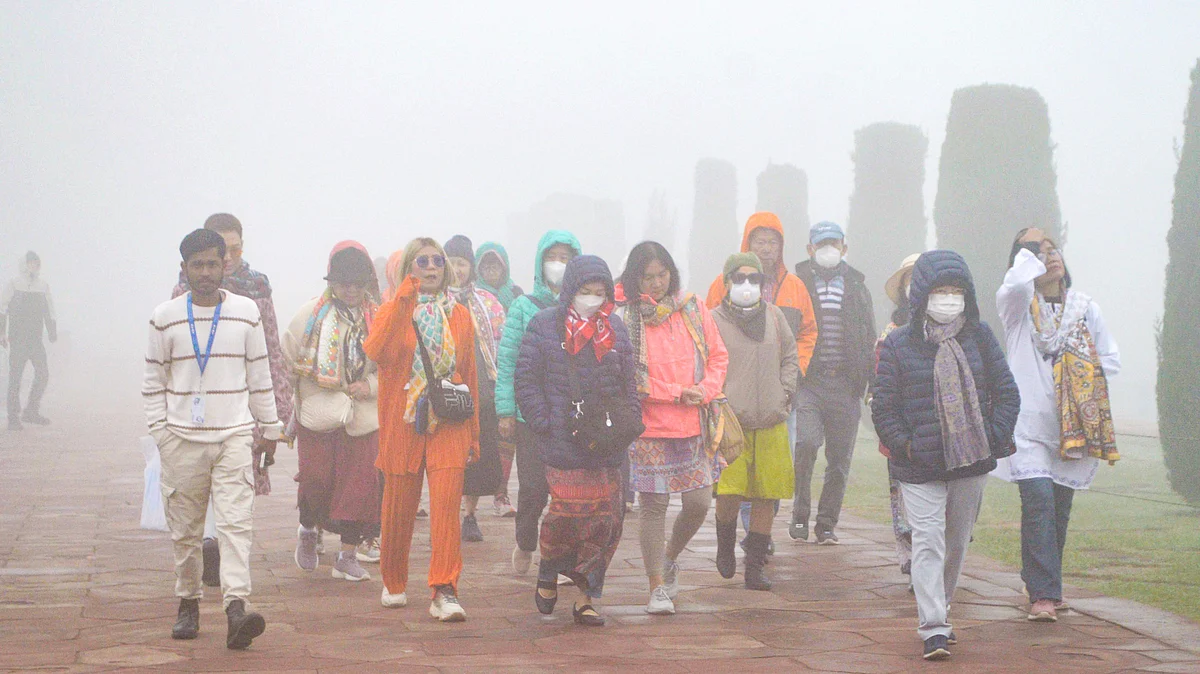
Delhi’s annual winter school shutdown has once again moved beyond classrooms to expose wider governance and climate-resilience challenges in the capital’s education ecosystem. Schools across the city are officially closed until mid-January under the Directorate of Education’s approved academic calendar, a measure designed to protect children during peak cold wave conditions.
Yet uneven adherence by private institutions has triggered concern among parents and renewed debate on how cities respond to increasingly harsh winters. The scheduled winter break, running through the first half of January, reflects long-standing recognition that extreme cold, dense fog and poor visibility pose risks to student safety. In a city where winter mornings can see temperatures dip sharply and commute conditions deteriorate, school closures are as much an urban safety intervention as an academic pause. Education officials describe the calendar as a uniform framework intended to avoid confusion and ensure equity across government and private schools.
However, reports from parents indicate that some privately managed schools have planned or resumed classes ahead of the designated reopening date. Families have raised alarms over children being required to travel during early hours when cold stress and respiratory vulnerability are highest. While no formal advisory has yet been issued to address these complaints, the situation has highlighted enforcement gaps between policy intent and on-ground implementation.
Urban planners note that such inconsistencies reflect broader governance challenges in megacities like Delhi, where public health, transport safety and education administration intersect. Winter disruptions are no longer isolated weather events but recurring urban stressors amplified by climate variability. For households, especially those without access to private transport or heated classrooms, early reopening can translate into tangible health risks and lost learning days due to illness.
From an economic perspective, the issue also affects workforce participation. Parents of younger children often reorganise work schedules around school calendars. Sudden deviations by individual institutions create uncertainty, particularly for families dependent on daily-wage or on-site employment. Education policy, experts argue, functions best when aligned with predictable civic systems rather than fragmented decisions.
The episode underscores the need for climate-responsive schooling infrastructure as well. Better-insulated buildings, flexible timetables and staggered hours are increasingly discussed as long-term solutions in cold- and heat-prone cities. Without such adaptations, closures remain the primary risk-mitigation tool, placing pressure on families and administrators alike. As Delhi continues to face sharper winter extremes, clarity and consistency in implementing the winter break will be critical. Education authorities are expected to review feedback and reinforce compliance to ensure that safety-driven closures achieve their intended purpose. The challenge ahead lies not only in managing this season’s cold wave, but in building a resilient urban education system that can adapt to a changing climate without leaving families uncertain or children exposed.
Delhi Schools Face Winter Closure Enforcement Gaps