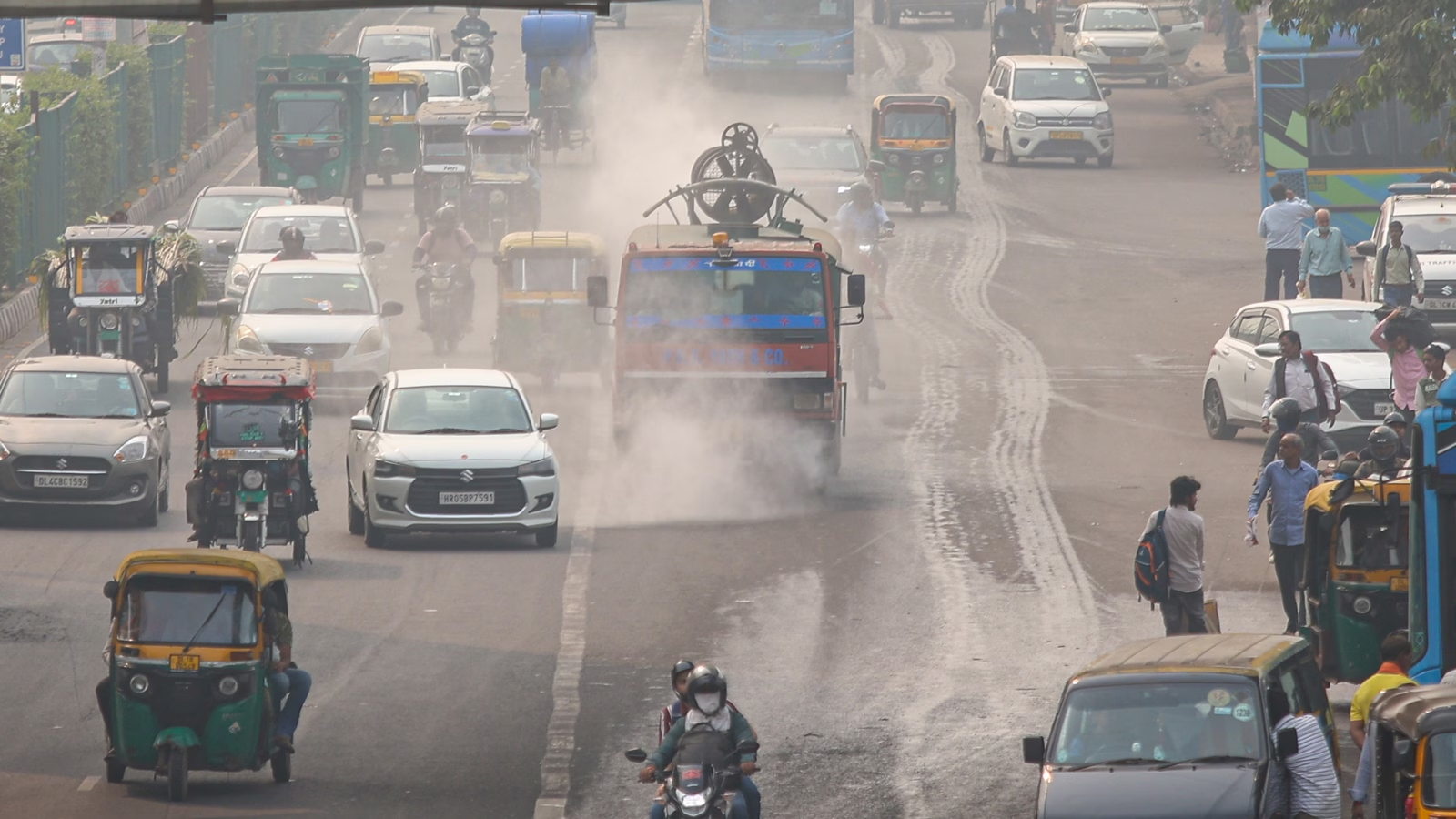
Delhi’s Sarai Kale Khan flyover, a critical connector between central, east and southeast parts of the capital, is emerging as an unexpected dust pollution hotspot just two years after its inauguration. With cracked surfaces, uneven joints and slow-moving traffic, the elevated corridor is now contributing to rising particulate levels at a time when the city’s air quality is again under strain. For commuters, it has become both a mobility bottleneck and a daily health concern.
Field observations show that large sections of the Sarai Kale Khan flyover have developed surface fissures and depressions that force vehicles to brake and accelerate repeatedly. The mechanical stress of traffic interacting with broken concrete releases fine dust into the air, forming visible plumes during peak hours. Residents and daily users report breathing discomfort after standing on the stretch for even a few minutes, underscoring how infrastructure defects can quickly translate into public health risks. Officials responsible for the corridor say water sprinkling is being carried out as part of broader anti-dust measures across pollution-prone zones in Delhi.
However, urban planners and transport engineers note that such interventions offer only temporary relief. Without structural repairs, the underlying problem of road degradation continues to generate dust, congestion and higher tailpipe emissions. “Sprinkling suppresses dust for a short window, but it does not address the source,” said a transport infrastructure consultant. “The real solution lies in resurfacing and proper joint sealing.” Complicating matters is fragmented jurisdiction. Portions of the flyover and its connecting loops fall under different authorities, leading to blurred accountability for repairs. One carriageway is managed by the public works department, while another segment linking towards Noida comes under the concessionaire operating the expressway. Industry experts say this split oversight often delays maintenance, as approvals, budgets and work schedules are not aligned.
Repair activity has also slowed due to restrictions under the Graded Response Action Plan (GRAP), which limits construction during high pollution episodes. While the curbs are designed to protect air quality, they have inadvertently stalled essential maintenance work, creating a paradox where the inability to fix damaged roads perpetuates dust pollution. The absence of permanent dust-control infrastructure, such as pole-mounted misting systems deployed in other high-traffic zones, has further drawn scrutiny. Officials indicate that no such installation has yet been planned for this corridor, despite its heavy round-the-clock traffic load.
The condition of the Sarai Kale Khan flyover raises broader questions about the durability of recently built urban infrastructure and the life-cycle costs of rushed construction. In a city striving for climate resilience and low-emission mobility, deteriorating roads undermine both environmental goals and economic efficiency by increasing vehicle operating costs and healthcare burdens.
Urban policy analysts argue that coordinated asset management, routine structural audits and unified jurisdictional responsibility are essential to prevent similar failures elsewhere. As Delhi heads into another high-pollution season, the flyover’s decay offers a cautionary lesson: sustainable urban development depends not only on building new infrastructure, but on maintaining it to standards that protect public health and long-term economic productivity.
Delhi Sarai Kale Khan Flyover Dust Crisis