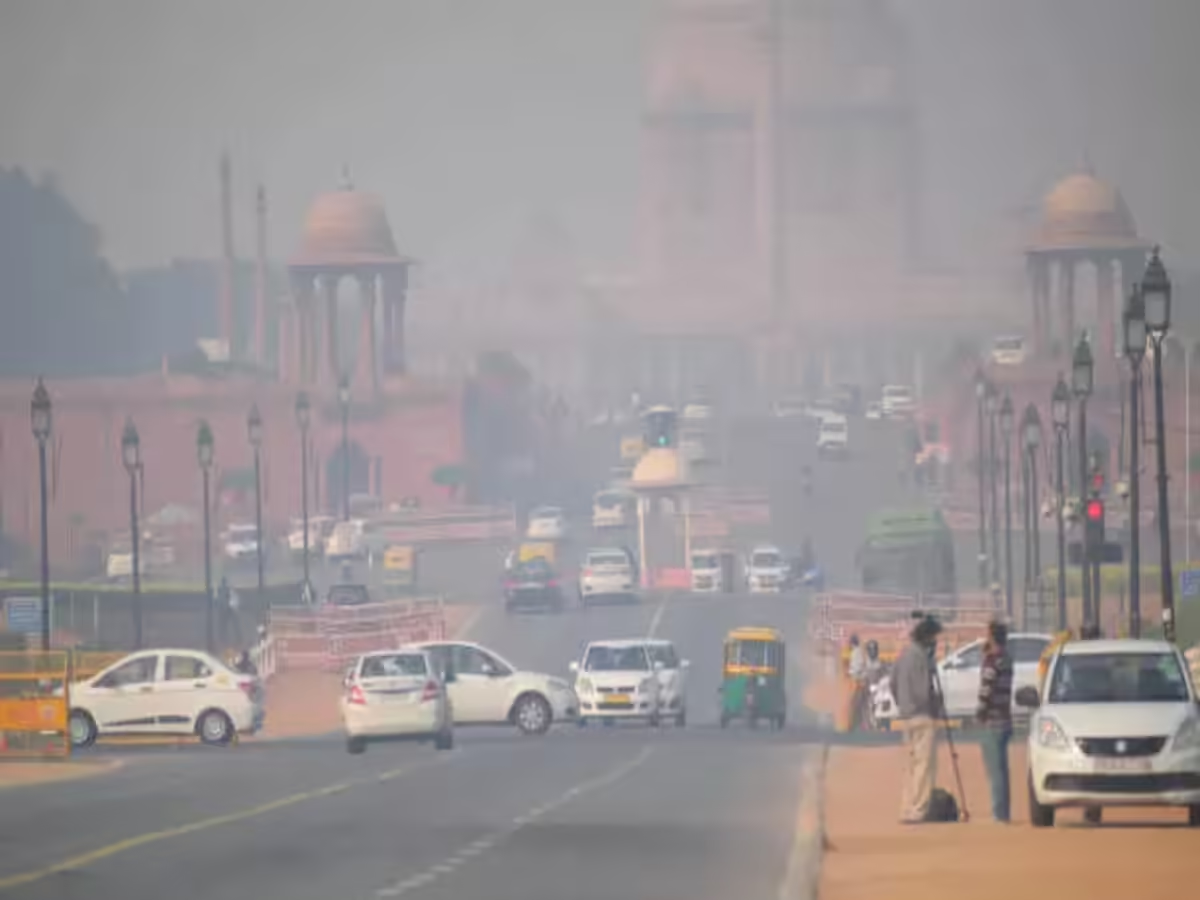
Delhi’s road infrastructure is poised for a significant overhaul as the city’s Public Works Department prepares to seek expanded financial support from the Centre for large-scale strengthening and modernisation works. The proposed funding push, routed through national road infrastructure mechanisms, is expected to accelerate long-pending upgrades across arterial and neighbourhood roads that carry a substantial share of the capital’s daily traffic.
Senior officials associated with Delhi’s urban infrastructure planning indicate that the focus is on improving road durability, capacity, and safety rather than short-term cosmetic repairs. With vehicle volumes continuing to rise and freight movement intensifying across the National Capital Region, the condition of city roads has emerged as a key economic and mobility concern. Poor road quality not only slows travel but also increases fuel consumption, emissions, and vehicle maintenance costs. As part of the broader roadmap, the department is currently undertaking resurfacing and repair works across hundreds of kilometres of roads, with a significant portion targeted for completion within the current financial year. Additional corridors are expected to be taken up next year, subject to central funding approvals. Urban transport specialists note that phasing such works is essential to minimise disruption while ensuring continuity in upgrades.
The renewed emphasis on roads comes amid improved coordination between city and central authorities, which has helped revive projects stalled by administrative and financial bottlenecks. Infrastructure economists point out that predictable funding flows and clearer accountability structures are critical for timely execution, particularly in dense urban environments where delays quickly translate into cost escalations and public inconvenience. Beyond mobility, the road upgrade programme has implications for urban liveability and climate resilience. Well-designed road surfaces with proper drainage can reduce waterlogging during extreme rainfall events, a growing concern as climate variability increases. Experts argue that integrating heat-resistant materials, pedestrian infrastructure, and cycling-friendly designs into road projects can help align capacity expansion with sustainability goals.
The programme also extends to selected flyovers and foot overbridges, where design upgrades and visual improvements are being planned. Urban design professionals caution that such interventions should prioritise structural safety, universal accessibility, and maintenance efficiency over purely aesthetic considerations. When executed well, these upgrades can improve traffic flow while enhancing public space quality. For the real estate and construction sectors, sustained investment in road infrastructure tends to improve neighbourhood accessibility and land values, particularly in peripheral zones.
However, analysts stress that benefits are uneven unless upgrades are complemented by public transport integration and demand management measures to prevent induced traffic growth. Looking ahead, policy observers emphasise that the success of Delhi’s road modernisation effort will depend on execution discipline, environmental safeguards, and transparent monitoring. As the city prepares for future population and mobility pressures, roads will remain a critical but complex component of a people-first, climate-resilient urban transport system.
Delhi Roads Upgrade Plan Gains Central Focus